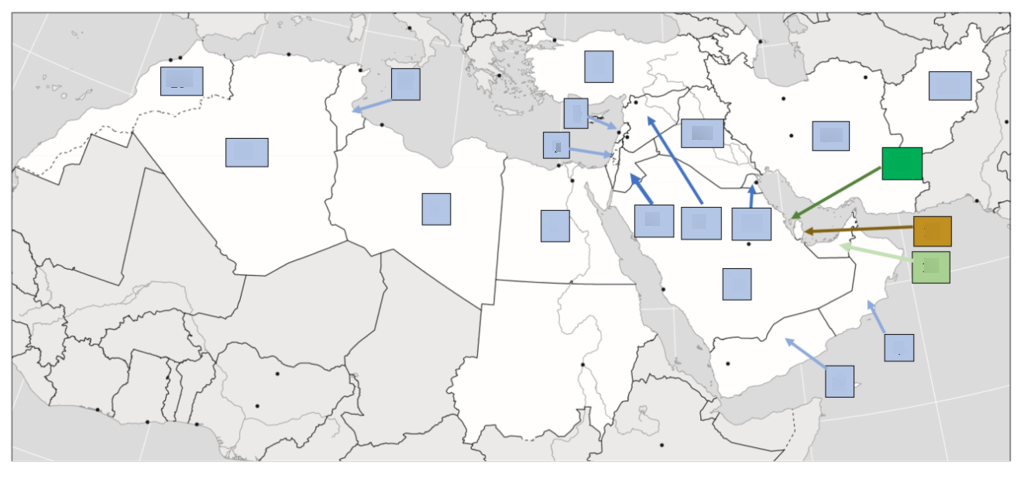
Analyses indicate that all parties in the Arab and Islamic region live under the illusion of power, where there is no real actor on the ground. Those who believe they are key players are, in fact, merely tools in a larger game. This perspective reflects a painful reality experienced by Arabs and Muslims, where interests intertwine and powers clash.
In this situation, we find that all sects, denominations, nationalities, and militias believe they possess power, while they are actually under the influence of larger forces. These dynamics reinforce the state of weakness and fragmentation that the region suffers from, raising questions about the future.
Details of the Situation
This phenomenon is evident in many conflicts and disputes that plague the region, where regional and international powers vie for influence. Each party seeks to achieve its own interests, leading to exacerbated humanitarian and political crises. This state reflects the absence of a unified vision or clear strategy to address the challenges facing the region.
Moreover, internal divisions among sects and denominations complicate the situation, as each party seeks to enhance its authority at the expense of others. This leads to the spread of violence and chaos, negatively impacting the lives of ordinary citizens.
Background & Context
Historically, the Arab and Islamic region has witnessed many political and social transformations that have contributed to creating an environment of instability. Since the end of the 20th century, many Arab countries have begun to suffer from political and economic crises, leading to rampant corruption and unemployment.
Additionally, external interventions in the internal affairs of Arab countries have deepened these crises. Major powers seek to achieve their own interests, complicating the political landscape and exacerbating the crises.
Impact & Consequences
The consequences of this situation are manifold, affecting security and stability in the region. Ongoing conflicts lead to the spread of violence, threatening the lives of millions. Humanitarian crises are also worsening, as many suffer from shortages of basic resources such as food and water.
Furthermore, the economic situation in many Arab countries is continuously deteriorating, increasing rates of poverty and unemployment. This contributes to the spread of despair and frustration among youth, raising the likelihood of drifting towards extremism.
Regional Significance
The lack of effectiveness in the Arab and Islamic world negatively impacts relations between countries. Ongoing tensions lead to a lack of trust, complicating the possibility of cooperation and coordination among countries to face common challenges.
In conclusion, the current situation in the Arab and Islamic region requires a comprehensive reassessment. Relevant parties must work towards building a unified vision that contributes to achieving stability and security, enhancing opportunities for sustainable development.