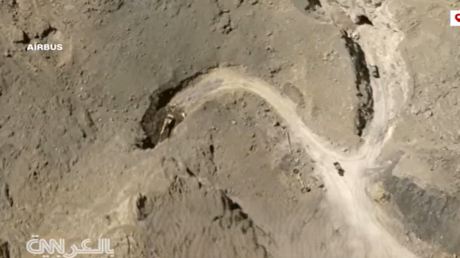
A recent analysis of satellite images, published by CNN, reveals that Iran has rapidly restored significant quantities of ballistic missiles stored in fortified military facilities and underground bases. This information comes at a sensitive time as fears grow regarding the enhancement of Iran's military capabilities and its impact on regional stability.
The analyzed images indicate that Iran has notably reassembled its missile arsenal, suggesting that the country may be able to resume ballistic missile production faster than previously anticipated. This development occurs amid escalating tensions between Iran and the United States, alongside heightened strains with Gulf Arab states.
Details of the Event
According to reports, Iran possesses one of the largest missile arsenals in the region, which includes ballistic missiles capable of striking distant targets. The analysis conducted by CNN highlights that these missiles are stored in fortified locations, making it difficult for any military strike to effectively target them. This storage and assembly capability reflects Tehran's strategy of maintaining its military strength in the face of international pressures.
Experts have also noted that Iran may have exploited a period of relative calm in the region to bolster its military capabilities, complicating the security landscape in the Middle East. The analyzed images also show that Iran may have updated some of its missile systems, increasing their accuracy and power.
Background & Context
Historically, Iran has faced significant international pressures due to its nuclear program and ballistic missile development. The nuclear agreement reached in 2015 aimed to alleviate these pressures, but the United States' withdrawal from the agreement in 2018 reignited tensions. Since then, Iran has ramped up its military activities, raising concerns among neighboring countries and Western nations.
In recent years, the region has witnessed a rise in armed conflicts, prompting Iran to enhance its defensive capabilities. This trend reflects Tehran's desire to secure itself against potential threats, whether from the United States or from Gulf Arab states, which it views as a major competitor in the region.
Impact & Consequences
Iran's recovery of its missile arsenal could escalate tensions in the region, as neighboring countries may feel an increasing threat. This situation could drive some nations to bolster their military capabilities, intensifying the arms race in the Middle East. Moreover, these developments could affect potential peace talks between Iran and Western nations, as such military activities may be seen as a challenge to negotiations.
Furthermore, the enhancement of Iranian military capabilities could impact the stability of Iraq and Syria, where Iran continues to support armed groups. These dynamics could exacerbate existing conflicts, increasing civilian suffering and complicating humanitarian relief efforts.
Regional Significance
For Arab countries, Iran's enhancement of its military capabilities represents a direct threat. Gulf states, in particular, may feel heightened concerns regarding their national security, potentially prompting them to strengthen military cooperation with the United States and other allies. This cooperation may involve increased joint military exercises and intelligence sharing.
These developments could also influence relations between Arab states and Iran, as tensions may rise between the two sides. At the same time, some countries may seek to open dialogue channels with Tehran in an attempt to ease tensions, but these efforts may face significant challenges under the current circumstances.
In conclusion, Iran's recovery of its missile arsenal marks a turning point in the security landscape of the Middle East. These developments require the international community to take urgent steps to ensure stability in the region and avoid any escalation that could lead to armed conflict.