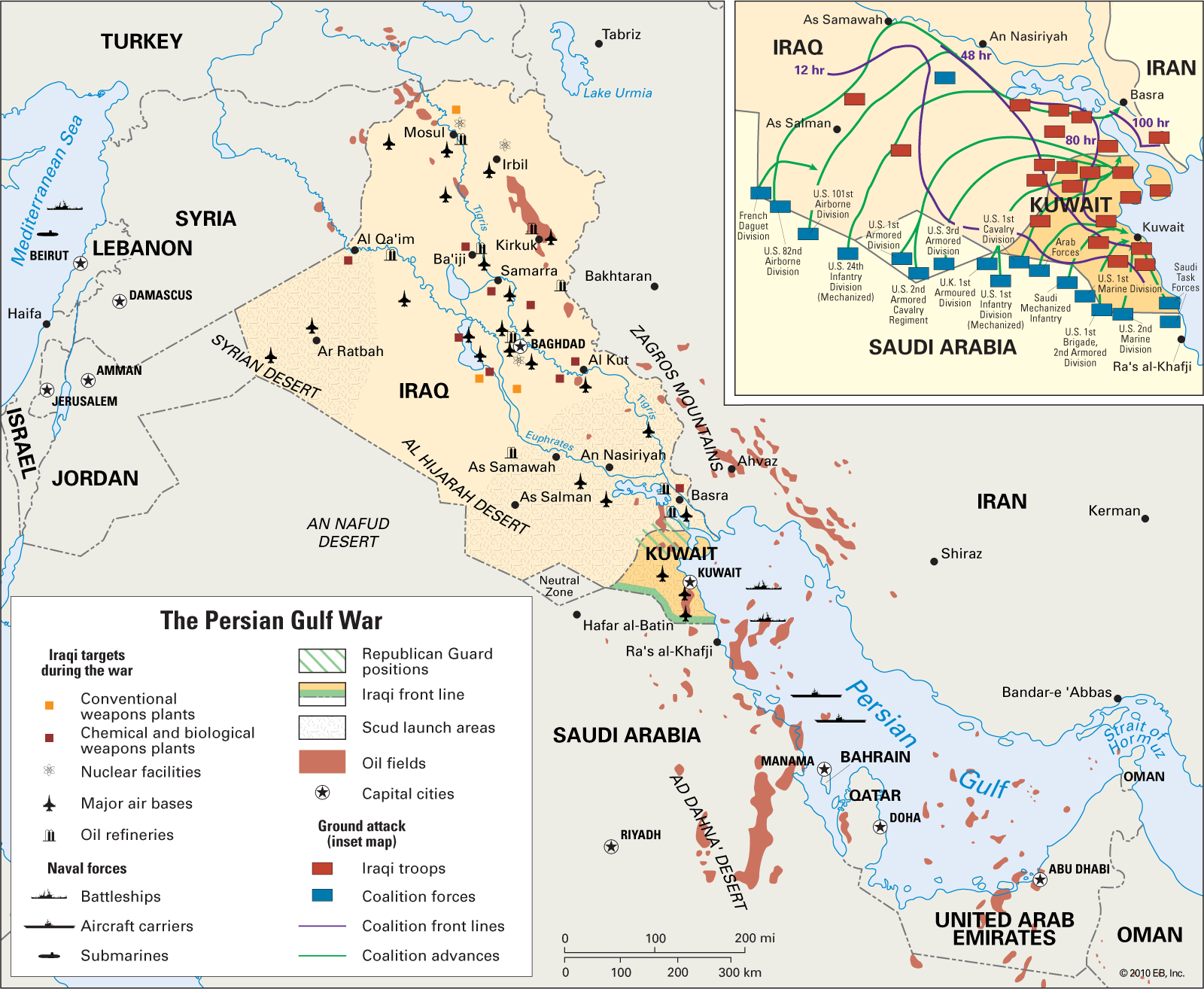
The Third Gulf War illustrates how the world is heading towards a state of increasing chaos, placing America's adversaries in a position to reassess their strategies. With the declining credibility of the United States, other nations are seeking alternatives to bolster their power and influence on the international stage.
This war comes at a sensitive time, as tensions between major powers escalate, contributing to an unstable environment. Although the United States is still considered a superpower, recent events demonstrate a deterioration in its traditional hegemony.
Details of the Conflict
The Third Gulf War, which began earlier this year, is regarded as one of the most complex conflicts in the region. Reports indicate that the conflict has exacerbated humanitarian conditions, with civilians suffering significantly. Additionally, military interventions by regional and international powers have complicated the situation further, making peaceful solutions more challenging.
Concerns are growing that this war could lead to far-reaching implications for regional and international security. As the fighting continues, America's adversaries are showing that they can exploit this chaos to enhance their strategic positions.
Background & Context
Historically, the Gulf region has witnessed numerous conflicts that have impacted regional balances. Since the First Gulf War in 1990, the area has undergone radical changes in political and economic powers. In recent years, tensions between Iran and Arab states have intensified, contributing to the escalation of conflicts.
This war serves as a new test for U.S. foreign policy, which has faced increasing criticism for its inability to achieve stability in the region. History shows that military interventions often lead to unexpected outcomes, raising questions about the effectiveness of American strategies in the Gulf.
Impact & Consequences
Analyses suggest that the Third Gulf War could lead to a reshaping of alliances in the region. Countries that have relied on American support may find themselves compelled to seek new partnerships, whether with regional or international powers. This shift could alter the dynamics of power in the Middle East.
Moreover, the increasing chaos may encourage extremist groups to exploit the situation to enhance their influence. In the absence of political stability, the region may become more susceptible to internal conflicts, further complicating humanitarian conditions.
Regional Significance
For Arab countries, the Third Gulf War serves as a wake-up call. These nations need to reassess their security and economic strategies in light of the growing threats. The increasing reliance on the United States may become a burden, necessitating the search for alternatives to enhance national security.
At the same time, these circumstances could present an opportunity for Arab countries to strengthen cooperation among themselves and work towards building new alliances that contribute to stability. Understanding the lessons learned from this war will be essential to ensure a safer future for the region.
In conclusion, the Third Gulf War demonstrates that the world is heading towards a state of chaos, prompting nations to reassess their strategies. With the declining credibility of the United States, this moment may provide an opportunity for America's adversaries to enhance their influence, raising questions about the future of stability in the region.