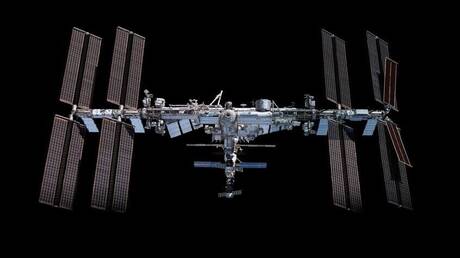
Dmitry Pakanov, head of Roscosmos, announced the launch date for a new group of astronauts to the International Space Station (ISS). This mission is part of a joint collaboration with NASA, with the launch date set for the coming weeks.
This mission is a continuation of ongoing efforts to enhance international cooperation in space, as Russia and the United States aim to strengthen their partnership in space exploration. This group is expected to include a team of experienced astronauts who will contribute to scientific research and experiments conducted aboard the station.
Event Details
According to official statements, the spacecraft carrying the astronauts will be launched from the Baikonur Cosmodrome in Kazakhstan. The mission is scheduled to last for six months, during which the astronauts will work on a variety of scientific experiments covering multiple fields such as medicine, biology, and physics.
This announcement comes at a time when global space programs are experiencing increasing competition, as many countries seek to enhance their capabilities in this field. Pakanov emphasized the significance of this mission in fostering cooperation among major countries in space.
Background & Context
Historically, Russia has been a pioneer in space since the launch of the first artificial satellite in 1957. Since then, it has sent numerous astronauts into space, including the world's first astronaut, Yuri Gagarin. With the advancement of technology, the ISS has become a key platform for collaboration among countries in space research.
Russia has collaborated with NASA since the ISS began operations in 1998, with Russia handling many logistical and supply missions. This partnership reflects the commitment of both nations to advance scientific research in space, despite occasional political tensions.
Impact & Consequences
This mission is a significant step towards enhancing international cooperation in space, contributing to the development of scientific research that can benefit humanity. Additionally, the success of this mission may open doors for further collaboration among countries in other areas, such as technology and the environment.
Moreover, this mission could influence other space programs, encouraging other nations to strengthen their partnerships in space, leading to more innovations and advancements in the field.
Regional Significance
As Arab countries seek to enhance their capabilities in space, this mission represents an opportunity to learn from international experiences. These successes can inspire Arab nations to develop their space programs and foster cooperation with leading countries in this field.
Furthermore, enhancing international cooperation in space could contribute to achieving sustainable development goals in the region by advancing technology and innovation, ultimately benefiting Arab communities.