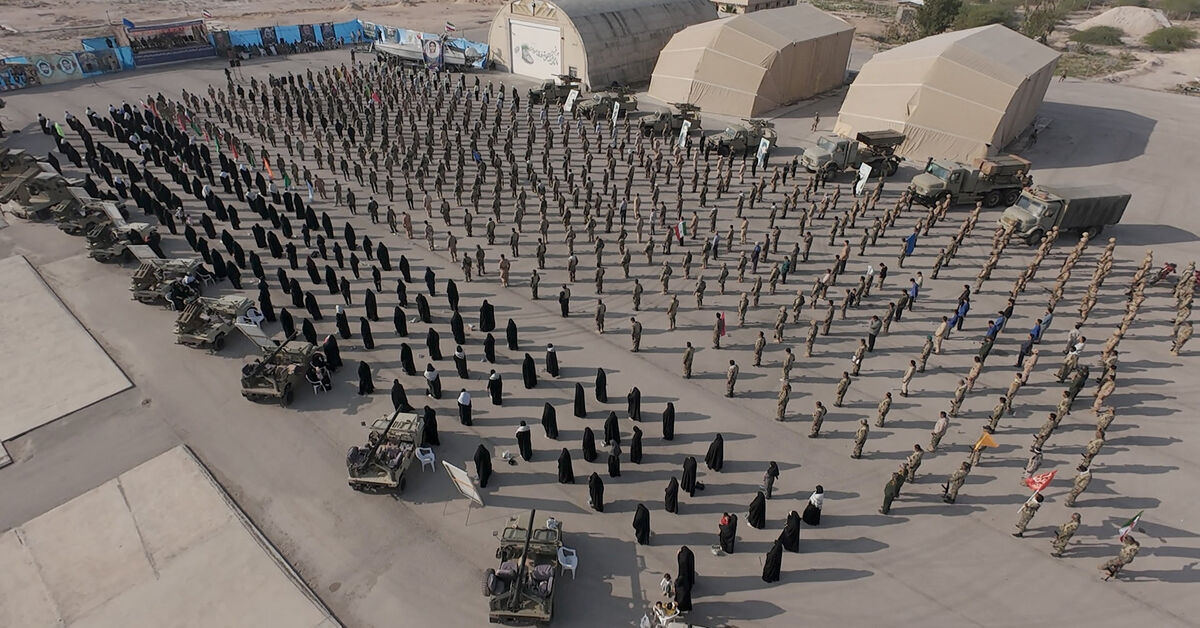
On Tuesday, Argentina announced the designation of the Iranian Revolutionary Guard Corps (IRGC) as a terrorist organization, a move that aligns with pressures exerted by the previous U.S. administration under Donald Trump. This announcement came from the Argentine presidential office, justifying the decision by citing the IRGC's support for the Lebanese group Hezbollah, which is deemed responsible for the deadliest attack in Argentina's history.
The attack that occurred in 1994 on the AMIA Jewish community center in Buenos Aires resulted in the deaths of 85 people and injuries to hundreds. Argentine authorities have accused Iran of being behind this attack by supporting Hezbollah. This new designation reflects a shift in Argentina's foreign policy, as the current government seeks to strengthen its relations with the United States.
Details of the Announcement
This step comes at a sensitive time for Argentina, as the country faces increasing economic and social crises. The Argentine president indicated that this decision reflects the country's commitment to combating terrorism and enhancing national security. He added that the designation of the Iranian Revolutionary Guard as a terrorist organization is part of Argentina's efforts to bolster international cooperation in the fight against terrorism.
The Iranian Revolutionary Guard is considered one of the most prominent military institutions in Iran, known for its support of various armed groups in the region, including Hezbollah in Lebanon. This support has sparked widespread controversy in the international community, where the IRGC is viewed as a tool for spreading Iranian influence in the region.
Background & Context
The history of relations between Argentina and Iran is complex, with increasing tensions in recent years due to attacks targeting the Jewish community in Argentina. The attack on the AMIA center is seen as a turning point in relations between the two countries, with Argentina accusing Iran of involvement in the attack, a claim that Tehran has vehemently denied. Nevertheless, Argentine investigations into the case have continued, leading to strained diplomatic relations.
In recent years, Argentina has sought to strengthen its ties with the United States, particularly under the previous U.S. administration, which adopted a hardline policy towards Iran. This shift in foreign policy also reflects Argentina's desire to improve its international image and enhance cooperation with Western nations.
Impact & Consequences
The designation of the Iranian Revolutionary Guard as a terrorist organization could have significant repercussions for Argentina's international relations, potentially affecting economic and political cooperation with other countries. This decision may also increase pressure on Iran in the international arena, seen as an additional step in U.S. efforts to isolate Tehran.
Moreover, this decision could impact the Iranian community in Argentina, raising concerns that the IRGC designation might escalate tensions among different communities within the country. It may also provoke reactions from Iran, which could view this designation as a provocation.
Regional Significance
This decision may have direct implications for relations between Arab countries and Iran, as the Iranian Revolutionary Guard is considered one of the main supporters of various armed groups in the region. While some Arab nations seek to improve their relations with Iran, this designation could heighten tensions between the two sides.
Furthermore, classifying the IRGC as a terrorist organization could bolster the position of Arab countries that adopt a strict policy towards Iran, potentially exacerbating regional conflicts. Ultimately, this decision illustrates how domestic policies can influence international relations and regional security.