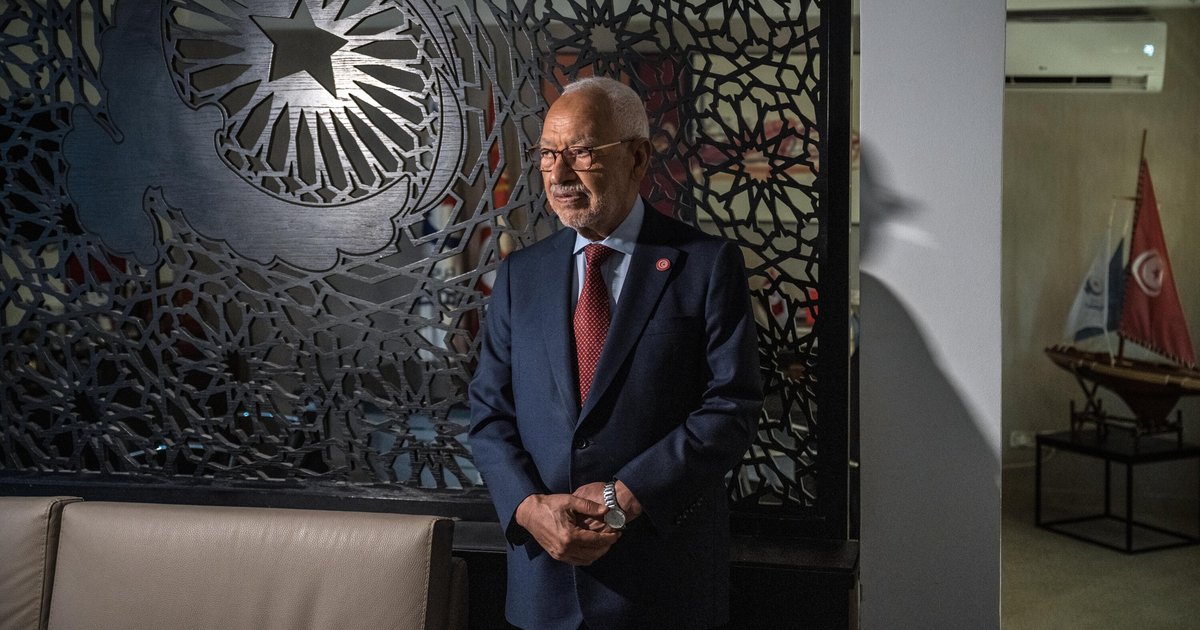
Riadh Chaibi, the political advisor to the head of the Tunisian Ennahda Movement, Rached Ghannouchi, stated that the latter's arrest reflects the authorities' fear of the symbolism he represents in the democratic transition process. Chaibi confirmed that this arrest is part of the government's attempts to undermine any political influence of Ghannouchi, who is considered one of the most prominent political figures in Tunisia.
In a related context, Chaibi noted that the arrest of activists from the Global Solidarity Fleet, who were seeking to support the Palestinian cause, illustrates that the Tunisian government's position on Palestine is merely populist rhetoric aimed at exploiting the issue for political purposes.
Details of the Event
Arrests continue in Tunisia, with attention focused on Ghannouchi, who was detained at a sensitive time when the country is experiencing political tensions. Chaibi pointed out that these arrests demonstrate the government's inability to confront political and social challenges, reflecting its weak position in the face of popular demands.
He added that Ghannouchi symbolizes the democratic transition in Tunisia, and his arrest reflects the government's anxiety over any movements that could lead to a reshaping of the political landscape. Chaibi argued that the arrests not only reflect the authorities' fear of Ghannouchi but also of any popular movements that could change the status quo.
Background & Context
The Tunisian Ennahda Movement was founded in the 1980s and played a pivotal role in the democratic transition following the 2011 revolution. However, the movement has faced significant challenges in recent years, particularly with the rise of political and economic pressures. Ghannouchi's arrest comes at a time when criticisms of the government are increasing due to the deterioration of economic and social conditions in the country.
The Palestinian cause is considered one of the central issues in Tunisian politics, as Tunisia has long supported the rights of Palestinians. However, many observers believe that the current government uses this issue as a means to gain popular support without taking real steps to support it.
Impact & Consequences
Political arrests, such as that of Ghannouchi, could exacerbate conditions in Tunisia, potentially provoking widespread popular reactions. Chaibi warned that these policies could lead to further political polarization, increasing tensions in the country.
Moreover, the arrest of Global Solidarity Fleet activists may affect Tunisia's image on the international stage, as it could be viewed as a country suppressing voices advocating for the Palestinian cause. This situation may negatively impact Tunisia's foreign relations, especially with countries that support Palestinian rights.
Regional Significance
Tunisia is considered a model for democratic transition in the Arab world, and any regression in this path could affect other countries seeking change. Political arrests may raise fears of a return to authoritarian regimes, which could impact protest movements in the region.
At the same time, these events may enhance Arab solidarity with the Palestinian cause, as citizens in various Arab countries may unite to defend Palestinian rights, reflecting the importance of this issue in Arab consciousness.
In conclusion, recent events in Tunisia reflect a state of political and social anxiety, as pressures on the government increase, necessitating a reevaluation of its policies towards the opposition and national issues.