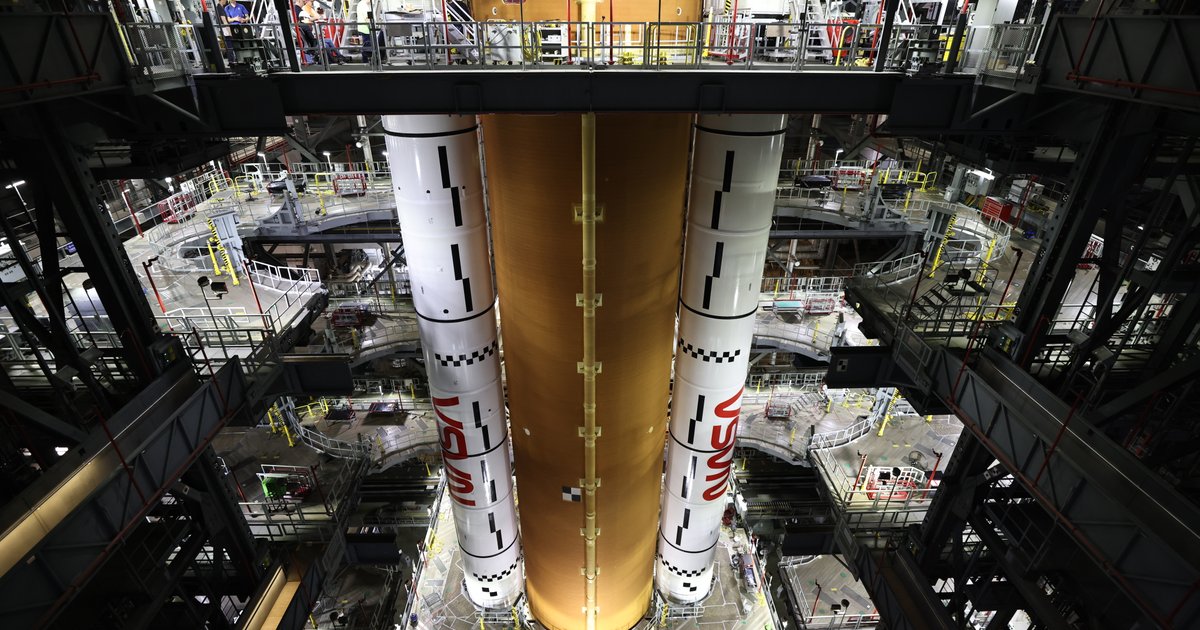
NASA is gearing up for the launch of Artemis 2, which aims to achieve a historic milestone by breaking the record set by Apollo 13 for the distance flown around the Moon. This mission is scheduled to launch later this year, with the spacecraft undertaking a journey around the Moon, rekindling hopes for exploration beyond Earth.
This mission is part of the Artemis program, which seeks to return to the Moon and explore it more deeply. The flight will include a crew of four astronauts who will conduct scientific experiments and monitor the lunar environment during their journey. This program aims to enhance scientific knowledge about the Moon and develop new technologies for space exploration.
Event Details
Artemis 2 will be the first crewed mission to the Moon since Apollo 17 in 1972. The spacecraft will fly at a low altitude around the Moon, allowing the crew to capture detailed images and study its surface. The mission is expected to last approximately 10 days, during which the astronauts will conduct significant scientific experiments.
This mission is a crucial step toward NASA's goal of sending humans to Mars by the end of this decade. It also represents part of a broader vision for space exploration, as the agency seeks to develop new technologies that can be utilized in future missions.
Background & Context
The history of space exploration is filled with achievements and challenges. Apollo 13 is one of the most famous missions, facing significant difficulties during its journey to the Moon. However, the crew managed to return safely to Earth, making this mission a symbol of perseverance and innovation. Now, Artemis 2 aims to restore hope for lunar exploration and the development of new technologies.
This mission is also part of international efforts to explore space. Many countries are working to develop their own programs for lunar and Martian exploration, reflecting the importance of space as an area for international cooperation and innovation.
Impact & Consequences
The Artemis 2 mission carries significant implications for the future of space exploration. If the mission succeeds in achieving its objectives, it will open doors for more missions to the Moon and Mars. Additionally, success in this mission may encourage further investments in the space sector, fostering innovation and technological development.
Furthermore, this mission will contribute to enhancing international cooperation in space, as other countries may participate in future programs. Space exploration is not just a scientific goal; it is also an opportunity to strengthen international relations and build new partnerships.
Regional Significance
The Arab region is part of this global trend toward space exploration. Several Arab countries have begun developing their own programs in this field, such as the United Arab Emirates, which launched the Hope Probe to Mars. The success of Artemis 2 could inspire Arab nations to invest more in space science and technology.
Moreover, cooperation in space could open new avenues for collaboration between Arab countries and others, enhancing the region's standing on the international stage.
In conclusion, the Artemis 2 mission represents a significant step toward a bright future for space exploration. With each new achievement, humanity moves closer to realizing its dreams of exploring other planets, opening new horizons for science and technology.