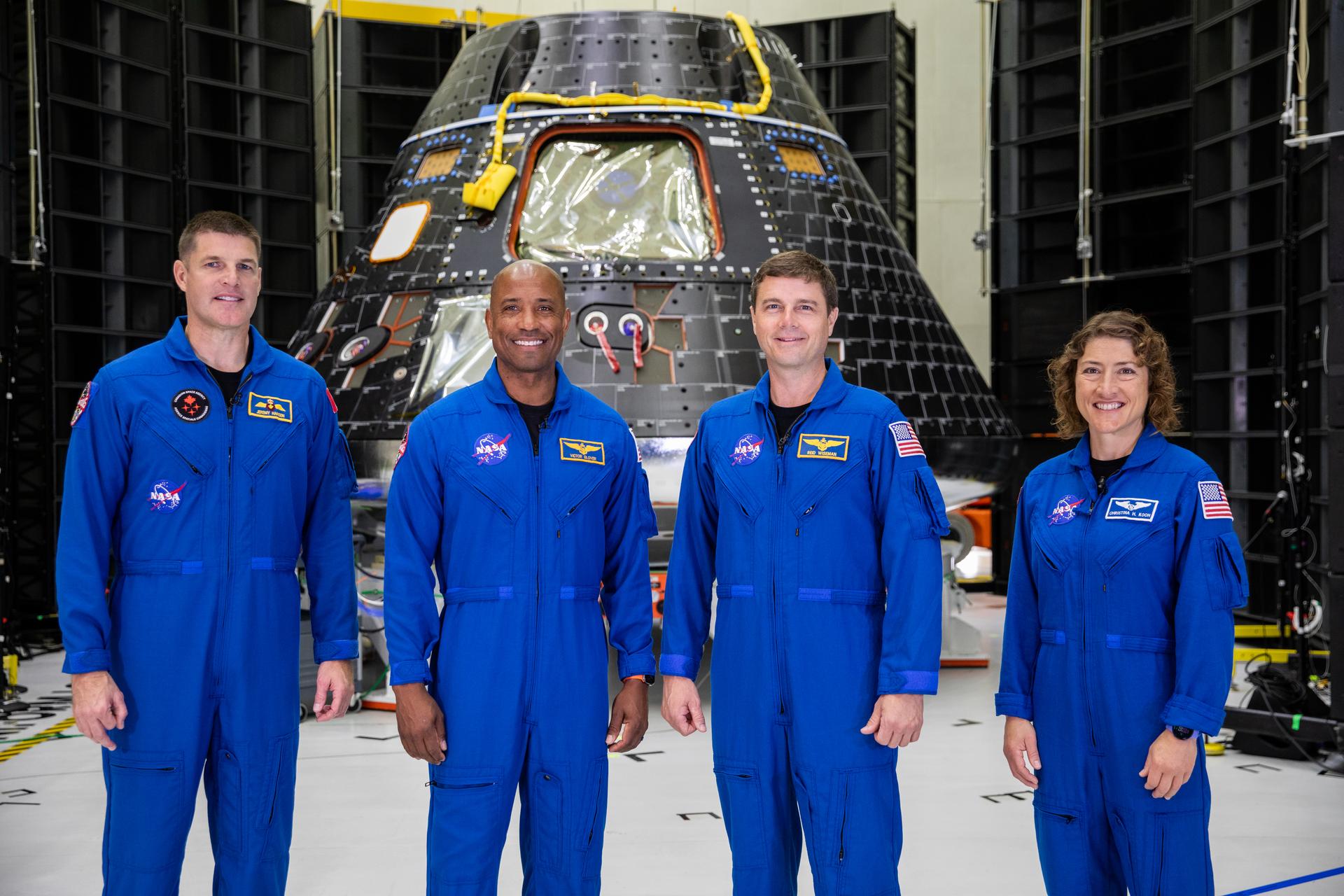
NASA is gearing up for the launch of Artemis 2, a mission designed to achieve a historic milestone by breaking the distance record set by Apollo 13. This mission is part of the United States' efforts to return to the Moon and explore outer space more deeply.
Artemis 2 is scheduled to embark on a journey around the Moon, where the spacecraft will fly at unprecedented altitudes, allowing scientists and engineers to collect valuable data about the Moon and its surrounding environment. This mission represents a significant step towards achieving NASA's ambitious goals in space exploration.
Event Details
Artemis 2 will be the first crewed mission under the Artemis program, which aims to return humans to the Moon by 2024. The journey will include a crew of four astronauts, who will conduct scientific experiments while orbiting the Moon. The mission is expected to last approximately 10 days, during which the spacecraft will circle the Moon before returning to Earth.
This mission is part of a larger plan to establish a permanent base on the Moon, which will aid in preparations for future missions to Mars. The success of Artemis 2 will have a significant impact on the future of space exploration, demonstrating humanity's capability to return to the Moon and explore new worlds.
Background & Context
The history of lunar exploration dates back to the 1960s when the United States launched the Apollo program, which saw the first human landing on the Moon in 1969. Following the success of Apollo 11, several other missions followed, including Apollo 13, which faced significant challenges but returned safely. Since then, no astronauts have been sent to the Moon, making the return to lunar exploration a critical topic for many nations.
In recent years, competition in space exploration has intensified, with countries like China and Russia striving to achieve similar milestones. The Artemis program represents a U.S. response to these challenges, aiming to reinforce America's leadership in space.
Impact & Consequences
The success of Artemis 2 could open doors for increased investments in space, fostering innovation and technology. Additionally, this mission will contribute to enhancing international cooperation in space exploration, as other countries may participate in future programs.
Moreover, the research conducted during this mission could lead to new discoveries across various fields, including Earth sciences and environmental studies. A better understanding of the Moon could improve technologies for space travel and exploration of other planets.
Regional Significance
As Arab nations focus on developing their space programs, the success of Artemis 2 may encourage more collaboration in space between Arab countries and developed nations. This mission could inspire Arab countries to invest more in research and development in science and technology.
Furthermore, lunar exploration could open new avenues for cooperation in areas such as communications and environmental science, enhancing the ability of Arab nations to engage in the global space arena.
In conclusion, the Artemis 2 mission represents a significant step towards space exploration, rekindling hopes for new achievements. As the launch date approaches, the scientific and space communities eagerly await the results of this historic mission.