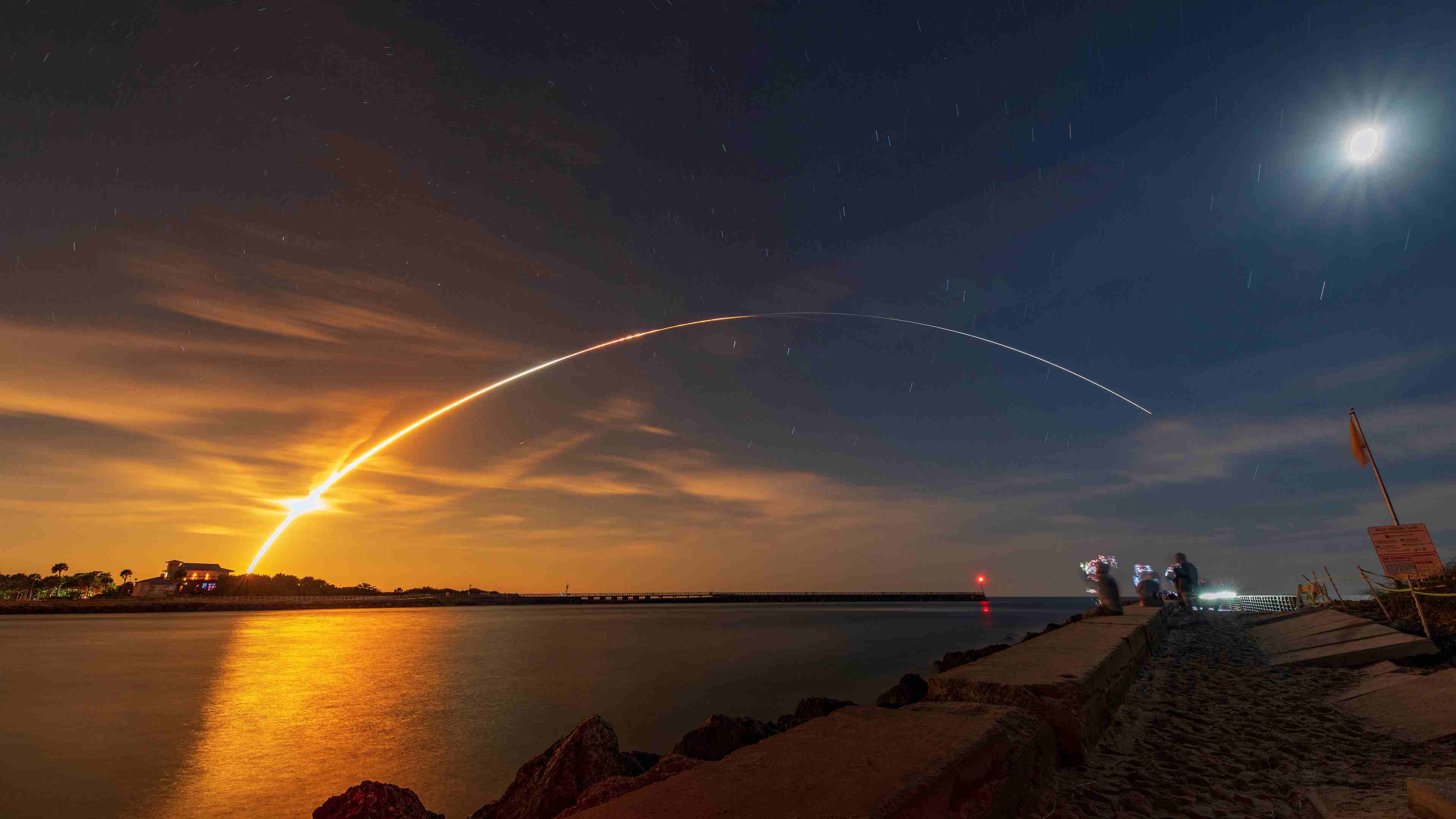
NASA has announced that the Artemis-2 mission has achieved a historic milestone, becoming the first space mission to exceed a distance of 400,171 kilometers from Earth. The mission will commence its journey around the Moon on Monday evening, marking a new step in space exploration.
This mission comes over fifty years after the last crewed flight around the Moon, reflecting the significant technological advancements humanity has made in the field of space. The spacecraft is scheduled to launch at 20:45 Eastern Time, beginning its journey around the Moon.
Mission Details
The Artemis-2 mission consists of a crew of four astronauts who will embark on a journey lasting approximately ten days. During this period, the astronauts will conduct multiple scientific experiments, in addition to exploring the Moon up close. This mission is part of the Artemis program, which aims to return humans to the Moon by 2025 and develop new technologies for exploring Mars.
This mission serves as a critical test for the systems and technologies that will be used in future missions, including the planned mission to Mars. The program also includes plans to build a permanent lunar base, which will facilitate deep space exploration.
Background & Context
Historically, the last crewed mission to the Moon was Apollo 17, launched in 1972. Since then, no crewed mission has approached the Moon, making this mission an exciting return to lunar exploration. In recent years, countries and private companies have increased their investments in space exploration, accelerating the pace of innovations in this field.
The Artemis-2 mission is part of a larger vision by NASA, aiming to enhance international cooperation in space exploration. The agency also seeks to engage the private sector in developing new technologies, contributing to cost reduction and increased efficiency.
Impact & Consequences
This mission represents an important step toward achieving humanity's goals in space exploration. The successes achieved by Artemis-2 are expected to increase public interest in space and enhance investments in this sector. It will also contribute to the development of new technologies that could be beneficial in various fields, such as communications and navigation.
Furthermore, this mission may open new avenues for international cooperation in space, enhancing opportunities for partnerships between different countries. This could lead to the development of joint projects that contribute to achieving global scientific and technological goals.
Regional Significance
As Arab countries seek to enhance their capabilities in space, the Artemis-2 mission can serve as an inspiration for them. Many Arab nations, such as the United Arab Emirates, are working to develop their own space programs, reflecting a growing interest in science and technology.
The successes achieved by NASA could enhance cooperation between Arab countries and global space agencies, opening up new opportunities for learning and development in this field.