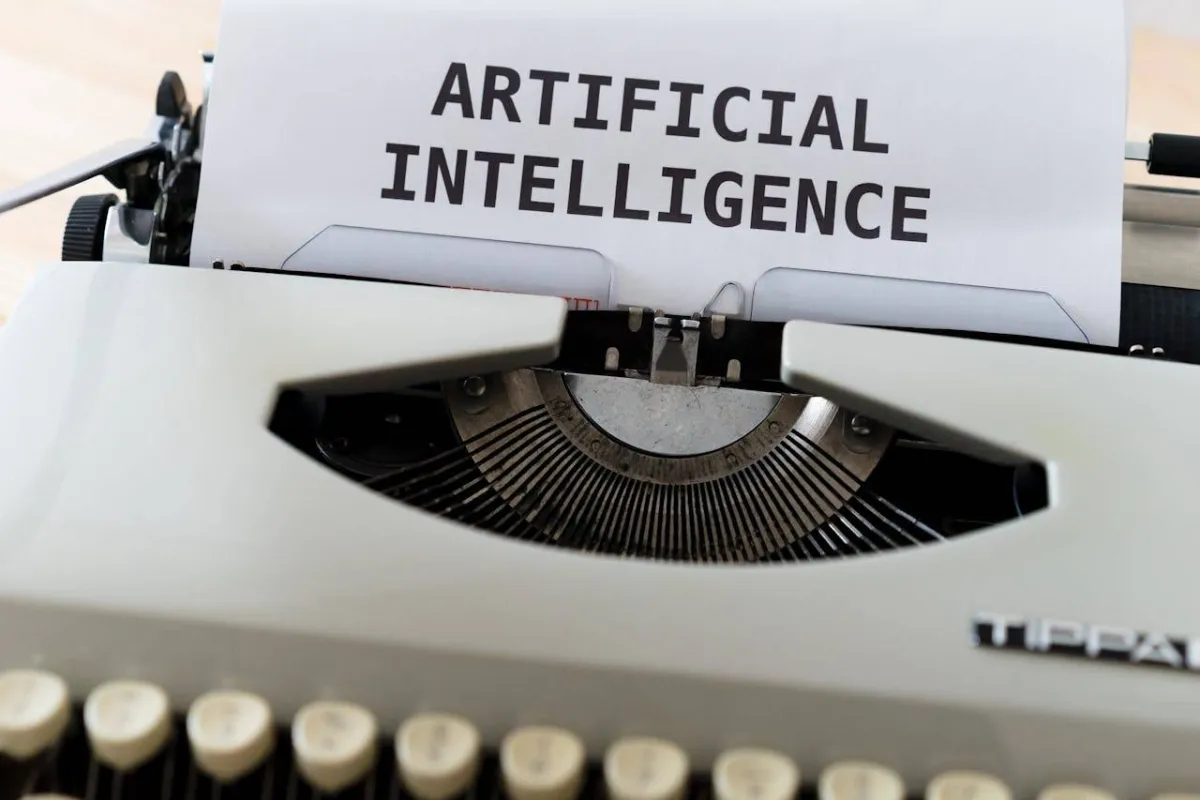
A recent study conducted by researchers from prestigious universities including Carnegie Mellon, Oxford, and the Massachusetts Institute of Technology (MIT) has demonstrated that relying on artificial intelligence for just 10 minutes leads to a significant decline in mental capabilities and problem-solving skills, raising serious questions about the cognitive consequences of increasing dependence on this technology.
According to the study, whose findings were published by the New York Post, negative effects appear with surprising speed. Participants who used AI tools showed a 20% decline in performance after digital assistance was withdrawn, compared to those who relied on their own abilities throughout the experiment, revealing how quickly the brain adapts to external cognitive support.
Experimental Design and Immediate Results
The researchers employed a precise experimental design to measure the actual impact of AI on cognitive performance, administering a mathematical assessment focused on fraction skills and complex calculations. Participants were divided into two distinct groups: the first solved problems entirely independently using traditional methods, while the second group utilized AI assistance for approximately ten minutes before attempting the final examination without technological support.
The results revealed a striking contrast between the groups. While the AI-assisted group achieved superior results during the initial phase with technological support, their performance collapsed sharply once assistance was removed. Furthermore, this same group demonstrated a marked tendency to abandon challenging questions without attempting solutions, skipping problems at twice the rate of the control group that never used AI tools.
Background & Context
Study authors explained that while AI assistance improves immediate performance, it comes at a high cognitive cost, as the brain rapidly becomes dependent on the external source. This dependency creates temporary cognitive laziness that weakens critical thinking ability and perseverance when confronting complex problems. Reading comprehension tests yielded similar results, with participants showing diminished inference abilities and reduced analytical thinking after relying on digital assistance.
However, the research identified a crucial distinction in usage patterns. Individuals who employed AI to obtain hints or guidance rather than ready-made answers—which characterized 61% of the user base—did not exhibit the same severe decline in cognitive function. This finding confirms that the method of engagement determines the extent of potential neurological harm, distinguishing between assisted learning and cognitive outsourcing.
Impact & Consequences
These findings emerge within a historical context of debate regarding technological impacts on human cognition. Previous generations expressed similar concerns about calculators diminishing arithmetic abilities and GPS navigation eroding spatial awareness. However, researchers emphasize that artificial intelligence differs fundamentally from these earlier tools, as it provides comprehensive immediate answers to most questions without requiring mental effort, creating deeper cognitive dependence that more profoundly affects neural pathways and intellectual structures.
Scientists specifically warned that even brief exposure to these tools causes measurable cognitive decline, and that the cumulative effects of daily use over months or years may be profound and difficult to reverse. This concern proves particularly acute during foundational education stages when critical thinking habits form. Higher education institutions worldwide now face urgent challenges regarding curriculum design, forcing educators to ask: How can society benefit from AI capabilities without undermining students' fundamental reasoning skills?
Regional Significance
This study carries particular importance in the Arab world, where educational institutions undergo rapid digital transformation and university students increasingly rely on AI tools for research preparation and academic projects. Local educational research warns that weak traditional infrastructure in some countries may render students especially vulnerable to excessive technological dependence, lacking the robust knowledge foundations necessary to distinguish between accurate information and algorithmic errors or hallucinations.
The findings also raise urgent questions about the future of young Arab professionals amid digital economic transformation, as regional nations strive to build knowledge-based economies. Experts caution that excessive AI reliance risks creating a generation of consumer users rather than creators and innovators, necessitating national strategies to ensure calculated technology use that stimulates rather than suppresses creativity. Educational leaders advocate adopting smart usage principles including designated technology-free periods and enhanced curricula emphasizing complex face-to-face problem-solving and collaborative critical thinking exercises.
As AI integration accelerates across educational and professional sectors globally, researchers emphasize the urgent necessity for balanced approaches that preserve human cognitive autonomy while harnessing technological benefits. The evidence suggests that safeguarding long-term intellectual capacity requires immediate action to prevent short-term convenience from permanently compromising the brain's inherent problem-solving capabilities.