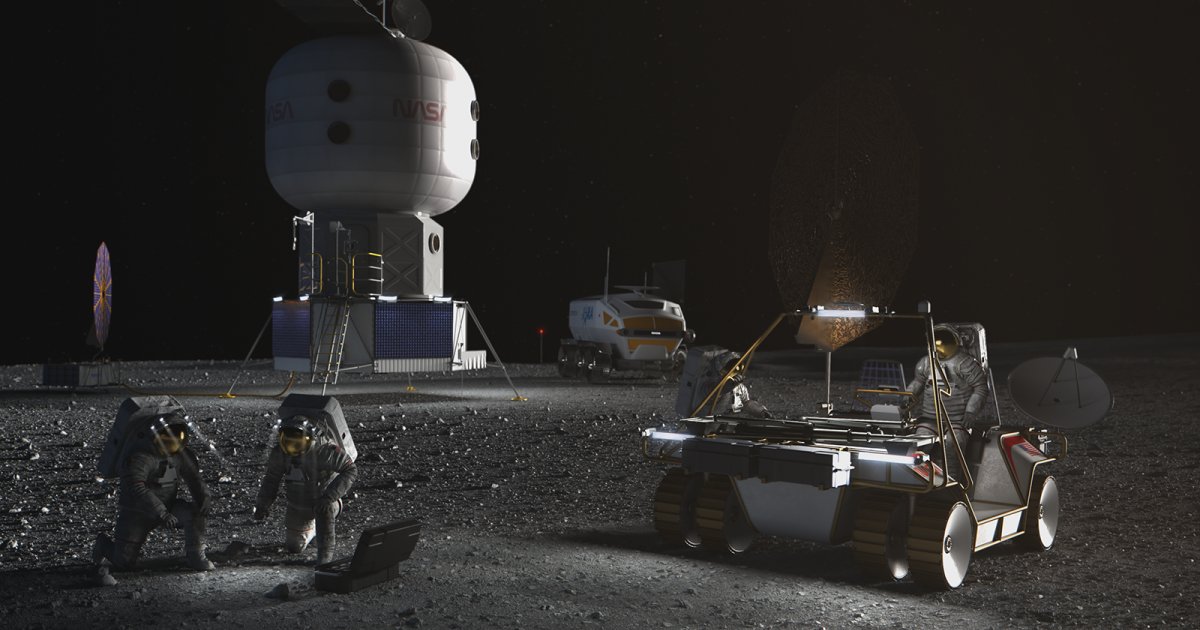
NASA announced that the crew of the Artemis II mission achieved a historic milestone on Monday by surpassing the record for the farthest distance humans have traveled from Earth, exceeding the Apollo 13 achievement. This milestone was reached at 1:56 PM Eastern Time, reflecting significant progress in space exploration.
Artemis II launched from the Kennedy Space Center in Florida on April 1, with a crew of four astronauts: mission commander Reid Wiseman, pilot Victor Glover, mission specialist Christina Koch, and Canadian Space Agency mission specialist Jeremy Hansen. The crew named their spacecraft "Integrity," a name that reflects the core values essential for space exploration.
Details of the Achievement
The crew achieved their historic milestone after surpassing the previous distance record set by Apollo 13, which was 248,655 miles (approximately 400,171 kilometers) in April 1970. Apollo 13 faced a crisis during its mission when an oxygen tank exploded, forcing the crew to change course and return to Earth without landing on the Moon. In contrast, Artemis II is following a similar trajectory, expected to reach a distance of 252,760 miles (approximately 406,777 kilometers) before returning to Earth.
During their journey, the crew proposed names for two caves on the Moon's surface, with their suggestion to name one cave "Integrity" being accepted, while they proposed the name "Carroll" for the second cave. This step reflects the spirit of innovation and collaboration among astronauts.
Background & Context
The Artemis II mission is part of the Artemis program, which aims to return humans to the Moon by 2024. This program is part of broader efforts to explore deep space, including Mars. Historically, the Apollo 13 mission is one of the most famous missions in space history, showcasing humanity's ability to overcome significant challenges.
Through Artemis II, NASA seeks to enhance international cooperation in space, involving astronauts from various space agencies, highlighting the importance of teamwork in achieving space objectives.
Impact & Consequences
This mission holds significant importance not only for the United States but for the entire world, as it enhances humanity's capacity to explore space. Surpassing the previous record reflects the technological advancements and innovations achieved in the field of space, opening doors to further discoveries.
The success of Artemis II may also encourage more investments in the space sector, leading to the development of new technologies that could benefit humanity in various fields, such as communications, navigation, and scientific research.
Regional Significance
These achievements in space are significant for the Arab region, where many Arab countries are striving to develop their own space programs. The success of the Artemis II mission may inspire Arab nations to invest in technology and scientific research, enhancing their standing in the international community.
Furthermore, these achievements could foster cooperation among Arab countries in the fields of space and technology, leading to shared goals in space exploration.