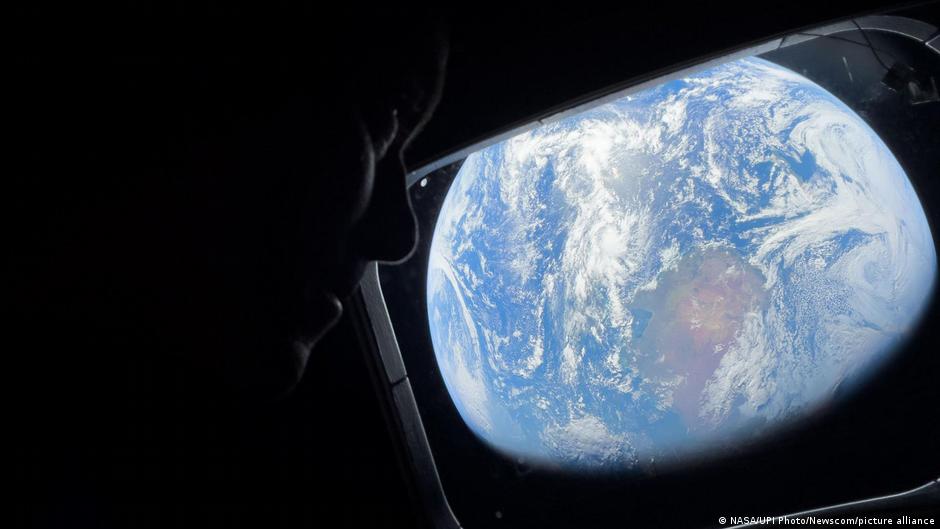
In a historic achievement, the American space agency NASA announced that astronauts participating in the Artemis II mission have entered the Moon's gravitational field, meaning the Moon's gravitational influence has surpassed that of Earth. This event took place at 04:42 GMT on Monday, with the spacecraft located about 63,000 kilometers from the Moon and 232,000 kilometers from Earth.
The spacecraft is expected to approach the Moon in the coming hours, reaching a distance of 7,500 kilometers from the far side of the Moon. This mission represents the first crewed spaceflight around the Moon since 1972, marking a turning point in space exploration.
Mission Details
The Artemis II mission follows a figure-eight trajectory around Earth and the Moon, allowing astronauts to view both the Earth and the Moon simultaneously, along with the possibility of witnessing a solar eclipse as the Sun disappears behind the Moon from the perspective of the Orion spacecraft. The mission crew consists of American astronauts Victor Glover, Christina Koch, and Reid Wiseman, along with Canadian astronaut Jeremy Hansen.
Christina Koch will be the first woman to fly around the Moon, while Victor Glover will become the first person of color to achieve this milestone. The astronauts have already begun documenting lunar features during their journey, capturing sights never before seen by human eyes.
Background & Context
The efforts to explore the Moon date back decades, with the Apollo 11 mission in 1969 being the first to land a human on the lunar surface. Since then, there have been numerous attempts to explore the Moon, but the Artemis II mission signifies a new beginning in space exploration, aiming to return to the Moon and develop new technologies that enable sustainable exploration.
This mission is not just a continuation of past efforts but a leap forward, as it seeks to establish a framework for future lunar missions and beyond, including potential manned missions to Mars.
Impact & Consequences
The Artemis II mission is a significant step towards achieving larger goals in space exploration, as it will aid in the development of new technologies that can be utilized in future missions to Mars and beyond. Additionally, this mission enhances the United States' position as a leading power in space, opening new avenues for international collaboration in this field.
As humanity prepares to return to the Moon, the implications of this mission extend beyond national pride; it represents a collaborative effort to push the boundaries of what is possible in space exploration.
Regional Significance
The successful execution of the Artemis II mission will likely inspire a new generation of scientists and engineers, fostering interest in STEM fields across the globe. It also serves as a reminder of the importance of international partnerships in tackling the challenges of space exploration.
In conclusion, the Artemis II mission not only marks a historic achievement for NASA but also sets the stage for future exploration endeavors, reinforcing the idea that space is a frontier that belongs to all of humanity.