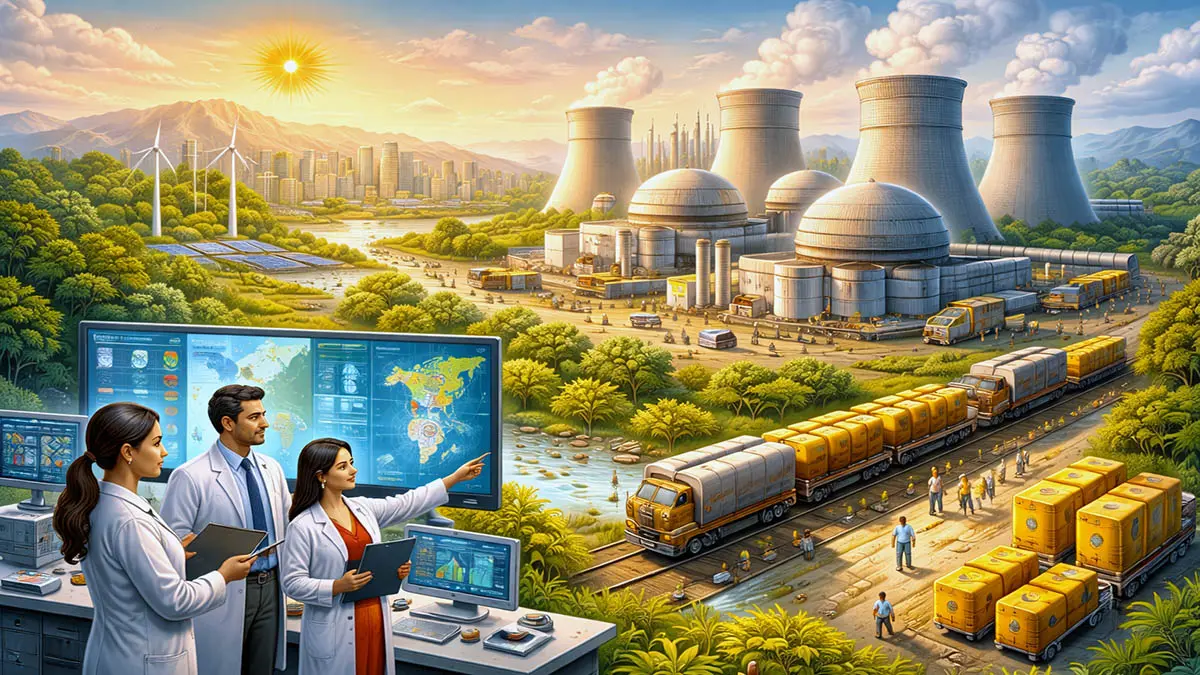
Asian countries are striving to enhance their energy security by exploring new options, including nuclear energy, amid the ongoing economic crises stemming from the war in Iran. This conflict has led to rising oil and gas prices, prompting many nations to reassess their energy strategies.
Most countries in the region, with a few exceptions, heavily depend on crude oil and liquefied natural gas imported from the Gulf region. As economic pressures mount, attention is turning towards nuclear energy as a long-term solution.
Details of the Developments
Reports indicate that countries such as Japan, South Korea, and India have begun taking concrete steps towards developing their nuclear programs. Japan, which had halted its nuclear programs following the Fukushima disaster, is now reconsidering its energy strategy as it seeks to reduce reliance on fossil fuels.
South Korea is also ramping up its investments in nuclear energy, announcing plans to build new reactors. Meanwhile, India, which already has an advanced nuclear program, is looking to expand its nuclear capabilities to meet its growing energy needs.
Background & Context
Historically, nuclear energy has been a controversial option in Asia, with opinions varying regarding its safety and environmental impact. However, the current economic challenges, including soaring energy prices, have prompted governments to rethink this option.
It is noteworthy that nuclear energy offers a low-carbon emissions alternative, making it attractive in light of the global shift towards reducing carbon emissions. This trend aligns with global goals to combat climate change.
Impact & Consequences
Analyses predict that these moves towards nuclear energy will lead to significant changes in global energy markets. Increased reliance on nuclear energy could reduce demand for oil and gas, impacting the economies of producing countries.
Furthermore, this trend may enhance cooperation among Asian countries in the energy sector, as technology and expertise in nuclear energy development can be shared. Such collaboration could contribute to improving regional energy security.
Regional Significance
For the Arab region, the increasing reliance on nuclear energy in Asia may affect oil and gas markets. Producing countries in the Gulf may face new challenges in maintaining stable prices.
Additionally, shifts in Asian energy strategies could open up new opportunities for Arab countries in energy cooperation and nuclear technology, thereby enhancing their role in the global market.
In conclusion, the transformations in energy policies in Asia indicate a significant shift in the global energy landscape, necessitating Arab countries to prepare for the challenges and new opportunities that may arise.