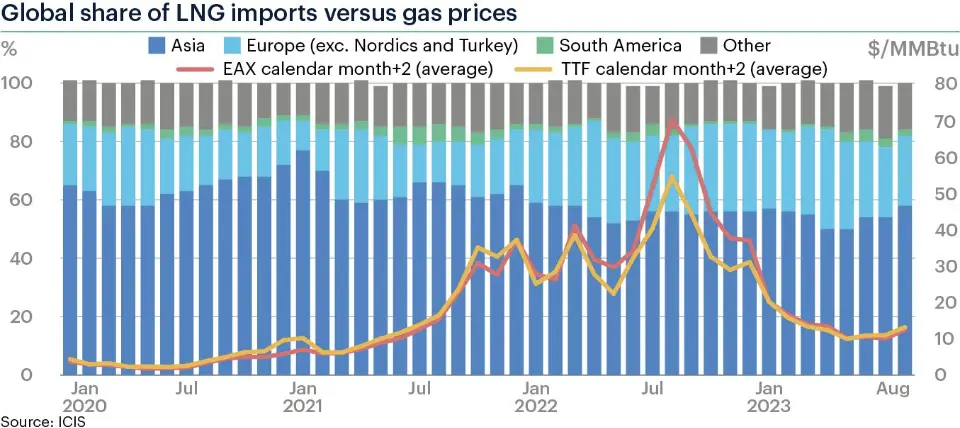
Asia's imports of liquefied natural gas (LNG) experienced their largest decline in over three years in March, with shipments dropping by 8.6% year-on-year, reaching approximately 20.6 million tons. This downturn coincides with escalating tensions from the U.S.-Israeli war against Iran, which has significantly constrained supplies and driven prices higher.
According to vessel tracking data compiled by Bloomberg, global LNG supplies have faced severe pressure due to this conflict, as the closure of the Strait of Hormuz has isolated the market from about 20% of global supplies. Additionally, Qatar, which possesses the world's largest LNG facility, has halted some of its operations.
Details of the Event
Bloomberg Intelligence forecasts that LNG prices in Asia could rise by 50% due to supply disruptions, intensifying competition for spot shipments. Both China and India recorded the largest declines in imports during March, with shipments to each country decreasing by around 20%, while Pakistan's imports plummeted by 70% year-on-year.
This reduction in supplies from the Middle East, coupled with disruptions to Australian gas facilities following a cyclone, has prompted Asian countries like Bangladesh, India, and Japan to seek alternative energy sources, reverting to coal usage. Furthermore, the Vietnamese company VinGroup has requested government approval to replace a LNG project with a renewable energy initiative.
Background & Context
Historically, the Middle East has been a major source of LNG; however, political and economic events can significantly impact supply flows. The ongoing war with Iran, which has escalated in recent years, has complicated the situation, as the closure of the Strait of Hormuz is a critical point for transporting gas to global markets.
Simultaneously, Europe has seen an increase in LNG imports, as Asian buyers have diverted some shipments away from European markets, which require additional gas to replenish storage sites after losing Russian pipeline gas supplies. Western Europe's LNG imports rose by 3.5% in March compared to the same period last year.
Impact & Consequences
These changes in the LNG market are affecting the global economy, as rising prices may lead to increased energy costs in many countries. The decline in supplies from the Middle East could also enhance reliance on alternative energy sources, such as renewables and coal.
Moreover, these developments may prompt shifts in countries' energy strategies, as Asian nations might seek to diversify their energy sources and reduce dependence on LNG from the Middle East. This trend could open new avenues for investment in renewable energy projects.
Regional Significance
For Arab countries, the decline in LNG imports in Asia could impact their exports, particularly for those nations heavily reliant on gas exports. While rising prices may enhance revenue for some countries, they could simultaneously escalate political and economic tensions in the region.
In conclusion, the LNG market in Asia appears to be facing significant challenges, necessitating strategic actions from the involved countries to adapt to these changes and ensure the sustainability of energy supplies.