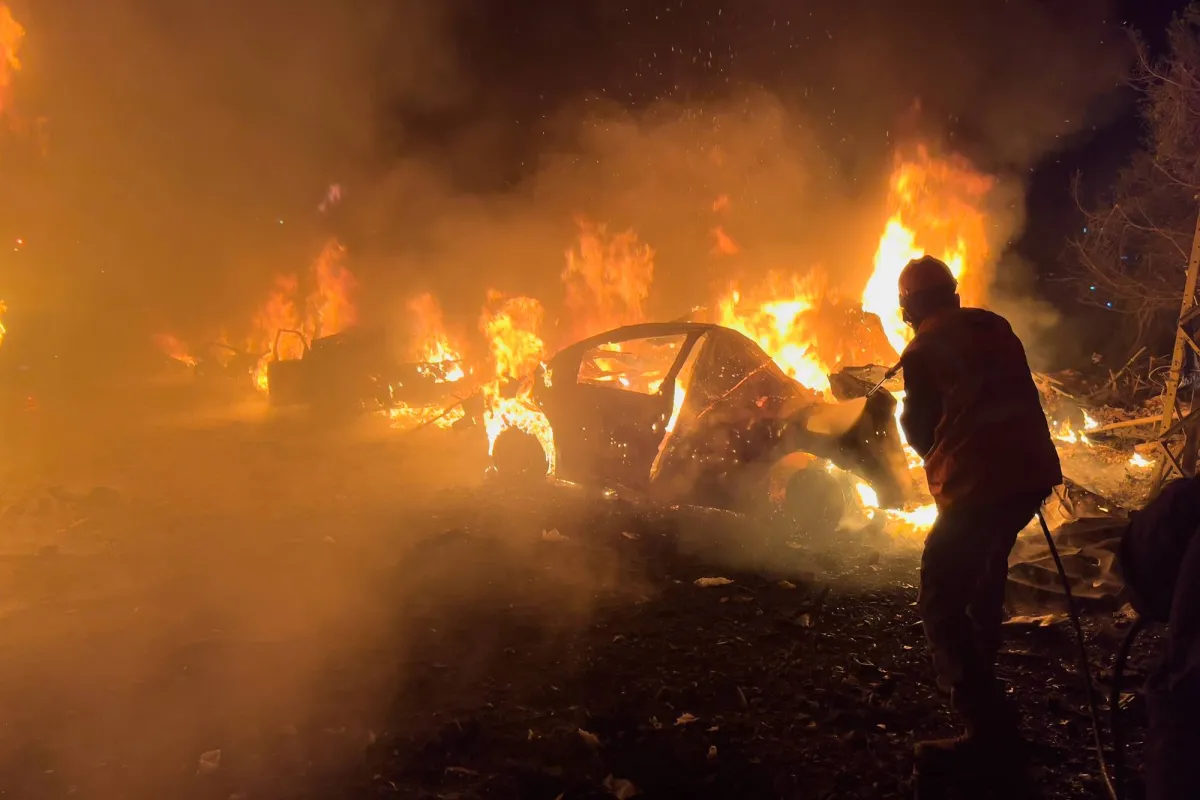
Yusuf Hashim, a prominent leader of Hezbollah, was assassinated early Wednesday in an operation targeting a parking garage in the southern suburb of Beirut. This incident sheds light on serious security breaches that the organization has suffered, with security sources indicating that Hezbollah had addressed these breaches before the outbreak of the recent war, but the situation appears to have changed significantly.
Reports suggest that the assassination is part of a series of operations carried out by Israel against Hezbollah leaders and members of the Iranian Revolutionary Guard since the beginning of the war on March 2. Hashim, who is considered the commander of the southern region for Hezbollah, was one of the most prominent targets.
Details of the Incident
Security sources indicate that the breaches Hezbollah faced prior to the recent war seemed nonexistent at the beginning of the current conflict. These sources attributed this to the party's implementation of strict security measures, including changing communication methods, evacuating centers and apartments, and excluding communication devices. Furthermore, the individuals appointed to new leadership positions were not well-known, complicating intelligence gathering about them.
Despite these measures, Israel was able to carry out limited assassination operations, the most notable being the assassination of Hashim. Reports have shown that the information used by Israel in its operations came from non-Lebanese data, including intelligence gathered from Iran and Palestine.
Background & Context
Since the beginning of the war, Israel has conducted over 1,300 airstrikes on Lebanon, resulting in the deaths of more than 1,300 people, including civilians and children. These operations have demonstrated a significant escalation in Israeli attacks, which have focused on targeting Hezbollah leaders and members of the Iranian Revolutionary Guard.
Israeli operations have not been limited to Lebanon alone; they have also included assassinations of Iranian figures in various regions, reflecting an Israeli strategy aimed at undermining Hezbollah's military capabilities and Iranian influence in the area.
Impact & Consequences
These assassination operations raise questions about the future of Hezbollah in Lebanon, especially amid increasing military and political pressures. Additionally, these operations could lead to a new escalation in the conflict between Israel and Hezbollah, signaling greater tensions in the region.
The revealed security breaches indicate that Hezbollah may face new challenges in maintaining the security of its leadership, which could affect its military strategy in the future. Furthermore, these events may impact the relationship between Iran and Hezbollah, as their cooperation is believed to be tested under these circumstances.
Regional Significance
These developments hold significant importance for the Arab region, reflecting escalating tensions among regional powers. The continuation of Israeli military operations could exacerbate the humanitarian situation in Lebanon, necessitating international intervention to curb the escalation.
Ultimately, the situation in Lebanon remains under scrutiny, with expectations that military operations and assassinations will continue amid rising tensions between Hezbollah and Israel. This situation requires close monitoring by Arab nations and the international community to ensure regional stability.