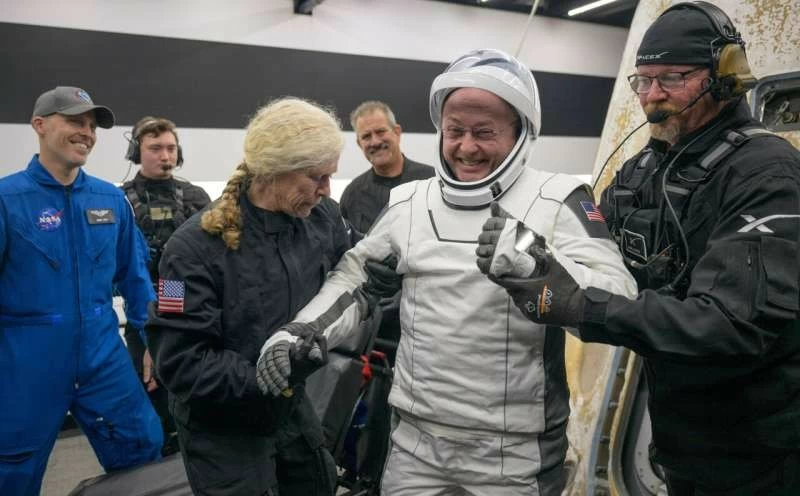
In a rare and concerning incident, veteran American astronaut Mike Fincke disclosed details of a mysterious medical episode he suffered during his mission aboard the International Space Station in January. This episode resulted in NASA's first early mass medical evacuation in its history for health-related reasons.
Fincke, who is 59 years old, suddenly lost the ability to speak while having dinner on January 7. In an interview with the Associated Press, he stated, "It happened suddenly and at an astonishing speed," noting that he felt no pain, but his six colleagues immediately noticed his difficult condition, quickly surrounding him and requesting assistance from doctors on the ground within seconds.
Details of the Incident
Fincke explained that the episode lasted only about 20 minutes, after which he began to feel gradual improvement. He confirmed that he had never experienced anything similar throughout his long career in space. Fincke is considered one of NASA's most experienced astronauts, having joined the agency in 1996 and participated in several missions, including missions to the ISS.
Doctors immediately ruled out a heart attack or choking, but they are still investigating all other possibilities, including the potential connection of the incident to weightlessness or the cumulative effects of prolonged space travel. Fincke had spent five and a half months on the station at the time of the incident, and his total days in space across four previous missions amounts to 549 days, placing him among the elite astronauts.
Background & Context
This incident is intriguing in the context of scientific research on the effects of space on the human body. Scientists are studying the effects of zero gravity on the body, such as loss of bone mass, balance disorders, and changes in circulation and brain function. Previous studies have shown that prolonged stays in space can lead to serious health issues.
Ultrasound devices available on the station contribute to assessing the health conditions of astronauts, and these devices were used to initially evaluate Fincke's condition. However, NASA decided to return Fincke and three of his colleagues to Earth more than a month ahead of schedule in an unprecedented mass evacuation for medical reasons, resulting in the cancellation of his mission and a planned spacewalk.
Impact & Consequences
After returning to Earth, Fincke underwent advanced medical examinations and confirmed that he is in good health now, on the path to full recovery. However, he noted that he cannot disclose additional medical details out of respect for the privacy of astronauts, which NASA is keen to maintain.
The agency is currently reviewing the records of other astronauts to check for similar cases in the past, which may help in better understanding the health impacts of prolonged space travel. This incident could affect future mission plans and increase the importance of researching the health effects of living in weightless environments.
Regional Significance
This incident is significant not only for scientists and researchers in the field of space but also for Arab countries seeking to develop their own space programs. With the increasing interest in space in the region, this incident may enhance awareness of the importance of researching the health effects of space on astronauts, potentially influencing how future space programs are designed.
In conclusion, this incident highlights the importance of ongoing research into the effects of space on the human body and underscores the health challenges astronauts may face during their long missions.