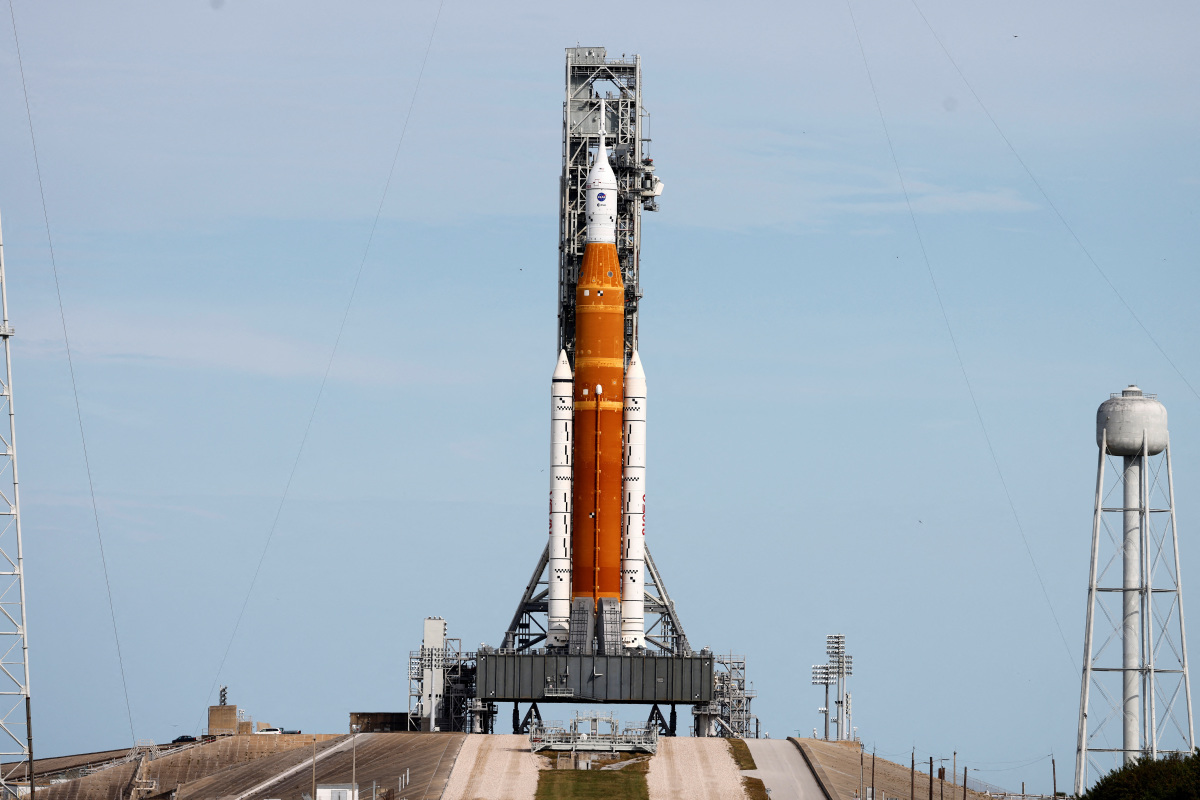
Astronauts on the Artemis II mission have concluded their journey around the Moon, where they gathered rich astronomical observations before returning to Earth. The mission, which commenced on April 7, saw numerous historic achievements, including unprecedented views of the lunar surface.
During the journey, the crew of four astronauts spent about seven hours observing the Moon's landscapes, describing their view of the lunar surface as an indescribable experience. Victor Glover, one of the astronauts, noted that humans were not evolved to see what they witnessed, reflecting the magnificence of the experience.
Astronomical Phenomena Observed
The crew witnessed several astronomical phenomena, including a solar eclipse when the Moon passed in front of the Sun, along with flashes of light on the lunar surface due to meteorite impacts. Kelsey Young, the mission's lead scientist, confirmed that these observations will open new horizons for scientific research.
After achieving a record distance, surpassing the distance traveled by the Apollo 13 astronauts in 1970 by more than 6000 kilometers, the crew expressed pride in this accomplishment. Jeremy Hansen, another astronaut, called on future generations to challenge this record.
Background & Context
The Artemis II mission is part of NASA's space exploration program, which aims to return humans to the Moon and explore Mars. After more than 50 years since the Apollo program, the United States seeks to regain its leadership in space.
Historically, lunar missions have represented the pinnacle of human achievement in space exploration. With advancements in technology, these missions have become safer and more efficient, allowing scientists and researchers to study space more deeply.
Impact & Consequences
This mission is a significant step towards achieving larger goals in space exploration, enhancing humanity's ability to travel to distant places. Additionally, the observations collected by the crew will contribute to a better understanding of astronomical phenomena.
The importance of this mission extends beyond scientific achievements; it also reflects the spirit of international cooperation in space, as astronauts from various nationalities participated in this mission, reinforcing the idea of teamwork in space exploration.
Regional Significance
These achievements in space are significant for the Arab region, as they open doors for Arab countries to develop their own space programs. With increasing interest in space, Arab nations can benefit from these experiences to enhance their scientific and technological capabilities.
Furthermore, international cooperation in space can contribute to building new partnerships between Arab countries and advanced nations in this field, enhancing opportunities for research and development.