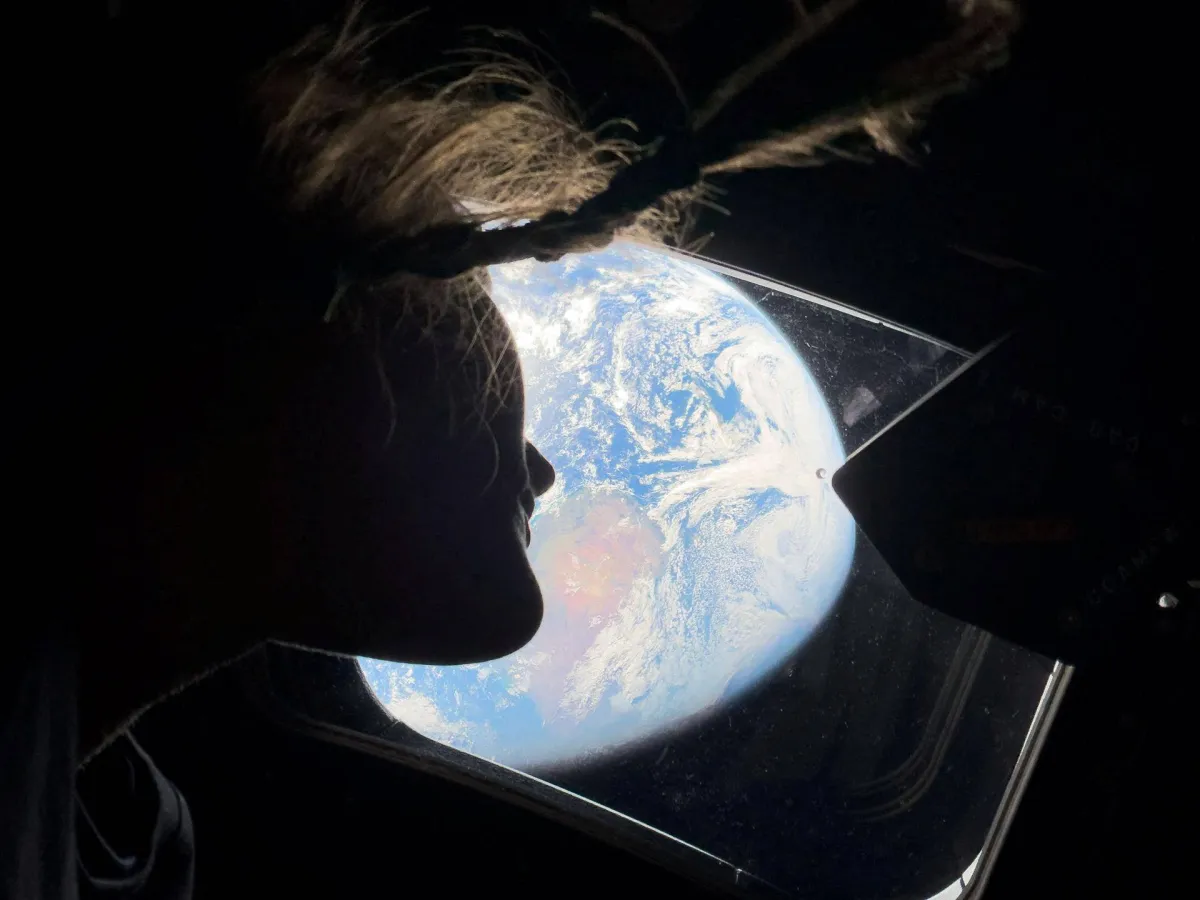
The astronauts aboard the Artemis spacecraft are preparing for a 40-minute communication blackout with Earth as they pass behind the Moon. During this time, the Earth will shrink in their rearview mirror, making them feel farther from home than ever before.
Despite this, the four astronauts have maintained constant communication with the control center in Houston, Texas, where the team's words create a link to home, providing them with reassurance. However, as they approach the Moon, lunar terrain will block radio and laser signals, resulting in a communication loss.
Details of the Event
This communication blackout is expected to occur at 11:47 PM British Summer Time on Monday. During this period, the astronauts will be completely alone, each lost in their thoughts and feelings as they travel through the darkness of space. These moments represent profound isolation and absolute silence.
The Artemis mission commander, Victor Glover, expressed his hope that the world would use this time for reflection, stating: "When we are behind the Moon and cut off from everyone, let’s consider it an opportunity. Let us pray to the Creator and hope to reconnect."
Background & Context
Historically, Apollo astronauts faced similar experiences, where communication was lost during their missions to the Moon. Astronaut Michael Collins, who was aboard Apollo 11, experienced a 48-minute communication blackout while crossing behind the far side of the Moon, describing those moments as a feeling of "true solitude" and "isolation from any known life."
These historical experiences reflect the challenges faced by astronauts during their journeys and highlight the importance of communication with Earth, even in the most difficult moments.
Impact & Consequences
This communication blackout highlights the risks faced by space missions and emphasizes the importance of advanced technology in maintaining communication between astronauts and control centers. It also reflects the challenges that future missions may encounter, especially as space exploration evolves.
These moments require astronauts to rely on their individual skills and capabilities, underscoring the significance of training and psychological preparation to cope with isolation.
Regional Significance
The experience of the Artemis astronauts may inspire new generations in the Arab world, reflecting the challenges and achievements in the field of space. With increasing interest in space in the region, these experiences could serve as a catalyst for developing local space programs.
Furthermore, these moments of isolation may enhance the importance of international cooperation in space, opening new avenues for collaboration between Arab nations and leading countries in this field.