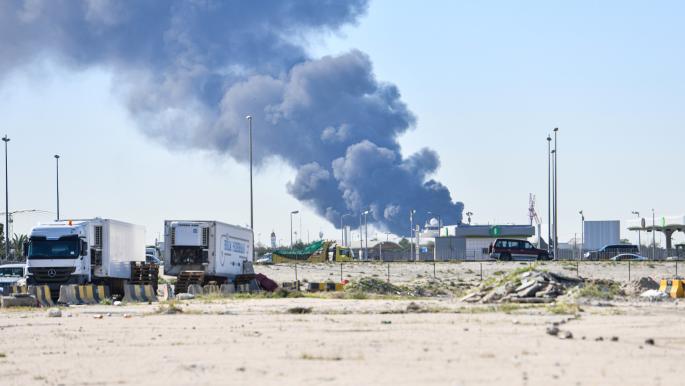
The Ahmadi Port Refinery in Kuwait was subjected to a malicious attack by drones early today, leading to fires erupting in several operational units. The Kuwait Petroleum Corporation confirmed the incident, stating that firefighting teams are working to control the flames.
This attack comes at a sensitive time as the region experiences increasing tensions, with assaults on vital facilities in Gulf countries on the rise. This incident serves as evidence of the escalating security threats facing Kuwait, which is one of the main oil-producing countries.
Details of the Incident
Reports indicate that the fire broke out in several units within the refinery, necessitating a swift response from firefighting teams. Some operational units have been shut down as a precautionary measure, while teams are working to contain the fire and prevent its spread to other areas of the refinery.
The extent of the damage or the impact of the incident on oil production has not yet been announced, but the Kuwait Petroleum Corporation confirmed that it will assess the damage once the flames are under control. Furthermore, the party responsible for this attack has not been disclosed, raising questions about the political and security implications of this assault.
Background & Context
The Ahmadi Port Refinery is one of the largest refineries in Kuwait and plays a vital role in meeting local and international market demands for oil and petroleum products. In recent years, Kuwait has seen an increase in security threats, particularly with the rising tensions in the region due to political and military conflicts.
Drone attacks have become an increasing phenomenon in the region, having been used in several assaults on oil facilities in Saudi Arabia and the UAE. These attacks reflect a shift in modern warfare tactics, where drones have become an effective means of executing strikes without the need for direct military presence.
Impact & Consequences
This attack is expected to have negative repercussions on the oil sector in Kuwait, especially if attacks continue or recur. This could lead to increased operational costs and disrupt production, adversely affecting the Kuwaiti economy, which heavily relies on oil revenues.
Moreover, this incident may contribute to rising political tensions in the region, as Kuwait or other Gulf states may respond by increasing security measures to protect their vital facilities. This could potentially escalate conflicts in the region, negatively impacting regional stability.
Regional Significance
This incident serves as a wake-up call for other Arab countries that depend on the oil and gas sector. Any assault on oil facilities can affect global oil prices, which in turn impacts the economies of consuming nations.
The rise in drone attacks raises concerns about regional security, as the scope of assaults could expand to include other countries in the region, complicating the security landscape in the Middle East.
In conclusion, the situation in Kuwait remains under observation, with everyone looking forward to the outcomes of investigations into this attack and the future security measures that will be implemented.