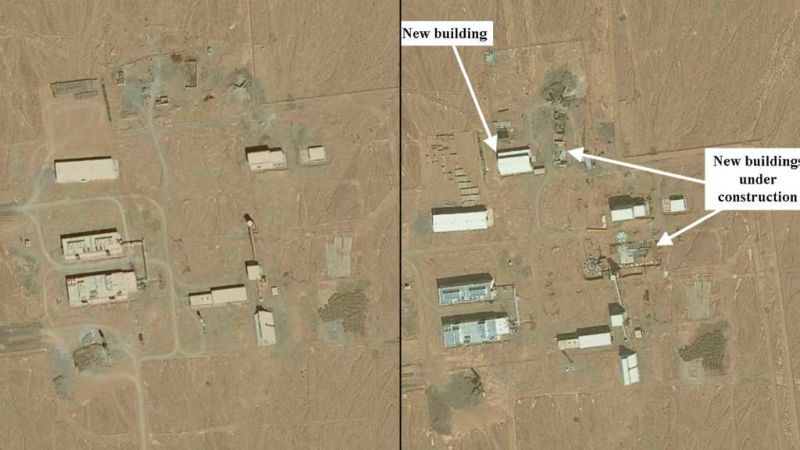
A yellowcake production facility in Ardakan, located in Yazd province in central Iran, was attacked, as reported by the Iranian Atomic Energy Agency on Friday, March 27. Despite the attack, the agency confirmed that no radioactive or toxic materials had leaked outside the complex, alleviating public safety concerns.
Yellowcake, also known as concentrated uranium oxide, is an intermediate stage in the nuclear fuel cycle. This material is produced after extracting uranium from its natural ores and separating impurities. It is not ready-to-use nuclear fuel but represents the beginning of the conversion process into materials suitable for use in nuclear reactors.
Details of the Incident
Yellowcake is not a completely pure substance; it consists of a mixture of uranium oxides, which makes its physical properties vary from one facility to another. It is produced through the mining of uranium ores, where the ore is chemically processed to separate uranium from other rocks and minerals, then filtered, concentrated, and dried to obtain the powder known as yellowcake.
Although yellowcake contains radioactive materials, its radiological risk is considered limited compared to enriched nuclear materials. However, it requires safe handling, transportation, and storage due to its chemical toxicity and the potential for exposure to its dust. Therefore, it is typically packaged in sealed barrels and transported to conversion facilities under strict controls.
Background & Context
Yellowcake is a crucial component of nuclear fuel programs, as it is used in enrichment processes or converted into other materials such as uranium dioxide. In recent years, Iran has experienced increasing tensions regarding its nuclear program, making it a focal point for the international community. The attack on the factory comes amid these tensions and raises questions about nuclear safety in the region.
Historically, there have been concerns that any assault on nuclear facilities could lead to environmental and health disasters. However, the attack on the yellowcake factory, despite its seriousness, is not considered on par with major nuclear disasters like attacks on operational nuclear reactors.
Impact & Consequences
The greatest risk arising from the attack on the yellowcake factory is the potential dispersion of uranium-contaminated dust, which could lead to local air and soil contamination. In the event of a leak, the health impact would be more confined to workers, emergency crews, and residents near the strike site, rather than widespread as some might imagine.
Chemical and radiological toxicity pose potential risks, but chemical toxicity is often of greater concern in occupational exposure scenarios. Therefore, any potential leak requires a swift response from emergency teams to ensure the safety of workers and residents.
Regional Significance
This incident serves as a reminder to the international community of the fragility of security conditions in the region. This attack could escalate tensions between Iran and Western nations, especially amid ongoing negotiations regarding Iran's nuclear program. Additionally, any radioactive leak could affect neighboring countries, necessitating vigilance and coordination among Arab nations to address any potential fallout.
In conclusion, the question of nuclear safety in Iran and the potential impacts of this incident remains open. Close monitoring by international and local agencies is required to ensure the situation does not worsen.