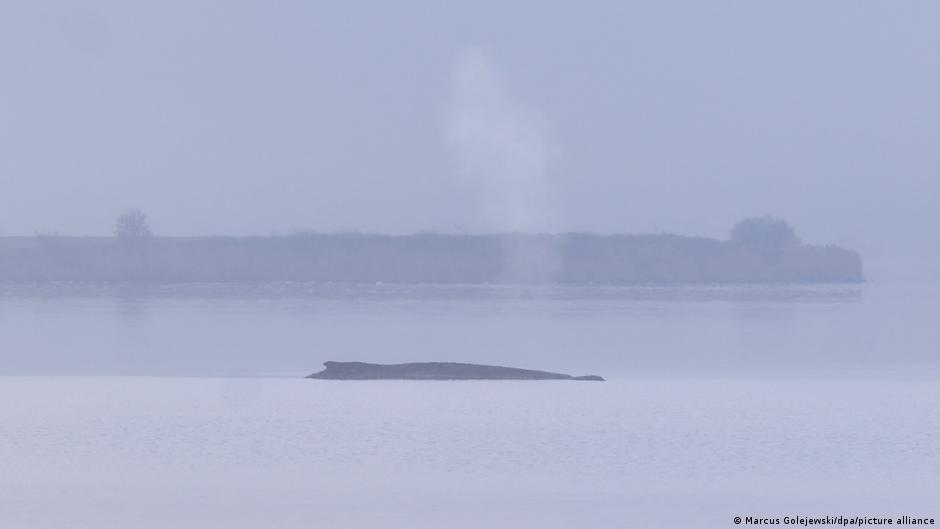
Local authorities in the German state of Mecklenburg-Vorpommern have announced the end of rescue efforts for the stranded seahorse, creating a no-go zone around it to allow it to 'die peacefully.' This decision came after a week of intensive attempts that did not produce any positive results, as the state's environment minister, Till Backhaus, indicated that all options had been explored without success.
The seahorse, believed to be a young male measuring between 12 and 15 meters, was found stranded in shallow waters near Poel Island, after being washed ashore at the Timmendorfer Strand resort on March 23. The animal showed signs of severe weakness, with irregular breathing and limited movement.
Details of the Incident
During an emotional press conference, Backhaus confirmed that everything possible had been done to save the seahorse, but he added that the animal had chosen this path for itself. Experts noted that any further attempts to move it could be considered cruelty due to its poor health condition.
The seahorse had suffered from severe skin problems due to low salinity levels in the water and still had remnants of fishing nets in its mouth, which had not been completely removed. It was initially rescued using excavators but got stuck again in the waters of Vismar Bay before attempting to escape with the help of experts using sound effects.
Background & Context
Seahorses are considered endangered species and typically inhabit the cold waters of the Atlantic Ocean. However, the environmental conditions in the Baltic Sea, including a lack of food, make it difficult for these marine creatures to survive. Reports have shown that the seahorse had been wandering in the Baltic Sea for nearly four weeks before it was found stranded.
There is a growing incidence of marine animals straying from their natural paths, reflecting the environmental changes affecting their habitats. This phenomenon raises concerns among scientists and environmentalists about the impact of climate change and pollution on marine life.
Impact & Consequences
The decision to end the rescue efforts highlights the challenges faced by marine animals under current environmental conditions. Experts pointed out that this case represents a unique tragedy but also serves as a reminder of the urgent need for action to protect the marine environment.
The seahorse is a symbol of biodiversity, and its loss could have negative effects on the ecosystem in the region. Additionally, this incident may impact tourism in the area, as marine life observation is part of the tourist attraction.
Regional Significance
Although the incident occurred in Germany, environmental issues and climate change affect all countries, including Arab nations. With increasing environmental challenges, Arab countries must adopt effective policies to protect marine life and the environment.
Preserving biodiversity and protecting marine creatures should be part of the national strategies of Arab countries, as the sea represents an important source of food and economy.