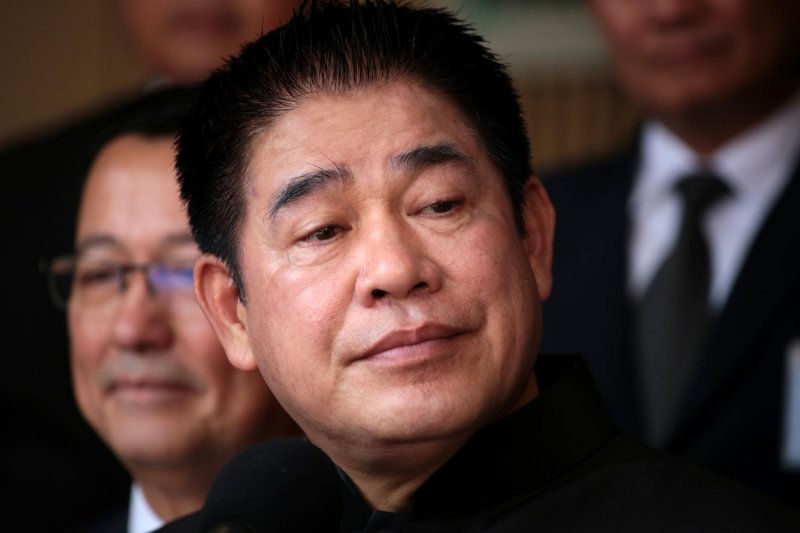
The Thai Klathum Party chose to abstain from voting rather than oppose Anutin Charnveerakul in the recent parliamentary elections, reflecting a calculated political strategy aimed at maintaining relations with the ruling party. This decision comes at a critical time following the victory of the Bhumjaithai Party in the elections held on February 8, where it secured 293 votes sufficient to form the new government.
The decision to abstain from voting by the Klathum Party, led by Thamanat Prompao, comes amid reports that the party will only support Anutin if included in the government coalition. This decision reflects the party's desire not to burn bridges with Bhumjaithai, as it may need to collaborate with them in the future.
Details of the Event
In the parliamentary elections, the Bhumjaithai Party secured 191 seats, while the Pheu Thai Party came in third with 74 seats. This situation makes the Pheu Thai Party a necessary but weak partner, allowing the Klathum Party an opportunity to play a larger role in the future. The voting results showed 86 abstentions, which became more interesting than the supportive votes.
The Klathum Party, which holds 58 seats, chose to avoid voting against Anutin, meaning it did not declare itself as part of an opposition bloc to Bhumjaithai. Instead, it opted for a middle path, allowing it to maintain negotiating relationships with the ruling party.
Background & Context
Historically, Thailand has witnessed many complex political alliances, requiring parties to work together to form stable governments. In recent years, there have been significant shifts in the balance of power among parties, leading to new alliances and changes in leadership.
The Bhumjaithai Party, led by Anutin, achieved notable success in the recent elections, reflecting a decline in the popularity of traditional parties like Pheu Thai. This shift in the political landscape provides the Klathum Party with an opportunity to expand its influence in the upcoming government.
Impact & Consequences
The Klathum Party's decision to abstain from voting is a strategic move aimed at increasing its influence in the next government. By not joining the government at this time, the party retains greater flexibility, allowing it to support or oppose various issues as needed.
This decision may also affect the relationship between the Bhumjaithai Party and the Pheu Thai Party, as the Klathum Party can be used as leverage against Pheu Thai, making it less capable of imposing its terms. Should any tensions arise within the government, the Klathum Party may become a ready alternative.
Regional Significance
The Arab region is also witnessing similar political transformations, where political conditions require parties to work together to form stable governments. The Klathum Party's experience in Thailand could serve as a lesson for Arab parties on how to manage political alliances amid changing circumstances.
In conclusion, the political situation in Thailand remains volatile, with alliances capable of changing rapidly. The Klathum Party may find itself in a position to benefit from any changes that occur within the government, reflecting the importance of strategy in politics.