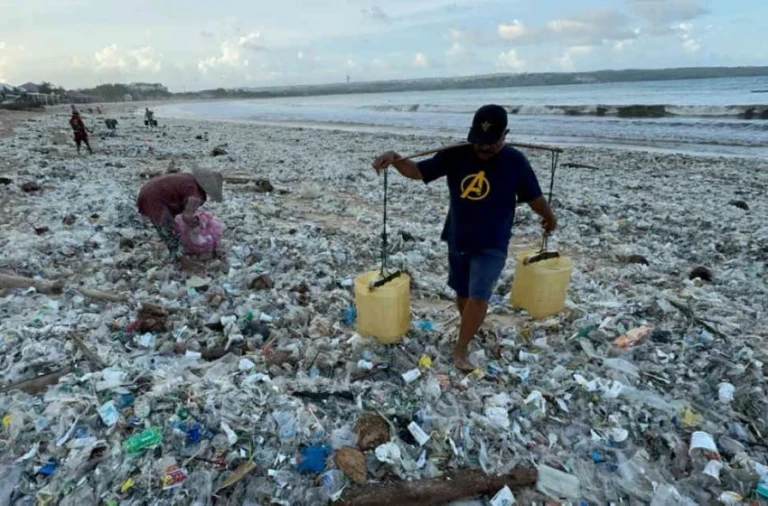
The Indonesian government of Bali has officially announced a ban on the disposal of organic waste at the Suwung landfill starting April 1, 2026. This decision is part of the government's efforts to promote a source-based waste management system, in response to directives from the Indonesian Minister of Environment.
I Made Dwi Arbeni, head of the Forestry and Environment Department in Bali, explained that this modification in operations means that the landfill will only accept non-organic or residual waste. This approach aims to reduce open dumping practices and decrease the amount of waste, particularly organic waste, which constitutes about 65% of the total waste in Bali.
Details of the Ban
Organic waste, such as food scraps, household waste, and paper, is one of the largest contributors to environmental pollution, leading to the emission of methane gas, a potent greenhouse gas. Arbeni noted that organic waste has represented the bulk of waste at the Suwung landfill, contributing to increased foul odors and environmental pollution.
Therefore, the government seeks to encourage source-based waste management, directing citizens to process organic waste at home using simple methods such as composting bins. A total of 42 units for waste processing have been developed in the Badung area, along with the distribution of over 141,000 compost bags to residents.
Background & Context
Historically, Indonesia, particularly Bali, has faced significant waste management issues. With the increasing number of tourists, the amount of waste has surged dramatically, exacerbating environmental crises. The government has begun to take serious steps to address this problem by improving waste management infrastructure and raising environmental awareness among citizens.
This decision is part of a broader national strategy aimed at achieving sustainable waste management, as the government seeks to reduce reliance on landfills and promote the concept of a circular economy.
Impact & Consequences
This decision is expected to have a significant impact on the environment in Bali. By reducing the amount of organic waste sent to the landfill, methane emissions can be decreased, improving air and water quality. Additionally, this decision will encourage innovation in waste processing methods, potentially leading to the creation of new job opportunities in this sector.
Moreover, enhancing source-based waste management will increase environmental awareness among residents, contributing to improved behaviors towards waste and reinforcing the concept of sustainability.
Regional Significance
Bali's experience in waste management serves as a model for many Arab countries facing similar challenges. With growing populations and urban growth, Arab cities encounter significant waste management issues. The lessons learned from Bali can assist these countries in developing effective strategies to tackle waste and promote environmental sustainability.
In conclusion, the Bali government's decision represents an important step towards improving waste management and reducing its environmental impact. Enhancing environmental awareness and implementing innovative waste processing methods can contribute to achieving a more sustainable environment for all.