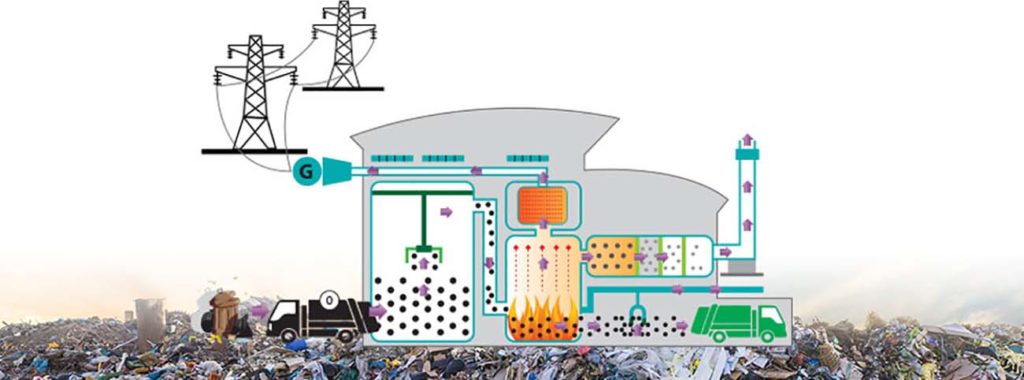
The government of Banjarmasin, located in South Kalimantan, Indonesia, has announced its collaboration with two neighboring regions, namely the Regency of Banjar and the Regency of Barito Kuala, in a project aimed at converting waste into electrical energy. This announcement was made during a meeting held on Friday, where the Mayor of Banjarmasin, Haji Yamin, emphasized the importance of this partnership in addressing the growing waste problem in the area.
During this meeting, practical steps for implementing the project were discussed, with the mayor meeting with the heads of the neighboring regions, Regent of Banjar, Saidi Mansur, and Regent of Barito Kuala, Barhul Ilmi. This collaboration is considered part of a national initiative known as the "Waste to Energy Project," which has been designated as a pilot site in Banjarmasin and the surrounding areas.
Event Details
This project is a response to the waste accumulation problem faced by the three cities, where the daily waste amount reaches approximately 678 tons. The government aims, through this project, to change the prevailing perception of waste, viewing it as a source of energy rather than a burden on society.
During the meeting, four potential sites for waste-to-energy conversion were proposed, including waste processing locations in Barito Kuala and Banjarmasin, as well as other sites in the Regency of Banjar. The Ministry of Environment will study these sites to determine the most suitable for project implementation.
Background & Context
Indonesia is among the countries facing significant challenges in waste management, with the amount of waste continuously increasing due to population growth and urban expansion. Studies have shown that many Indonesian cities suffer from a lack of necessary infrastructure for waste processing, leading to environmental degradation.
In recent years, the Indonesian government has begun to take serious steps to address this issue through innovative projects aimed at converting waste into energy. Several initiatives have been launched in various cities, reflecting the government's commitment to improving waste management and promoting environmental sustainability.
Impact & Consequences
The waste-to-energy project is expected to have a significant impact on both the environment and the local economy. In addition to reducing the amount of waste sent to landfills, the project will contribute to the production of electrical energy, thereby decreasing reliance on traditional energy sources.
This project may also open new job opportunities in the fields of waste management and renewable energy, boosting the local economy and creating new employment opportunities. This collaboration among the three regions serves as a model for enhancing partnerships between local governments to achieve sustainable development goals.
Regional Significance
Many Arab countries face similar challenges in waste management, as the quantities generated increase due to population growth and urban expansion. The experience of Banjarmasin in converting waste to energy could serve as an inspiration for Arab nations seeking to improve waste management and enhance environmental sustainability.
Arab countries can benefit from this experience by adopting similar projects, contributing to improved quality of life and reduced environmental impact. Additionally, cooperation among Arab countries in this field could facilitate knowledge and experience exchange, enhancing efforts towards achieving sustainable development.