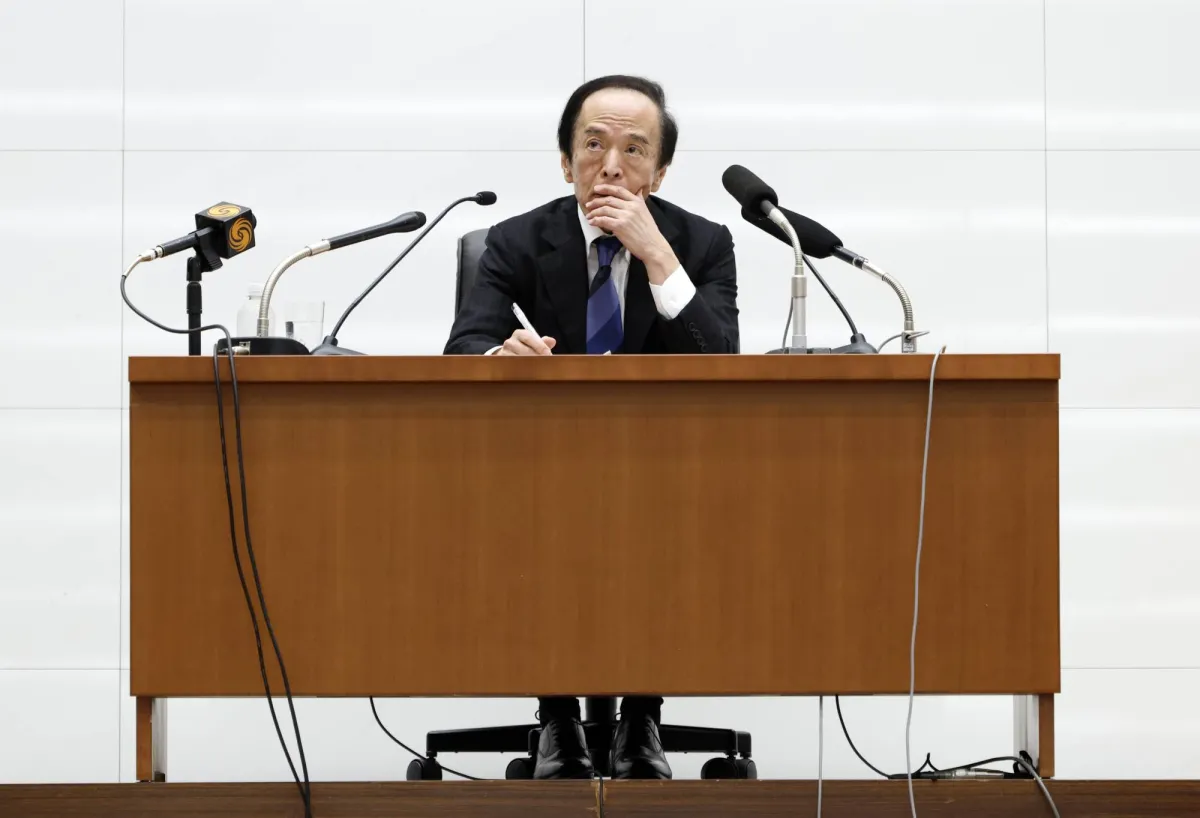
The Bank of Japan has maintained its interest rates at current levels, yet Governor Kazuo Ueda indicated the possibility of raising them in the upcoming months due to increasing inflationary pressures linked to developments in the Middle East and surging energy prices.
According to a report published by Reuters, three members of the central bank's board have called for an increase in borrowing costs, reflecting growing concern within the monetary institution regarding the future of inflation. In the press conference following the bank's April meeting, Ueda confirmed that the uncertainty surrounding the conflict in the Middle East complicates predictions about the economy and price trends.
Details of the Event
Ueda clarified that there are dual risks of slowing growth on one hand and rising inflation on the other, particularly during the fiscal year 2026. He noted that the bank needs more time to assess the impact of these developments, given the volatility in energy markets and its potential influence on corporate and consumer behavior.
With core inflation in Japan approaching 2%, Ueda pointed out that companies may start passing on rising costs of oil-related goods to consumers, potentially leading to a new wave of price increases. The bank has also significantly revised its price forecasts upwards, indicating that rising oil prices could drive up the costs of a wide range of goods and services, even if temporarily.
Context and Background
These developments come at a time when the global economy is experiencing increasing pressures due to geopolitical conflicts, particularly the war in Iran. This war has significantly impacted energy prices, leading to heightened inflationary pressures in many countries, including Japan.
In this context, Ueda mentioned that the current monetary policy is based on the principle of ignoring inflation resulting from temporary supply shocks, such as rising oil prices. However, if the effects of these shocks extend to core inflation, raising interest rates becomes a necessity.
Implications and Effects
If inflation continues to rise, the Bank of Japan may be forced to take tightening measures, which could impact economic growth. Ueda acknowledged the common factors with the oil crisis experienced in the 1970s, noting that the current low interest rate compared to neutral economic levels could lead to economic volatility.
The decision to maintain interest rates in Japan reflects a delicate balance between supporting growth and monitoring inflation, at a time when external pressures, particularly from energy markets, are increasing. Nevertheless, the final decision remains contingent on developments in the global economy, primarily the trajectory of the conflict in the Middle East.
Impact on the Arab Region
The developments at the Bank of Japan indirectly affect the Arab region, as rising energy prices due to conflicts in the Middle East may increase inflationary pressures in Arab countries. Additionally, the monetary policies of the Bank of Japan could influence investment flows to the region.
In conclusion, it appears that the Bank of Japan is heading towards a more stringent phase in its monetary policy, with the final decision remaining dependent on global economic developments, necessitating close monitoring by investors and policymakers in the region.