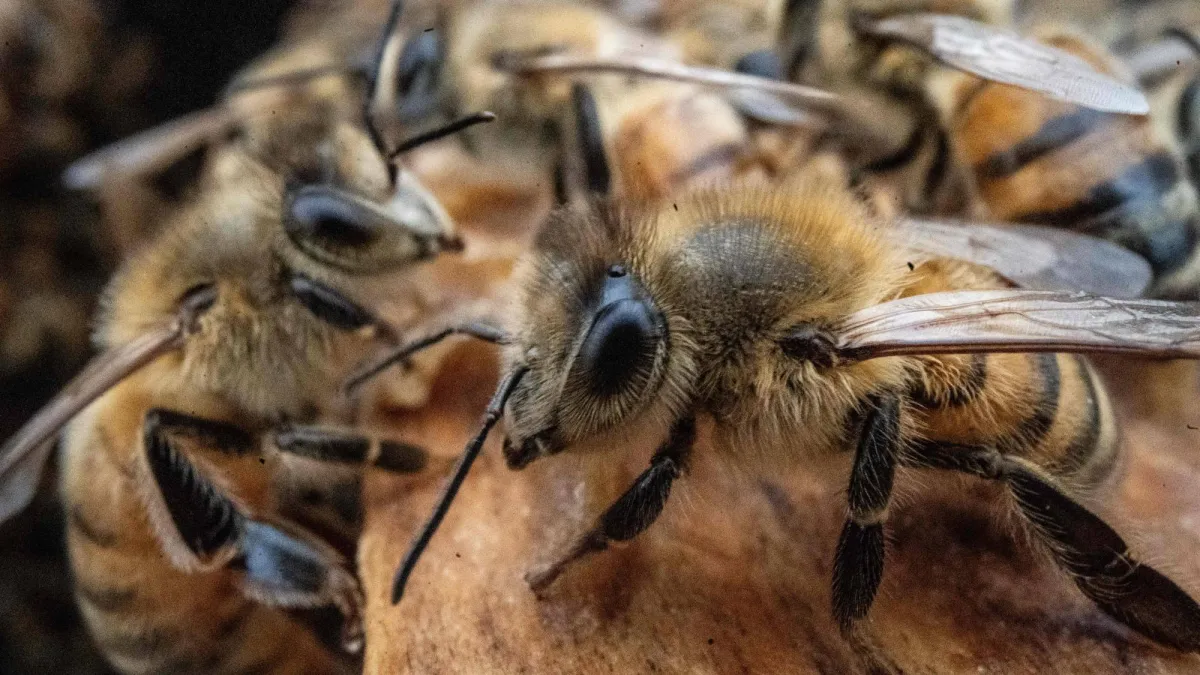
A recent study conducted in the United States has shown that worker bees adopt a democratic mechanism for selecting queens in their hives, altering our conventional understanding of social structures in the bee world.
The study, published in the journal "Insect Biochemistry and Molecular Biology," confirmed that worker bees choose the larvae that will become queens by feeding them a natural substance known as "youth hormone," which plays a key role in the insect's growth and reproductive capabilities.
Details of the Study
A research team from Pennsylvania State University conducted experiments on worker bees, providing them with quantities of youth hormone. This hormone was transferred to the larvae through feeding, increasing their chances of becoming queens. The researchers emphasized that this study is the first of its kind to clarify how worker bees determine the social hierarchy within the hive, indicating that life inside the hive is not subject to a strict hierarchy as previously thought.
Researcher Itai Amsalem stated, "Since all females share the same DNA, the process of transforming a larva into a queen serves as a clear model of how genetic patterns can evolve into different forms." He added that these findings could help improve beekeeping practices for commercial purposes, given the importance of bees in pollinating plants.
Background & Context
Historically, previous studies focused on queens and worker bees as fixed roles, but this study opens new avenues for understanding social dynamics in the bee world. Worker bees, representing the general populace, play a pivotal role in determining the future of the hive, reflecting a more democratic system than previously believed.
Moreover, the morphological differences between queens and worker bees reflect the biological diversity in the bee world, where queens are larger and capable of reproduction, while worker bees are smaller and unable to reproduce.
Impact & Consequences
This study represents a significant step towards understanding how hormonal factors influence the development of bee societies. The experiments demonstrated that worker bees play a crucial role in selecting queens, which may affect how beekeeping practices are managed in the future.
Additionally, the results could contribute to developing new strategies to enhance queen production, which is vital in light of the environmental challenges facing bees globally.
Regional Significance
In the Arab region, where bees play an important role in agriculture and pollination, these discoveries could help improve beekeeping methods and increase productivity. Understanding the social dynamics within bee hives may assist farmers in making better decisions regarding hive management.
In conclusion, this study highlights the importance of scientific research in understanding ecological systems and opens new avenues for comprehending how insect societies operate in general.