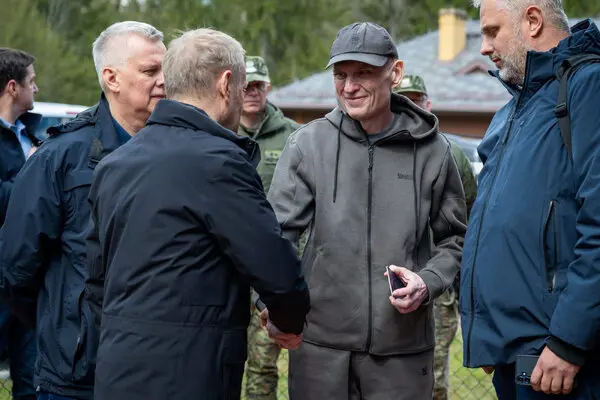
In a significant move, Belarus announced on Tuesday the release of five prisoners in an exchange with Russia and other countries, reflecting complex diplomatic efforts involving multiple nations. Among those released is Belarusian journalist Andrei Pochobut, who has Polish roots and is considered a leading critic of the Belarusian government. This exchange comes after a period of heightened tensions between Poland and Belarus, with relations between the two countries notably deteriorating since Pochobut's arrest in 2021.
Polish Foreign Minister Radoslaw Sikorski stated during a joint press conference with U.S. envoy John Kowal, who played a crucial role in negotiating this exchange, that they are delighted to have Pochobut back after 1860 days in a high-security prison. He described him as a freedom hero and emphasized that his return represents a victory for justice.
Details of the Exchange
The exchange also included the release of three individuals linked to Poland, including a Catholic priest accused of espionage, as well as a third unidentified person. Additionally, citizens from Moldova were released, reflecting the complexity of security relations in the region. In return, Belarus handed over Alexander Butyagin, a Russian archaeologist, Nina Popova, the wife of a Russian military officer, and Alexander Bilan, a former security official from Moldova.
This move comes at a sensitive time, as pressures on Belarus increase due to its supportive stance towards Russia in the Ukrainian conflict. The Russian Federal Security Service indicated that those released from Moldova were officers in the Moldovan intelligence services.
Background & Context
Historically, Belarus under the leadership of Alexander Lukashenko has been a close ally of Russia, making it a focal point of geopolitical tensions in the region. Since 2020, the country has witnessed widespread protests against the government, leading to mass arrests and international outcry over human rights violations. Pochobut's arrest was part of this crackdown, provoking strong reactions from the Polish government and the international community.
Poland, a NATO member, supports Ukraine in its struggle against Russia. Therefore, any move from Belarus could significantly impact the balance of power in the region. This exchange may represent a new beginning in relations between Poland and Belarus, despite ongoing challenges.
Impact & Consequences
This step carries significant implications for international relations, reflecting diplomacy's ability to achieve positive outcomes even in times of tension. It also highlights the role of the United States in mediating between conflicting nations. This exchange could lead to improved relations between Poland and Belarus, potentially contributing to regional stability.
Moreover, this exchange could affect Russia's position, which may feel concerned about the improving relations among its neighbors. The release of detainees might also help ease internal tensions in Belarus, opening the door for further political reforms.
Regional Significance
Although this event may seem distant from the Arab region, it underscores the importance of diplomacy in resolving conflicts. Amid the multiple crises facing Arab nations, this experience could serve as a model for mediation and negotiation efforts. Additionally, relations between countries can impact regional stability, making it essential to monitor such developments.
In conclusion, this exchange represents a positive step in international relations, reflecting the ability of nations to overcome differences through dialogue and negotiation. The improvement in relations between Belarus and Poland may have far-reaching effects on security and stability in the region.