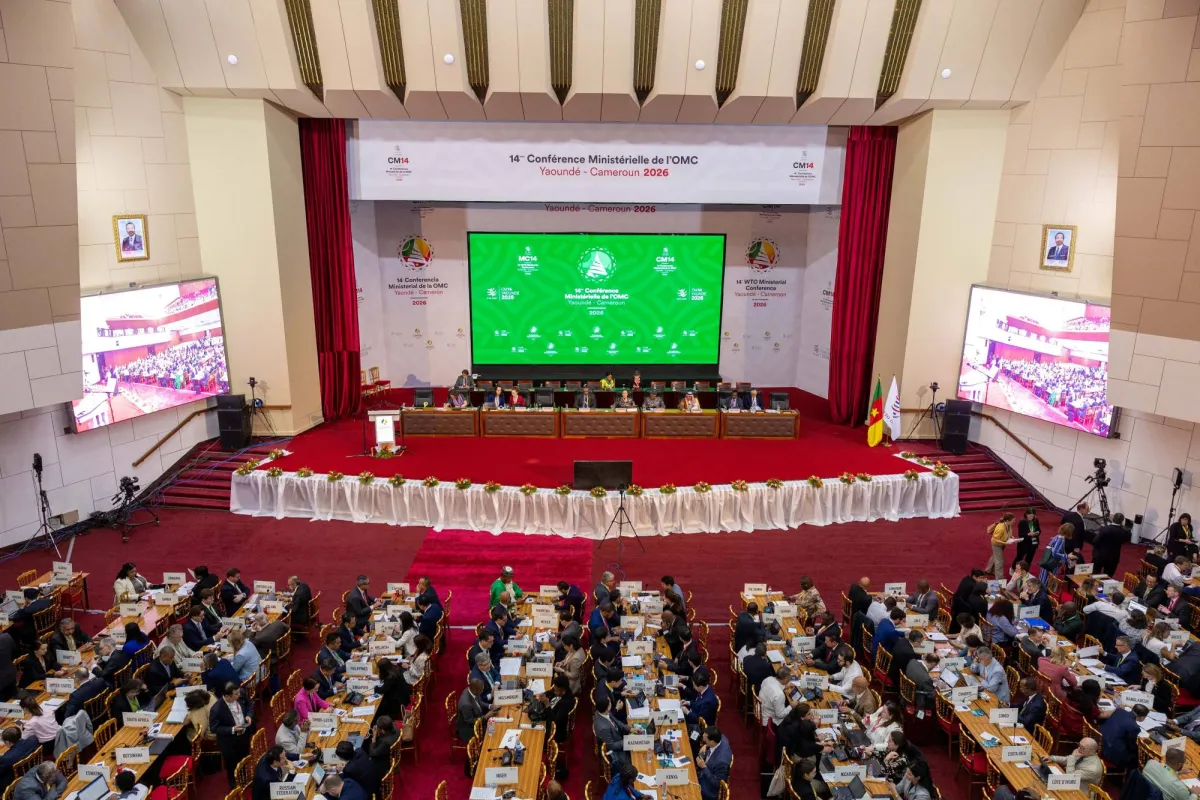
The World Trade Organization's talks ended in a deadlock early Monday after Brazil obstructed the United States and other countries' attempts to extend the freeze on tariffs for electronic transmissions. This failure is considered a new blow to the organization, which faces increasing challenges amid rising trade disputes among nations.
The Director-General of the organization, Ngozi Okonjo-Iweala, stated that the freeze on electronic trade tariffs has ended, granting countries the right to impose tariffs on digital goods such as downloads and streaming services. Nevertheless, she expressed hope for the possibility of reinstating the freeze, noting that Brazil and the United States are seeking to reach an agreement on the matter, according to Reuters.
Details of the Event
Okonjo-Iweala said, "They need more time, and we did not have enough time here." Although expectations were low before the meeting, the failure to agree on extending the tariff freeze is seen as a serious setback for the WTO, which struggles to maintain its position amid an increasing trend of countries circumventing its rules. However, the talks in Cameroon made progress in drafting a comprehensive reform plan for the organization, although agreements remain pending.
Cameroon's Minister of Trade, Luc Magloire Mbarga Atangana, the conference president, indicated that the organization's talks will resume in Geneva, where they are expected to be held in May next year. Peter Kyle, the UK Minister for Business and Trade, described the failure to reach a collective decision in Yaoundé as a "major setback for global trade."
Background & Context
The meeting in Yaoundé was a test for the WTO's standing after a year of trade disruptions and economic wars. However, ministers were unable to agree on extending the freeze for more than two years following Brazil's objections. The United States sought a permanent extension, and diplomats worked throughout Sunday to narrow the gap between Brazil's position, which proposed a two-year extension, and the United States, which wanted a permanent extension.
The United States proposed a four-year extension with a one-year grace period, ending in 2031. However, Brazil later suggested a four-year extension with a mid-term review clause, but this proposal did not gain support. Developing countries also opposed a lengthy extension, arguing that the freeze deprives them of tax revenues that could be invested in their countries.
Impact & Consequences
Business leaders expressed regret over the outcomes of the talks, with John Denton, Secretary-General of the International Chamber of Commerce, stating that the situation is "extremely concerning, especially under the significant pressures on the global economy." John Bisk, Director of Customs and Trade Affairs at Microsoft, confirmed that the agreement was expected to provide more certainty, but what occurred was the exact opposite.
Reaching an agreement on the freeze of electronic trade is essential to ensure the United States' support for the organization, which has lost much of its influence during the presidency of former Donald Trump due to its withdrawal from multilateral institutions. Diplomats reported that a draft reform roadmap was close to being agreed upon in Cameroon before the talks ended.
Regional Significance
This failure to extend the freeze on tariffs for electronic transmissions directly impacts digital trade in the Arab region, where many Arab countries rely on e-commerce as a means to boost their economies. Amid current economic challenges, imposing tariffs could increase costs for consumers and businesses, hindering economic growth.
In conclusion, the future of electronic trade remains uncertain, requiring Arab nations to take proactive steps to ensure the stability of their digital markets and enhance regional and international cooperation in this field.