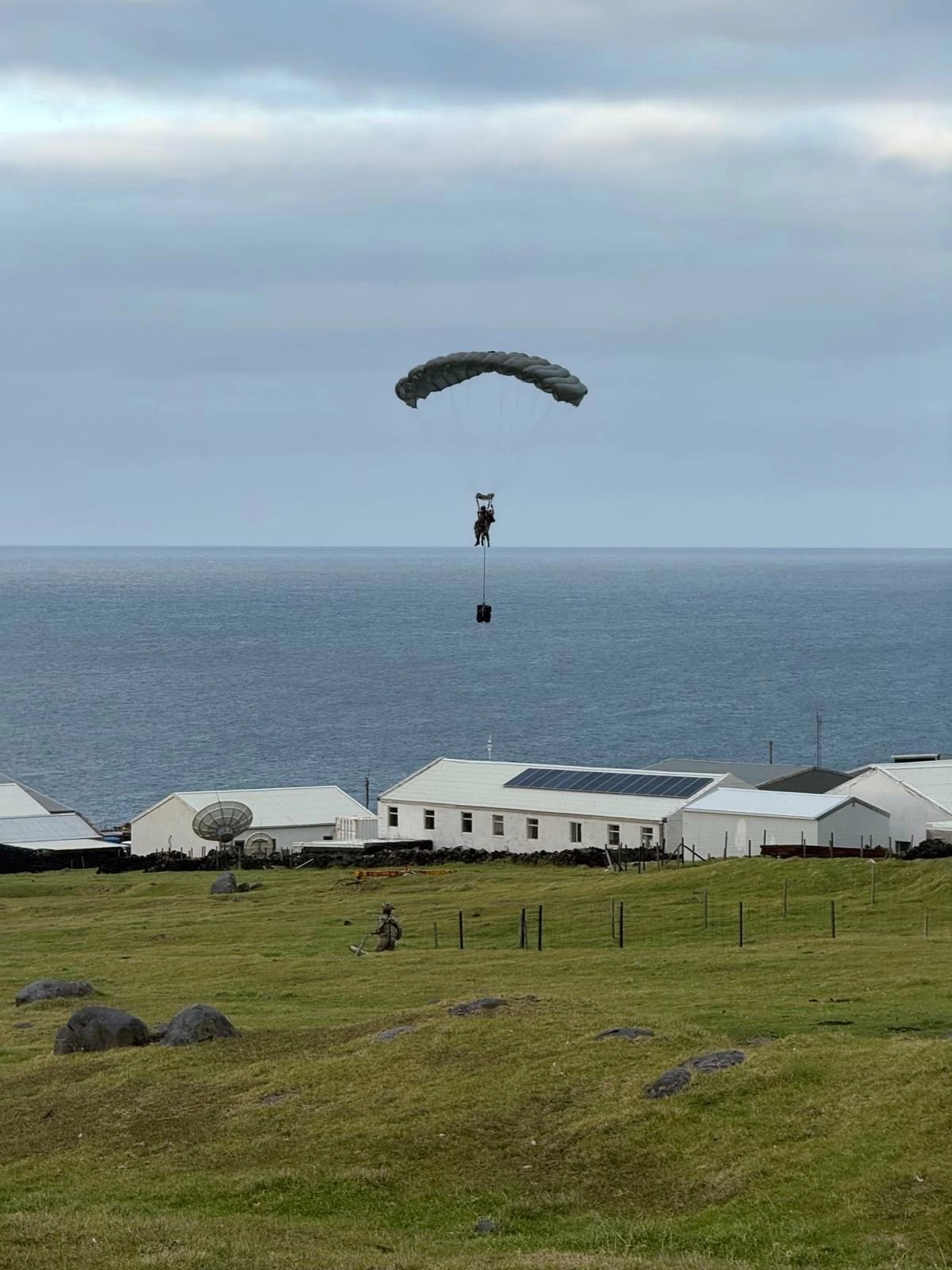
The British Ministry of Defence executed a specialized aerial drop today (Sunday) to the remote island of Tristan da Cunha in the southern Atlantic Ocean. This operation was aimed at providing urgent medical support to a British citizen suspected of being infected with Hantavirus, a highly dangerous virus.
The operation involved the deployment of six paratroopers from the 16 Air Assault Brigade, along with a consultant from the Royal Air Force and a military nurse. They were dropped from a military transport aircraft, the A400M, departing from RAF Brize Norton. Medical supplies and vital oxygen were also dropped, as the island's stocks were at critical levels.
Details of the Operation
Tristan da Cunha is considered the most remote inhabited island in the world, a British Overseas Territory with a population of only about 221 residents. The island lacks an airport, making access typically by sea only, complicating relief efforts.
The British Ministry of Defence confirmed that this is the first time the British military has parachuted a medical team to provide humanitarian support. This urgent intervention is part of the response to a potential outbreak of Hantavirus, which has been linked to the cruise ship MV Hondius that visited the island from April 13 to 15.
Background & Context
Hantavirus is a highly dangerous virus that is typically transmitted through contact with the droppings or urine of infected rodents. It can lead to acute respiratory syndrome or kidney failure, and has a high mortality rate in some cases. This virus poses a significant health threat, especially in remote areas where healthcare is limited.
This aerial operation represents an unprecedented response to the logistical challenges faced by British authorities in dealing with emergencies in remote areas. Their extreme isolation requires innovative and rapid solutions to save lives.
Impact & Consequences
This incident highlights the importance of preparedness for pandemics, particularly in remote regions. The ability of the armed forces to carry out rescue operations under difficult conditions reflects their readiness to tackle health challenges.
This type of intervention also reflects the British government's commitment to providing healthcare to its citizens, regardless of their geographical location. It raises questions about how to handle pandemics in the future, especially in light of climate changes that may affect the spread of viruses.
Regional Significance
Although this event pertains to Britain, it has broader implications for public health. In the Arab region, many countries face similar challenges regarding pandemics and infectious diseases. A rapid and effective response to health crises can serve as a model to emulate.
Global pandemics require international cooperation and the exchange of information and expertise, which can enhance the ability of Arab countries to confront future health challenges.