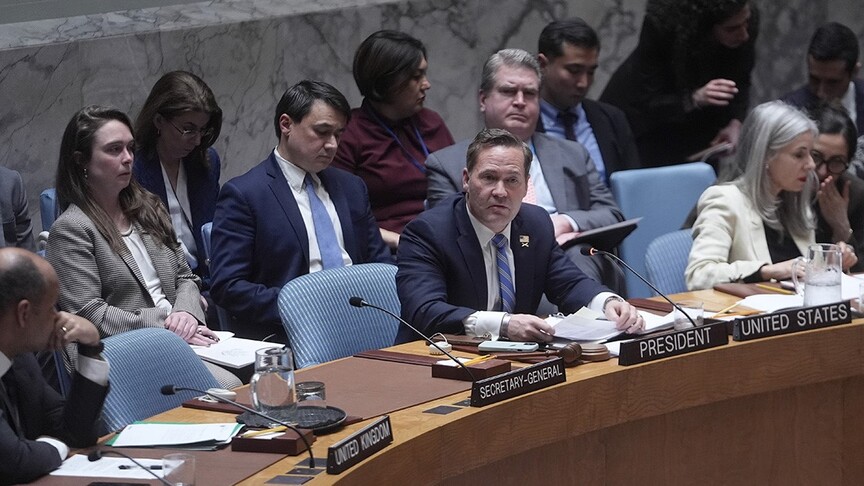
The U.S. Ambassador to the United Nations, Mike Waltz, emphasized the urgent need to form an international coalition comprising countries with similar visions to enhance security in the Hormuz Strait. Waltz stated that the time has come for nations with real capabilities to assist in securing this vital corridor, highlighting the increasing threats posed by Iran in the region.
Waltz's remarks were made in the context of escalating tensions between the United States and Iran, where Washington has accused Tehran of employing 'hostage-taking' methods through direct threats to maritime navigation. These statements reflect growing American concerns regarding Iranian activities in the region, which include targeting commercial vessels and threatening regional security.
Details of the Event
The Hormuz Strait, considered one of the world's most important maritime passages, sees approximately 20% of the world's total oil flow. In recent years, this strait has witnessed rising tensions due to Iranian activities, including the detention of ships and threats to navigation. This has led to repeated calls from the United States and its allies to form security coalitions to ensure safe passage in this strategic corridor.
In this context, Waltz affirmed that the coalition should consist of countries capable of providing tangible support, emphasizing the importance of international cooperation to address the challenges posed by Iran. He also noted that previous coalitions, such as the international coalition against ISIS, have proven effective in achieving their objectives, thereby underscoring the significance of this call.
Background & Context
Historically, the Hormuz Strait has experienced numerous crises, serving as a stage for multiple conflicts among major powers. In the 1980s, the region witnessed a war between Iraq and Iran, during which navigation in the strait was continuously threatened. With the rise of Iranian activities in recent years, the strait has become a focal point in the conflict between the United States and Iran, complicating the security situation further.
Iran considers the Hormuz Strait part of its sovereignty and uses it as a means to exert pressure on Western nations. Conversely, the United States and its allies strive to ensure freedom of navigation, leading to escalating tensions between the two sides. This dynamic reflects the ongoing challenges facing regional and international security.
Impact & Consequences
The call for forming a coalition to protect the Hormuz Strait represents a significant step within the framework of U.S. policy towards Iran. If this coalition is established, it could lead to increased tensions in the region, as Iran may take retaliatory actions against any foreign intervention in its affairs. Furthermore, this coalition could enhance cooperation between Arab nations and the United States, potentially altering the balance of power in the region.
Moreover, any escalation in the Hormuz Strait could significantly impact global oil prices, as the global economy relies heavily on oil flow from this area. Therefore, any threat to navigation in the strait could lead to fluctuations in financial markets and increase pressures on the global economy.
Regional Significance
The Arab nations neighboring the Hormuz Strait, such as the United Arab Emirates and Oman, are among the most affected by the tensions in this region. The economies of these countries heavily depend on oil exports through the strait. Any escalation in tensions could negatively impact the stability of these nations and increase security risks.
Additionally, the U.S. call for forming a coalition may lead to a reshaping of alliances in the region, as Arab nations might seek to strengthen their ties with the United States to counter Iranian threats. Ultimately, the security of the Hormuz Strait remains a vital issue that requires ongoing international cooperation.