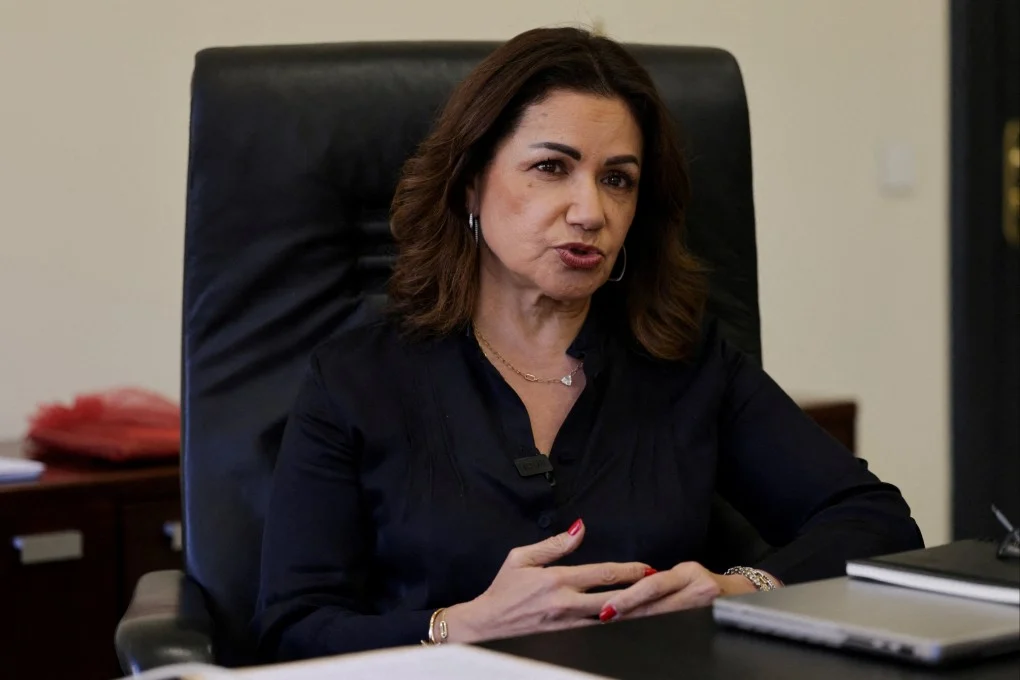
Lebanese Minister of Social Affairs, Haneen Saeed, emphasized during a discussion at an American research center that disarming Hezbollah is a fundamental demand of her government and the Lebanese people. She pointed out that this process "must happen," but warned that implementation will not be easy or quick.
Saeed's statements are part of ongoing discussions regarding Hezbollah's role in Lebanon, where it is viewed as an armed force supported by Iran. She clarified that Hezbollah is not merely an armed organization, but is part of the Lebanese social fabric, complicating the disarmament process.
Details of the Event
The Minister's remarks came in the context of discussing the challenges facing Lebanon amid multiple political and economic crises. She affirmed that the Lebanese government recognizes the importance of disarming Hezbollah, but the process requires broad political consensus among various Lebanese factions.
She also added that the current situation necessitates a comprehensive national dialogue that includes all political parties to reach a solution that ensures stability and security in the country. She noted that any steps towards disarmament must be conducted in a manner that respects the rights of all Lebanese citizens.
Background & Context
Hezbollah was established in the early 1980s in response to the Israeli occupation of Lebanon, and since then, it has played a prominent role in Lebanese politics. Over time, the party has evolved into a significant military and political force, leading to a division within Lebanese society regarding its role and status.
In recent years, international pressure on Lebanon to disarm Hezbollah has increased, especially amid rising regional tensions. However, any attempt at disarmament faces strong resistance from the party and its supporters, who view it as a threat to their existence.
Impact & Consequences
Calls for disarming Hezbollah are seen as a step that could lead to a radical change in the Lebanese political landscape. If successfully implemented, it could contribute to restoring governmental control over security in the country, potentially improving relations with Western and Arab nations.
However, any attempt to disarm the party could also escalate internal tensions, as its supporters may perceive it as a threat to their existence. Therefore, dialogue and negotiation will be essential to avoid any escalation.
Regional Significance
The implications of disarming Hezbollah extend beyond Lebanon, affecting the regional balance in the Middle East. Hezbollah is part of the resistance axis that includes Iran and Syria, and any change in its status could impact regional dynamics.
If the Lebanese government succeeds in disarming the party, it could reduce Iranian influence in the region, potentially paving the way for new alliances among Arab states. However, this scenario requires complex internal and external consensus.
In conclusion, calls for disarming Hezbollah remain a sensitive and complex issue in Lebanon, necessitating a comprehensive national dialogue and consensus among all parties to ensure the country's stability and security.