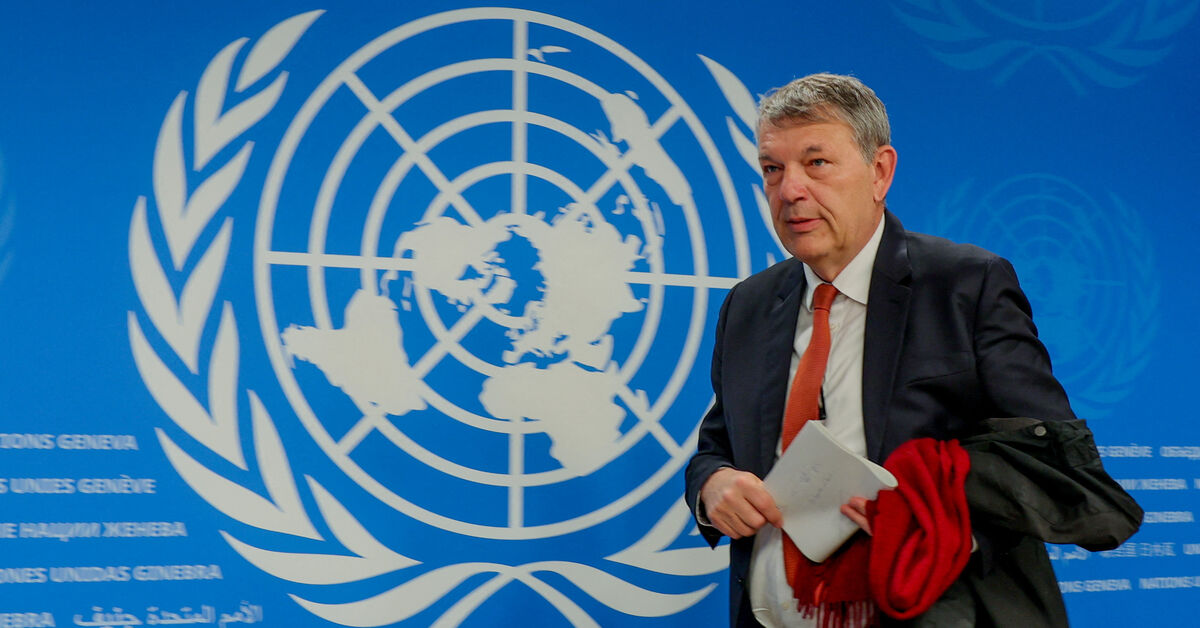
Philippe Lazzarini, the Commissioner-General of the United Nations Relief and Works Agency for Palestine Refugees in the Near East (UNRWA), revealed the initiation of discussions for an international investigation into the deaths of over 390 staff during the two-year war in Gaza. Lazzarini regarded this war as the deadliest in the agency's history, where UNRWA lost a significant number of its employees under difficult and complex circumstances.
His statements came during a press conference held in Geneva, where he emphasized the necessity of forming a high-level committee of experts to investigate the deaths of UNRWA staff. He confirmed that this investigation is vital to ensure justice and accountability, especially given the conditions witnessed in Gaza during the conflict.
Details of the Conflict
This war is considered one of the bloodiest conflicts in the history of the Palestinian-Israeli struggle, leading to the deaths of thousands of civilians and widespread destruction of infrastructure in Gaza. UNRWA, which provides services to over 5.7 million Palestinian refugees, has faced significant challenges in delivering humanitarian aid under these harsh conditions.
It is noteworthy that UNRWA plays a crucial role in providing education, healthcare, and food assistance to Palestinian refugees, and has faced numerous criticisms due to the deteriorating security situation in the region. The deaths of UNRWA staff during the conflict serve as a wake-up call for the international community to intervene to protect civilians and provide necessary support to humanitarian organizations.
Background & Context
UNRWA was established in 1949 to meet the needs of Palestinian refugees who were displaced as a result of the Arab-Israeli conflict. Since then, the agency has faced ongoing challenges in delivering its services, especially with the escalation of conflicts in the region. Recent years have seen a surge in violence in Gaza, exacerbating the humanitarian situation.
In past years, UNRWA has been subject to criticism from some countries regarding its management and operations, yet at the same time, the agency is considered a fundamental pillar in providing support to Palestinian refugees. With the escalation of the recent conflict, it has become essential to reconsider how to protect the agency's staff and ensure their safety while carrying out their humanitarian duties.
Impact & Consequences
The deaths of UNRWA staff in Gaza highlight the dangers faced by humanitarian organizations in conflict zones. This incident serves as a call for the international community to urgently act to protect humanitarian workers and ensure their safety. It also underscores the urgent need for independent and transparent investigations into such incidents to guarantee accountability.
Moreover, this situation may adversely affect the provision of humanitarian aid in Gaza, as humanitarian organizations may hesitate to operate in conflict areas due to increasing risks. This could lead to a worsening humanitarian situation in the region, necessitating urgent international intervention.
Regional Significance
The conditions in Gaza are part of the broader Palestinian-Israeli conflict, which has profound implications for the Arab region. The ongoing conflict and the deterioration of the humanitarian situation in Gaza enhance instability in the region and affect relations between Arab countries and Israel.
Additionally, the deaths of UNRWA staff illustrate the need for greater Arab solidarity with the Palestinian cause, as the current situation requires humanitarian and political support from Arab countries to address the challenges faced by Palestinians. Strengthening Arab efforts in this direction is vital to uphold the rights of Palestinian refugees and improve their humanitarian conditions.
In conclusion, investigating the deaths of UNRWA staff is a necessary step towards achieving justice and accountability, and it highlights the importance of protecting humanitarian workers in conflict zones. The international community is called to urgently act to ensure the safety of these workers and provide the necessary support to humanitarian organizations.