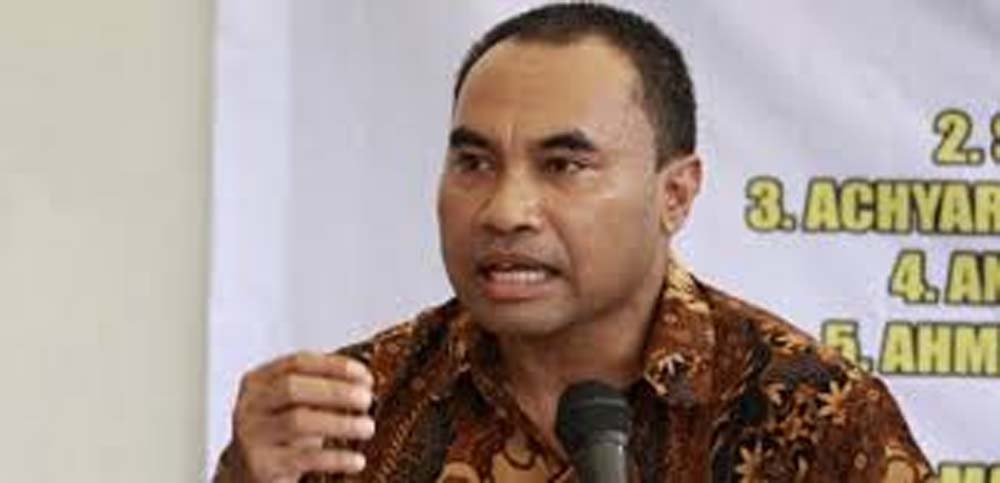
Haris Rosli Moti, founder of the 98 Solutions Network, urged all segments of Indonesian society to maintain national unity to confront global geopolitical challenges that may impact the country's economic and social stability. This statement was made during his remarks in Jakarta, where he emphasized the importance of collective cooperation to preserve national conditions amid changing global circumstances.
Haris pointed out that national stability, whether economic or political, is a critical factor in the face of the uncertainty surrounding the world. He stressed the necessity of maintaining this stability collectively to prevent Indonesia from being further affected by these geopolitical dynamics.
Event Details
In the context of his discussion, Haris highlighted the importance of dialogue that the government follows in addressing differences of opinion among citizens. He explained that the government opens communication channels, including listening to criticisms directed at its policies. He also mentioned that government figures, such as Professor Dasco, attend discussion forums to hear various perspectives.
Haris also addressed the significance of public criticism as part of the process of improving the management of government programs, such as the "Free Nutritious Meals" (MBG) program. He affirmed that the government has responded to these criticisms with corrective measures, demonstrating that President Prabowo does not ignore feedback.
Background & Context
Many countries around the world are facing severe pressures due to economic crises, such as the energy crisis and supply chain disruptions. However, Haris believes that Indonesia has relatively managed to maintain the stability of energy supplies and basic needs. He noted that the government, thanks to President Prabowo's efforts, has been able to ensure stable and affordable energy supplies.
He also emphasized the importance of proactive government policies, including accelerating food self-sufficiency programs, as a means to reduce reliance on imports amid global uncertainty. He explained that Indonesia is capable of facing challenges related to rice shortages due to the government's success in implementing these programs.
Impact & Consequences
The importance of stability extends beyond political and security aspects; it also encompasses economic dimensions that directly affect citizens, such as the prices of essential goods, the continuity of industries, and worker protection. Haris pointed out that economic instability could lead to rising prices and factory closures, which harm workers.
He also called on all stakeholders, including state employees, to maintain integrity in the implementation of government programs to avoid any deviations. He emphasized the importance of prioritizing the public interest in facing geopolitical challenges and global threats.
Regional Significance
Arab countries are also affected by global geopolitical changes, facing similar challenges related to economic and social stability. Calls to maintain national unity and cooperation among various segments are deemed essential to confront these challenges. Furthermore, enhancing dialogue between governments and citizens can contribute to improving conditions in the region.
In conclusion, maintaining national unity and cooperation among all segments of society is an urgent necessity to address the geopolitical and economic challenges that may impact stability in both Indonesia and Arab countries alike.