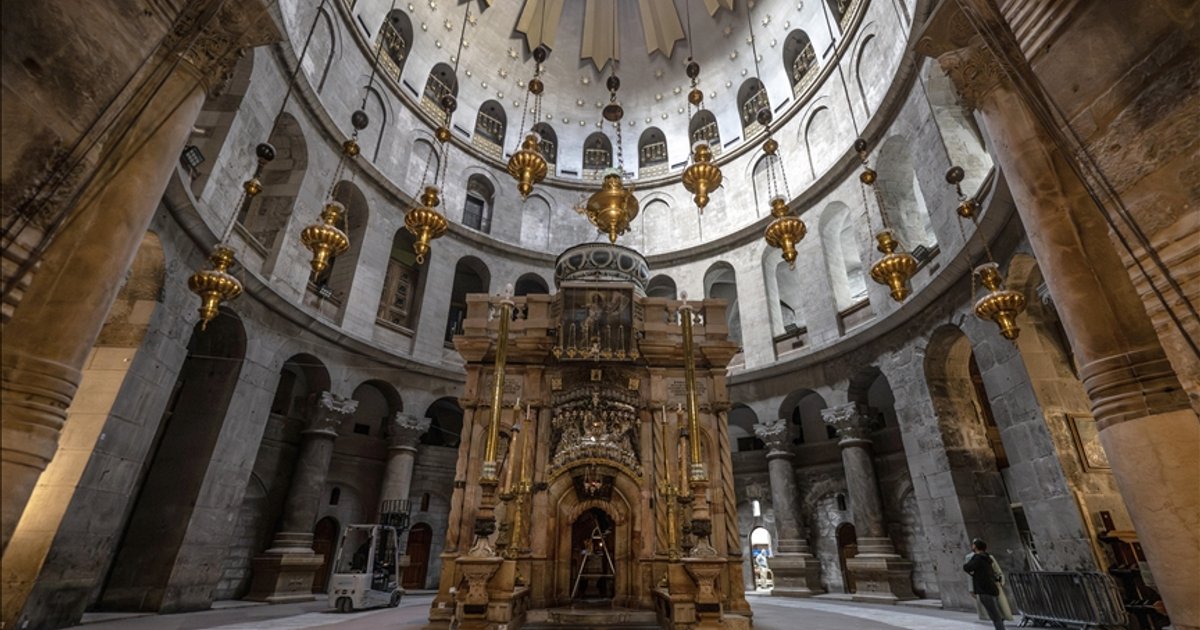
Christian leaders in Jerusalem have called on Israeli authorities to reopen the Church of the Holy Sepulchre, one of the holiest sites for Christians, ahead of the rapidly approaching Easter celebrations. These calls come at a sensitive time, as the number of visitors to the holy city is expected to rise during Holy Week, which is one of the most significant periods in the Christian calendar.
The Church of the Holy Sepulchre is an important symbol for Christians worldwide, believed to be the site where Christ was buried and resurrected. As Easter approaches, the importance of opening the church to welcome visitors and worshippers increases significantly.
Details of the Event
In recent years, the Church of the Holy Sepulchre has faced numerous restrictions due to the security and political situation in the region. The church's closure at previous times has raised significant concerns among Christians, who view this action as a violation of their religious rights. Christian leaders have emphasized that reopening the church before Easter is essential to ensure that believers can celebrate freely.
These calls come at a critical moment, as this year's Easter is expected to see an increase in visitor numbers, especially following the easing of restrictions related to the COVID-19 pandemic. Leaders have pointed out that the celebrations require ample space to accommodate worshippers, making the opening of the church urgent.
Background & Context
Historically, the Church of the Holy Sepulchre has been a center of Christian worship since the fourth century AD and has witnessed many significant historical events. However, the political situation in Jerusalem has greatly impacted the freedom of worship. In recent years, the church has seen protests and confrontations between visitors and Israeli authorities, leading to restrictions on entry.
The Church of the Holy Sepulchre is part of the cultural and religious heritage of the city, attracting visitors from around the world. As Easter approaches, pressure mounts on Israeli authorities to ensure freedom of worship and uphold the rights of Christians.
Impact & Consequences
If restrictions on the Church of the Holy Sepulchre continue, it could exacerbate tensions between Christian and Israeli communities. Additionally, the church's closure could negatively impact tourism in Jerusalem, which heavily relies on Christian visitors during holiday periods.
On the other hand, reopening the church could reflect the Israeli authorities' desire to improve relations with the Christian community, potentially contributing to enhanced peace and stability in the region. Successful Easter celebrations could provide an opportunity to foster interfaith dialogue and promote tolerance.
Regional Significance
Jerusalem is a holy city for the three Abrahamic religions: Islam, Christianity, and Judaism, making any developments there affect the entire region. Reopening the Church of the Holy Sepulchre could enhance Jerusalem's image as a center of religious tolerance, potentially improving relations among different communities.
This issue also highlights the importance of supporting the rights of religious minorities in the region, where Christians face challenging conditions in many Arab countries. Improving their situation in Jerusalem could serve as a model for other places.
In conclusion, the calls from Christian leaders to reopen the Church of the Holy Sepulchre before Easter reflect the significance of this issue in the religious and political context of the region. Achieving this goal could contribute to enhancing peace and tolerance among religions in Jerusalem.