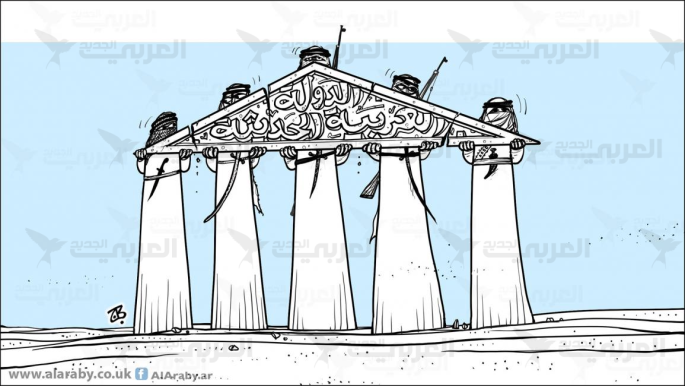
Voices advocating for the necessity of a state as a capable entity to achieve stability and security are increasingly being heard in light of multiple regional conflicts. These demands are supported by various influential and powerful forces, whether from traditional or subordinate positions, yet the societal structure in these countries presents a vastly different picture.
These demands are particularly evident in numerous nations suffering from internal divisions and power struggles. Citizens are striving to reinforce the concept of the state as a means of protecting their rights and ensuring their stability, even though the societal structure may not fully support this direction.
Event Details
In recent years, the Arab region has witnessed significant political and social transformations, leading to a rise in calls for a strong state. These demands arise at a time when tensions between regional powers are escalating, with each party seeking to enhance its influence and impact. However, these calls do not necessarily reflect a genuine desire to build institutional states but may merely be reactions to the current circumstances.
Opinions vary on how to achieve these demands, with some believing that political solutions are the optimal path, while others argue that military force may be necessary to achieve stability. These divisions highlight the complexities of the political and social reality in the region.
Background & Context
Historically, Arab countries have experienced numerous internal and external conflicts that have impacted the concept of statehood. There have been many attempts to build strong states, yet external interventions and internal conflicts have weakened these efforts. In this context, calls for rebuilding the state are increasing as a means of overcoming current crises.
These demands intersect with regional and international contexts, where major powers play a role in shaping the internal policies of Arab states. These dynamics directly affect the ability of states to achieve stability and build strong institutions.
Impact & Consequences
The demands for statehood influence relationships between regional powers, as each country seeks to strengthen its position in the face of challenges. These dynamics could lead to escalated conflicts or new opportunities for cooperation, depending on how states respond to these demands.
Moreover, these demands may affect internal stability, potentially leading to heightened tensions among various social groups. If these demands are not effectively addressed, crises may worsen, and conflicts may intensify.
Regional Significance
The calls for statehood represent a significant challenge for the Arab region, requiring effective responses from governments and societies. If states can achieve stability and build strong institutions, they may contribute to improving economic and social conditions.
Conversely, if the situation remains unchanged, crises may escalate, and conflicts may persist, negatively impacting the future of the region. Therefore, achieving the concept of a strong state is vital for the future of Arab countries.
In conclusion, the demands for statehood remain at the heart of political and social discussions in the region. Collective efforts from all parties are required to achieve this goal; otherwise, crises will continue to affect citizens' lives.