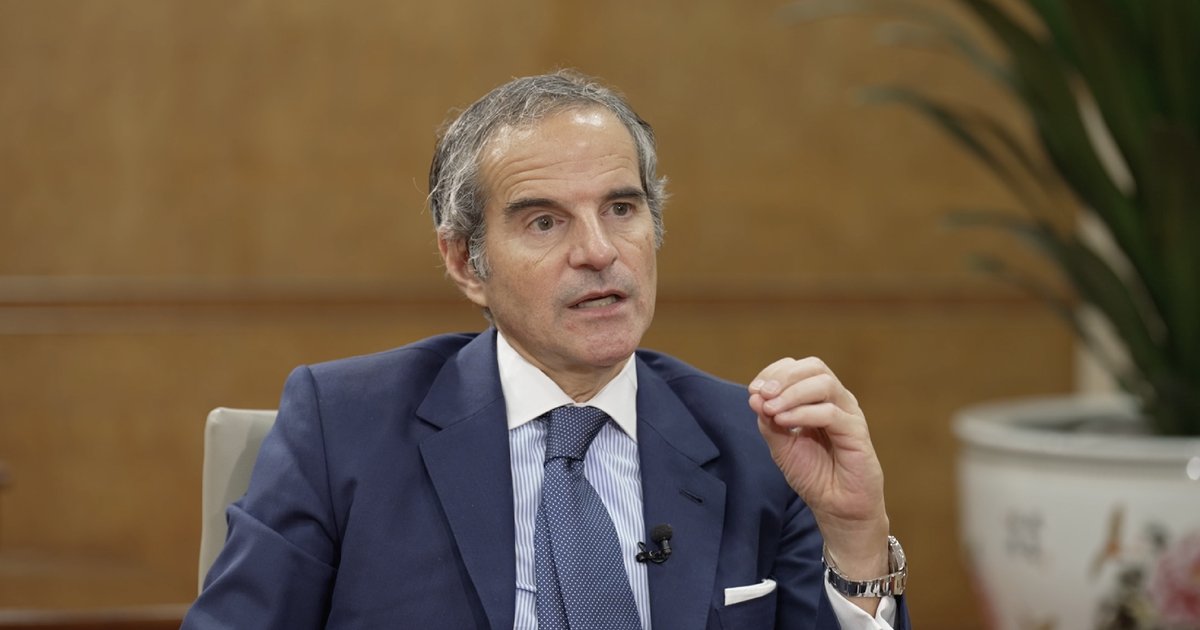
Rafael Mariano Grossi, the Director General of the International Atomic Energy Agency (IAEA), has called on all parties involved in the Middle East conflict to return to the negotiation table. This statement was made during an exclusive interview with CGTN on Thursday, where he stressed the importance of reaching a lasting solution that ensures security and stability in the region.
Grossi noted that the current situation requires collective efforts from all concerned parties, emphasizing that dialogue is the only way to achieve peace. He also expressed his concern over recent escalations in the region, which could negatively impact regional and international security.
Details of the Event
Grossi's remarks come at a sensitive time when the region is witnessing rising tensions, with increasing fears of new conflicts that could exacerbate humanitarian crises. He pointed out that the IAEA is prepared to provide technical support and advice to the parties involved in their efforts to reach peaceful agreements.
He also highlighted the importance of international cooperation in addressing nuclear issues, noting that any escalation in nuclear activities could have dire consequences for regional security. He called for a commitment to international treaties aimed at preventing the proliferation of nuclear weapons.
Background & Context
Historically, the Middle East has witnessed numerous conflicts that have led to the deterioration of humanitarian and economic conditions. For decades, the region has been a stage for multiple conflicts, ranging from the Israeli-Palestinian dispute to crises in Syria and Yemen. These conflicts have not only affected the involved countries but have also had widespread implications for global security.
In recent years, tensions have increased due to regional competition among major powers, making it difficult to achieve peace. Additionally, the humanitarian crises resulting from these conflicts require urgent responses from the international community, as millions suffer from shortages of food, water, and healthcare.
Impact & Consequences
Grossi's call for dialogue comes at a critical time, as any new escalation could destabilize the region. These statements are expected to influence the political positions of the involved parties and may prompt some countries to reassess their strategies in dealing with ongoing conflicts.
Furthermore, the success of negotiations could open new avenues for regional cooperation, contributing to improvements in humanitarian and economic conditions. However, the greatest challenge remains convincing all parties to sit down at the negotiation table and abandon escalation.
Regional Significance
For Arab countries, stability in the Middle East is vital. Any escalation in conflicts could impact the national security of neighboring countries and increase the flow of refugees. Moreover, the humanitarian crises resulting from conflicts directly affect economic and social development in the region.
Grossi's call for dialogue represents a new opportunity for Arab countries to rethink their strategies towards conflicts in the region. These calls could help enhance Arab cooperation and achieve lasting peace, benefiting all parties involved.