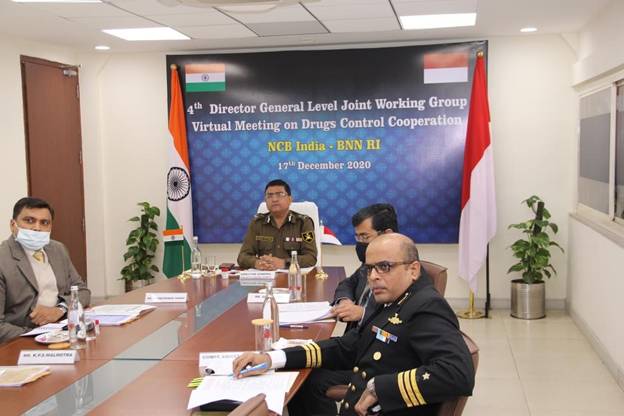
During a meeting with the legal affairs committee of the Indonesian Parliament, the head of the National Anti-Drug Agency, Suwiyadi Aryo Seto, emphasized the need to include the agency's powers as an investigative body in the new drug law. Seto pointed out that omitting reference to the agency could lead to ambiguity in its role, thereby weakening its ability to carry out its core tasks such as arresting and investigating drug-related cases.
Seto confirmed that this ambiguity could negatively affect coordination between the agency and the police, hindering efforts to combat drugs in the country. He also noted that the amended bill, which aligns with the new criminal procedure law, lacks clarity in defining the agency's powers, potentially obstructing its ability to effectively address the growing challenges in this field.
Details of the Meeting
During the meeting, Seto highlighted that the agency has experienced negative impacts due to the reduction of its powers, citing the experience of the National Agency for Food and Drug Control, which faced difficulties in executing its tasks due to unclear authorities. This situation poses a threat to the government's efforts in combating drugs.
The National Anti-Drug Agency was established in 2002 and is responsible for coordinating government efforts to combat drugs. However, legal and procedural challenges have affected its effectiveness, prompting Seto to call for an enhancement of the agency's powers in the new bill.
Background & Context
Indonesia faces significant challenges in combating drugs, with a noticeable increase in addiction and drug trafficking cases in recent years. The government has launched several campaigns to tackle this phenomenon, but it struggles to achieve tangible results.
Impact & Consequences
If the bill is passed without including the agency's powers, it could exacerbate the drug problem in Indonesia, increasing the activity of drug syndicates and threatening social and public health security in the country. This could also undermine trust between citizens and government entities, leading to a decline in community cooperation in this area.
Regional Significance
The call to enhance the National Anti-Drug Agency's powers is crucial for improving its effectiveness in Indonesia, which can contribute to better drug control efforts. Strengthening the agency's role could facilitate more coordinated actions against drug trafficking and abuse, ultimately benefiting public health and safety.
In conclusion, the enhancement of the National Anti-Drug Agency's powers is vital for addressing the escalating drug crisis in Indonesia. By clarifying its authority and responsibilities, the agency can better fulfill its mission and contribute to a safer society.