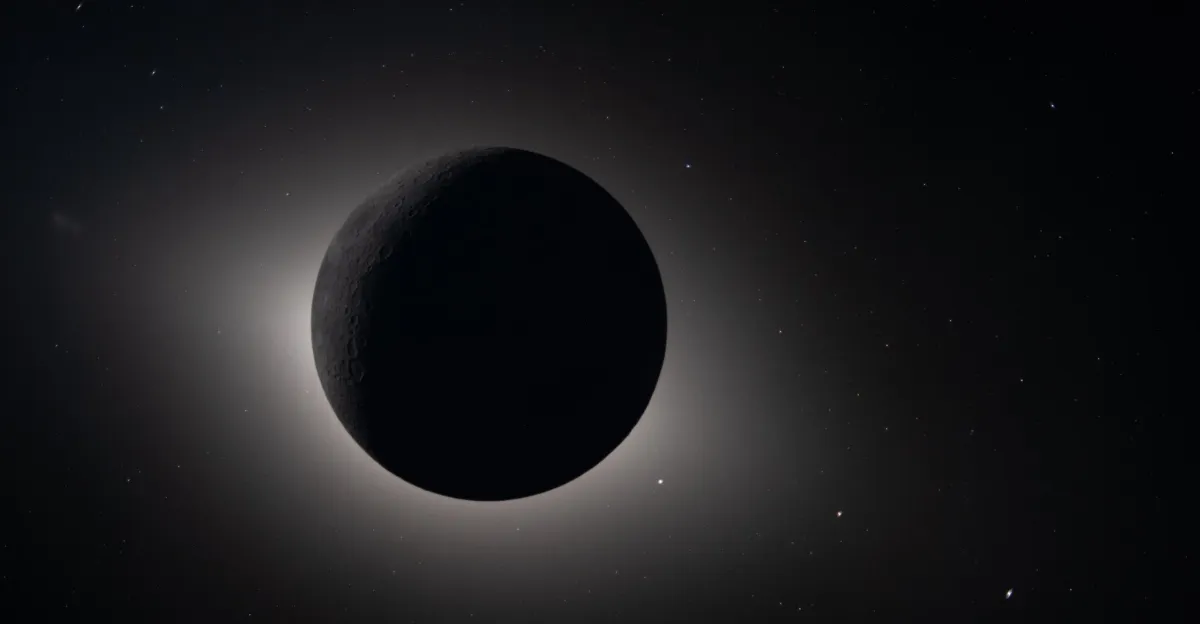
In an extraordinary event, astronauts on the Artemis II mission experienced a total solar eclipse from deep space, capturing stunning images that reflect the beauty of the universe. The images showcase the Moon with its clear edges, while stars twinkle in the background, adding a magical touch to the scene.
The second image shared by NASA shows Earth, with part of it covered in shadow as it sets behind the Moon. This image reminds us of the "Earthrise" photo taken by astronauts on the Apollo 8 mission nearly sixty years ago.
Astronauts' Unique Experience
The Artemis II crew consists of four astronauts who witnessed the eclipse while positioned behind the Moon, allowing them to experience a visual phenomenon entirely different from what we observe on Earth. The total eclipse lasted nearly an hour, while it typically lasts only a few minutes on the Earth's surface. The crew was also able to see the solar corona gently appearing behind the Moon, without any interference from Earth's atmosphere.
The mission commander, Reid Wiseman, expressed his amazement during the eclipse, stating, "It is something indescribable. No matter how much we look at this image, our minds cannot comprehend what we see before us. It is stunning, surreal... there are no words to describe what we witness from this window."
Background & Context
The Artemis II mission is part of the Artemis program, which aims to return to the Moon and explore deep space. This program represents a significant step in the history of space exploration, seeking to enhance human understanding of the universe and expand the boundaries of scientific knowledge. Since the Apollo 8 mission, humanity has made significant advancements in space technologies, enabling astronauts to experience sights that were previously impossible.
Impact & Consequences
This unique experience serves as an opportunity to raise public awareness about the importance of space exploration. The images captured by the Artemis II astronauts may inspire future generations of scientists and engineers to explore more about space. Furthermore, this mission enhances international cooperation in the field of space, as many countries collaborate in developing technology and scientific research.
Regional Significance
The implications of this event extend beyond scientific achievement; it also serves as a catalyst for Arab nations to invest in space science and technology. The success of the Artemis II mission could encourage these nations to enhance their capabilities in space exploration and research.
In conclusion, the experience of witnessing a solar eclipse from space not only enriches scientific understanding but also opens new avenues for space exploration. The stunning visuals and the excitement shared by the astronauts highlight the ongoing journey of humanity into the cosmos.