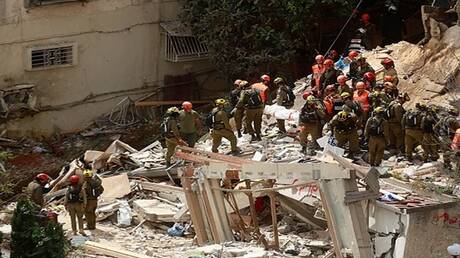
Iranian Revolutionary Guard Aerospace Force Commander Majid Mousavi reported that Iranian missiles have "plowed" through refineries, power plants, ports, and railways in Haifa Bay. Mousavi confirmed that these attacks faced no interception, indicating the effectiveness of Iranian missiles in achieving their objectives.
These statements come at a sensitive time, as tensions between Iran and Israel escalate, particularly amid increasing political and security crises in the region. Mousavi noted that northern Israel has become defenseless, reflecting significant concern in Tel Aviv regarding Iran's growing military capabilities.
Details of the Incident
In the context of the recent escalation, reports confirmed that Iranian attacks targeted several strategic sites in Haifa Bay, reflecting Tehran's strategy of delivering direct strikes against Israeli infrastructure. These attacks have elicited varied reactions in political and military circles, with some viewing them as evidence of Iran's military superiority in the region.
Mousavi also indicated that these strikes are part of a response to what he described as repeated Israeli aggressions against Iranian territory. These statements serve as a warning to Israel against continuing its military operations against Iran or its allies in the region.
Background & Context
Historically, Iranian-Israeli relations have experienced increasing tensions since the Islamic Revolution in 1979. These tensions have particularly escalated in recent years, with rising Israeli military activities in Syria and Iranian threats of retaliation. Iran views the existence of Israel as a hostile state that poses a threat to its national security, prompting it to bolster its military capabilities.
Regional conflicts, such as the disputes in Syria and Yemen, have further complicated relations between Iran and Israel. Both countries seek to enhance their influence in the region, increasing the likelihood of military escalation.
Impact & Consequences
These Iranian attacks represent a serious escalation that could provoke military responses from Israel. Many analysts have warned that any further escalation could lead to a comprehensive conflict in the region, affecting both regional and international security.
Additionally, these developments may impact relations between Iran and Western countries, especially amid ongoing discussions regarding Iran's nuclear program. Such attacks could raise concerns among European nations and the United States, potentially leading to new diplomatic pressures on Tehran.
Regional Significance
Arab countries are directly affected by the escalation between Iran and Israel, as any military conflict could have severe implications for security and stability in the region. Arab nations, particularly those neighboring the conflict, such as Lebanon and Syria, find themselves in a sensitive position, potentially compelled to intervene or face the consequences of the conflict.
Moreover, these events may reopen discussions about regional alliances, as some Arab nations might seek to strengthen their ties with Israel as a means to counter the increasing Iranian threat.
In conclusion, developments in Haifa Bay serve as an indicator of rising tensions in the region. The current situation requires close monitoring by the international community to ensure that conditions do not escalate into a comprehensive conflict.