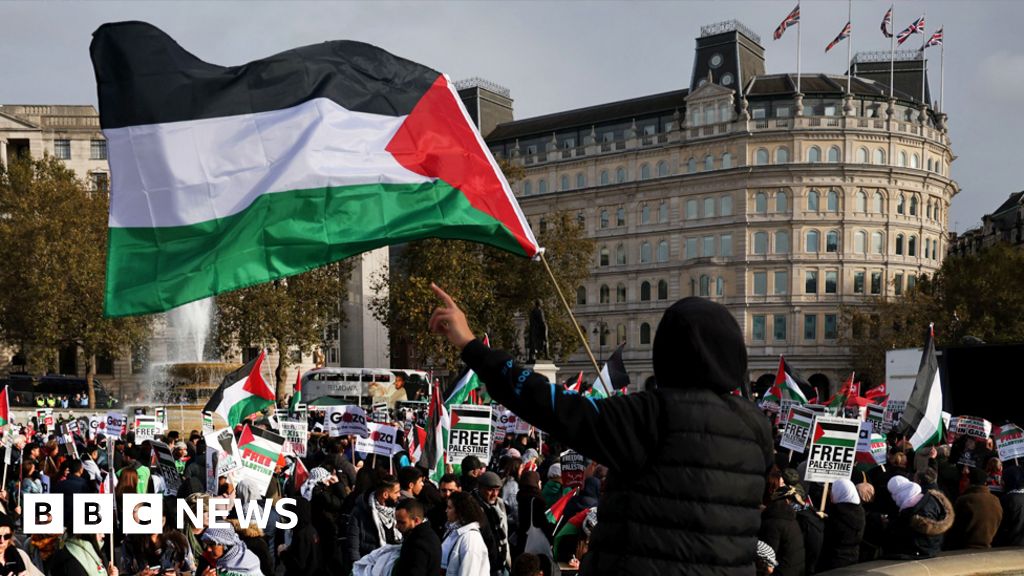
In a bold move, several celebrities in the United Kingdom have announced their challenge to the ban imposed by the British government on the Palestine Action group, an activist organization advocating for Palestinian rights. This challenge arises at a time when pressures on freedom of expression regarding the Palestinian issue are increasing, putting these celebrities at risk of arrest.
The celebrities participating in this challenge include well-known artists and influencers, who have expressed their support for the group through social media and public platforms, sparking widespread debate about freedom of expression in the UK. The ban imposed by the British government on Palestine Action came amid escalating political tensions surrounding the Palestinian issue, with the group being one of the most prominent advocates for Palestinian rights.
Event Details
Founded in 2020, Palestine Action aims to raise awareness about the Palestinian issue and support the rights of the Palestinian people. However, the group has faced criticism from the British government, which claims that its activities incite violence. In contrast, many human rights advocates view this ban as a violation of freedom of expression.
In this context, several celebrities have shared messages of support for the group, emphasizing the importance of freedom of expression and individuals' rights to voice their opinions on political issues. This movement comes at a critical time, as pressures on activists seeking to express their views on the Palestinian issue are mounting.
Background & Context
Historically, the Palestinian issue has faced numerous challenges, with Palestinians experiencing various violations over the decades. In recent years, political divisions in the region have intensified, exacerbating the humanitarian situation in the Palestinian territories. In this context, Palestine Action is considered one of the leading voices advocating for Palestinian rights.
The ban imposed by the British government on the group is part of its efforts to curb activities deemed a threat to security. However, many activists argue that this ban represents an attempt to undermine freedom of expression and reflects the increasing political tensions surrounding the Palestinian issue.
Impact & Consequences
The celebrities' challenge to the ban on Palestine Action could significantly impact the public discourse surrounding the Palestinian issue in the UK. This movement may encourage more individuals to express their opinions on the matter, potentially leading to increased awareness of the violations faced by Palestinians.
Moreover, this challenge may provoke reactions from the British government, which could tighten its measures against activists. At the same time, it may lead to increased public support for Palestine Action, reflecting a growing awareness of the Palestinian issue within British society.
Regional Significance
For the Arab world, this event reflects a growing international interest in the Palestinian issue. Celebrity support for Palestine Action could strengthen the Palestinians' position on the international stage and increase pressure on Western governments to seriously address Palestinian rights.
Ultimately, this challenge represents an important step towards enhancing freedom of expression and supporting Palestinian rights, reflecting a heightened awareness of the Palestinian issue globally.