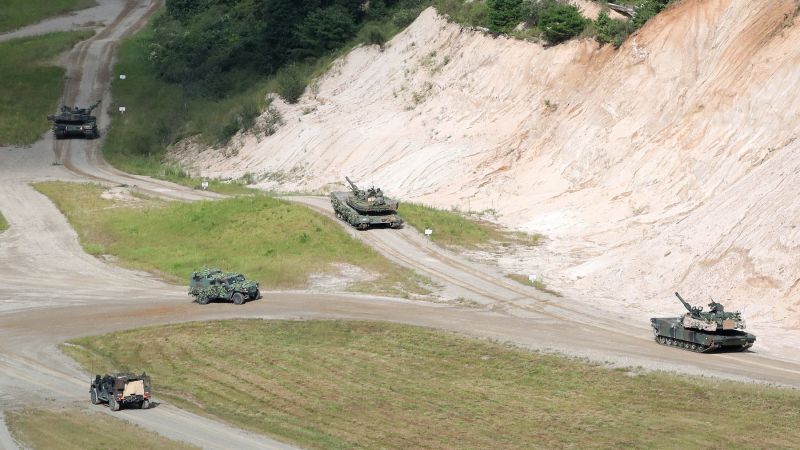
The naval and marine forces of South Korea are conducting military exercises focused on amphibious landing operations near the city of Pohang, with participation from units of the United States and New Zealand, from April 23 to 30. Approximately 3,200 military personnel are involved in these exercises, which are part of ongoing efforts to enhance military cooperation among the three countries.
The exercises include the use of a variety of military equipment, such as over 20 warships, the amphibious landing ship Marado, and South Korean amphibious assault vehicles KAAV. Additionally, MUH-1 helicopters and P-8A maritime reconnaissance aircraft were utilized, along with KF-16 fighter jets and AH-64E attack helicopters.
Details of the Exercises
The focus of the exercises is on executing amphibious landing operations, where ships and aircraft are used to transport troops to the shore. Drones from special operations units have been introduced, reflecting the evolution of military technology used in these maneuvers. FPV drones were also deployed to gather real-time intelligence and assess the operational capabilities of the forces.
These exercises are part of efforts to enhance the joint defensive capabilities of the participating nations, as South Korea seeks to improve its readiness to face potential threats from the north. They are considered a component of a broader strategy aimed at strengthening military cooperation in the Pacific region.
Background & Context
Historically, military relations between South Korea and the United States have improved significantly since the end of the Korean War in 1953. These relations have contributed to enhancing regional security, especially amid ongoing tensions with North Korea. Cooperation with New Zealand reflects the desire of the three nations to bolster security and stability in the region.
Impact & Consequences
These exercises could enhance the military capabilities of the participating nations, increasing their ability to respond to any potential threats. Furthermore, military cooperation among these countries may contribute to regional stability and reflects their commitment to regional security. However, these exercises may provoke negative reactions from North Korea, which could perceive them as a threat to its security. Consequently, these military activities could lead to heightened tensions in the region.
Regional Significance
The importance of these exercises lies in their role as part of ongoing efforts to enhance regional security and military cooperation among allied nations in the face of increasing threats. They signify a united front among South Korea, the United States, and New Zealand, aiming to deter aggression and promote peace in the Pacific region.
In conclusion, the joint military exercises represent a critical step in reinforcing the defense capabilities of the participating nations while sending a clear message of solidarity and preparedness in the face of potential challenges.