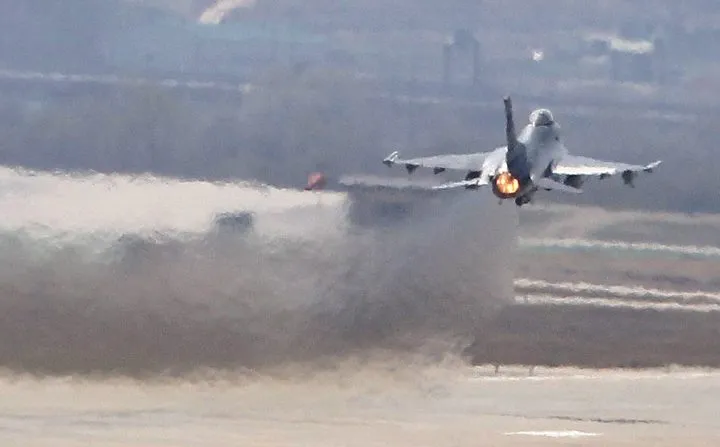
The US Central Command (CENTCOM) has refuted claims made by the Iranian Revolutionary Guard regarding the downing of an American fighter jet in the Strait of Hormuz, emphasizing that this information is baseless.
This statement follows the Iranian Revolutionary Guard's announcement of having shot down an American fighter jet, which raised international concerns about the security situation in the region. CENTCOM confirmed that all US aircraft in the area are operating normally and have not been subjected to any attacks or downing.
Details of the Incident
Earlier, the Iranian Revolutionary Guard claimed to have shot down an F-35 fighter jet in the Strait of Hormuz, which elicited mixed reactions from US military officials. This claim comes amid escalating tensions between Iran and the United States, particularly following a series of maritime incidents in the region.
CENTCOM, responsible for US military operations in the Middle East, affirmed that all US military aircraft are functioning efficiently and have not faced any direct threats. It also confirmed that any military activity in the region is conducted under careful supervision and in coordination with allies.
Background & Context
The Strait of Hormuz is one of the most critical maritime passages in the world, through which approximately 20% of the world's total oil passes. The region has witnessed increasing tensions in recent years, especially after the US withdrawal from the nuclear deal with Iran in 2018, leading to heightened military tensions between the two parties.
Historically, there have been several incidents in the Strait of Hormuz, where Iran has threatened maritime navigation, prompting the United States to bolster its military presence in the area. These events reflect the ongoing conflict between Iran and Western countries, particularly the United States, over issues related to regional security and the Iranian nuclear program.
Impact & Consequences
These developments come at a sensitive time, as major powers seek diplomatic solutions to the Iranian crisis. The escalation in statements and military operations could exacerbate the situation in the region, threatening security and stability.
Such incidents may impact global oil prices, as any escalation in the Strait of Hormuz could heighten concerns over disruptions to oil supplies. Additionally, these events could affect relations between the United States and its allies in the region, necessitating a reassessment of military and diplomatic strategies.
Regional Significance
The Arab countries neighboring the Strait of Hormuz find themselves in a sensitive position, as many of these nations rely on regional stability to ensure the flow of oil and gas. Any escalation in tensions could impact local economies and increase security risks.
Moreover, these events may affect relations between Arab states and Iran, prompting further coordination and cooperation among Arab nations to address shared security challenges.
In conclusion, CENTCOM's denial of Iranian claims underscores the importance of accurate information amid rising tensions in the region. The situation in the Strait of Hormuz remains under close observation, as any new developments could impact regional and global security.