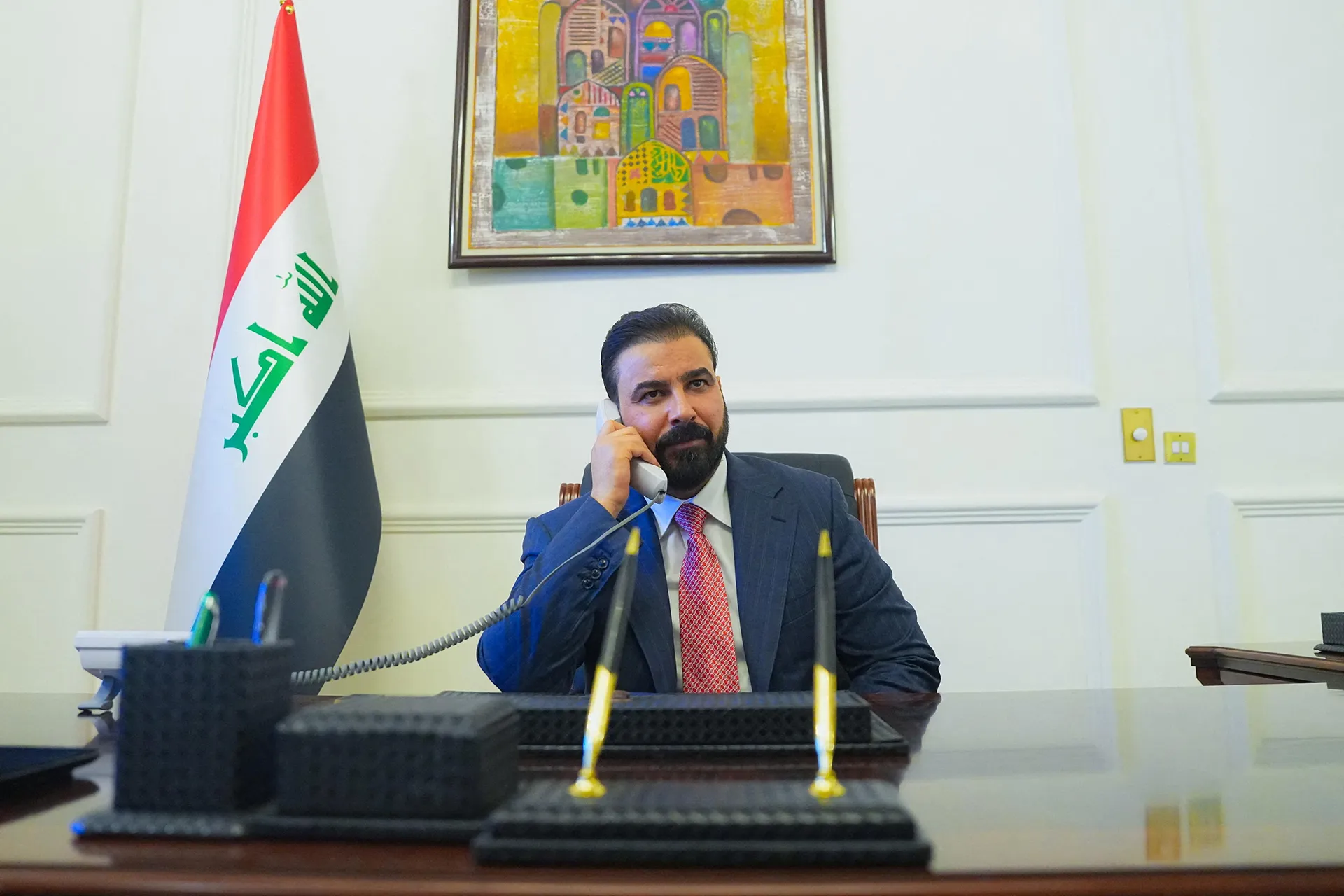
Ali Al-Zeidi has been appointed to form Iraq's new government, which has sparked questions about the possibility of real political change. Analysts are monitoring fears that Al-Zeidi may become just a manager for the interests of political blocs.
In today's episode of "Beyond the News," political analysts discussed the implications of selecting Al-Zeidi, noting that he could be a youthful compromise candidate to break the political deadlock. However, the most pressing question remains: Is Iraq on the brink of genuine change, or is it merely a reshuffling of faces?
Event Details
After weeks of squabbling among the components of the Coordination Framework, Al-Zeidi's name emerged as a necessary choice, according to Professor Issam Al-Faili from Al-Mustansiriya University. Despite his economic and youthful background, Al-Zeidi lacks party support or a parliamentary bloc, placing him in a constrained position among the factions that nominated him.
This situation raises questions about his ability to freely form his cabinet amid the pressures of political quotas that plague Iraq's political process. Analysts believe that ministries are still viewed as electoral entitlements, which could reduce Al-Zeidi to merely an executive manager of the framework's interests.
Background & Context
The new government faces significant challenges, starting with the constitutional deadline of thirty days to form the cabinet. This short period comes amid an unfavorable environment, with rising regional and international tensions.
Additionally, Al-Zeidi confronts challenges related to administrative corruption and dollar smuggling, as well as the militia's weapons, which raise concerns for the international community. These factors place him in a difficult position, where he must balance his ambitions for change with the requirements of political blocs.
Impact & Consequences
Al-Zeidi's success depends not only on internal agreements but also on the stance of the United States. Academic Issam Al-Faili pointed out that Washington may grant Al-Zeidi a "test period" to monitor his seriousness in addressing contentious issues.
If Al-Zeidi fails to achieve tangible progress, he may face significant pressure from political blocs, potentially reducing his role to that of a "general manager" rather than a Prime Minister with full powers. This dynamic could negatively impact the stability of the new government.
Regional Significance
Al-Zeidi's selection reflects the depth of disagreements within the Coordination Framework, as he was preferred as a new face to avoid internal explosion. However, the greatest challenge remains his ability to endure four years under these complex circumstances.
If Al-Zeidi succeeds in achieving the desired change, it could have a positive impact on the situation in Iraq, potentially reflecting stability across the region as a whole. Conversely, failure could exacerbate political and economic crises.