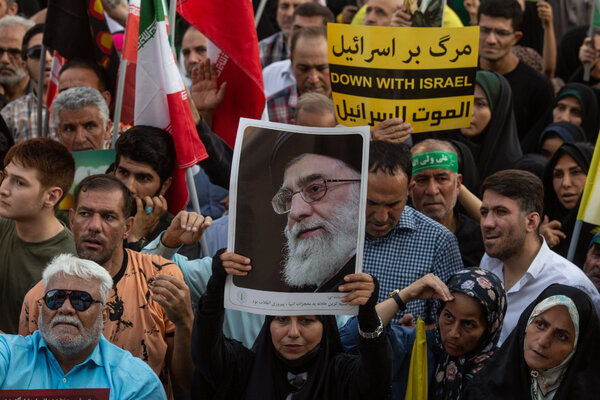
A former U.S. national security advisor emphasized that changing the regime in Iran represents the only solution for achieving peace and stability in the Middle East. These remarks come against the backdrop of escalating tensions between Iran and Western countries, as Tehran's current policies are viewed as a threat to regional security.
Concerns are growing that Iran's nuclear activities, along with its support for armed groups in the region, could exacerbate crises in countries like Iraq, Syria, and Lebanon. The advisor pointed out that current diplomatic solutions have not yielded the desired results, necessitating consideration of more radical options.
Details of the Event
The former U.S. national security advisor's statements come at a sensitive time, as Iran continues to develop its nuclear program amid increasing international criticism. The United States and its allies have expressed concern that these activities could lead to an arms race in the region.
He also noted that the current Iranian regime exacerbates instability by supporting armed militias in countries like Iraq and Syria, complicating the security situation in the region. In this context, he called for a firm stance against Tehran, stressing the importance of regime change as a fundamental step toward achieving peace.
Background & Context
Historically, relations between Iran and the United States have been marked by increasing tensions since the Islamic Revolution in 1979. These tensions have led to the imposition of strict economic sanctions on Tehran, significantly impacting its economy. In recent years, fears have grown that Iran may seek to acquire nuclear weapons, prompting the international community to take diplomatic action.
In 2015, a nuclear agreement was reached between Iran and the P5+1 group, but the U.S. withdrawal from the agreement in 2018 brought matters back to square one, intensifying tensions. Since then, the region has witnessed an escalation in hostilities, increasing the need for radical solutions.
Impact & Consequences
If the regime in Iran were to change, it could lead to radical shifts in regional politics. This could result in a reduction of Tehran's support for armed groups, potentially contributing to the stabilization of Iraq, Syria, and Lebanon. It may also open the door to new opportunities for cooperation between Arab countries and Iran, fostering more stable relations.
However, regime change is not a simple matter and could initially lead to chaos and greater instability. Therefore, any steps in this direction must be carefully considered to avoid exacerbating the situation.
Regional Significance
The Arab countries neighboring Iran are among those most affected by developments in the Iranian situation. Ongoing tensions between Iran and Arab states, particularly Saudi Arabia and the UAE, could escalate conflicts in the region. If regime change occurs, it could reshape regional alliances.
Moreover, a stable Iran could enhance security in the Arabian Gulf, benefiting Arab economies that rely on regional stability. Thus, this issue is of utmost importance to Arab nations, which are closely monitoring developments in Iran.
In conclusion, the issue of regime change in Iran remains a contentious topic, fraught with both risks and opportunities. It requires a delicate balance between pressuring the current regime and providing peaceful alternatives to achieve peace and stability in the region.