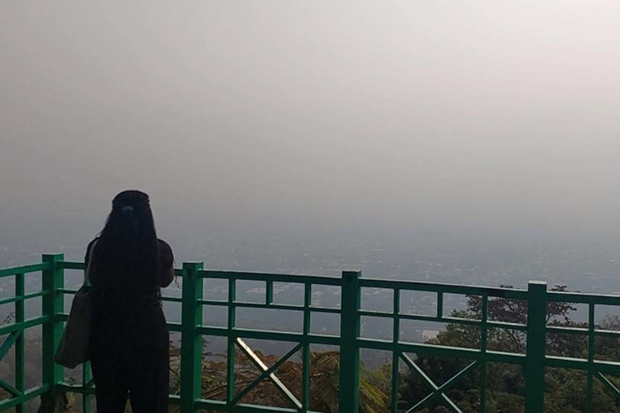
Chiang Mai, located in northern Thailand, has been ranked as the most polluted city in the world, recording dangerous levels of air pollution due to wildfires and human activities. According to reports from Swiss company IQAir, the air quality index (AQI) in the city reached 263, classified as "very unhealthy," with PM2.5 particle concentrations measured at 188.0 micrograms per cubic meter.
These alarming figures come at a time when Chiang Mai is experiencing poor weather conditions, with expectations of haze persisting until 4 PM, although improvements are anticipated later in the day and through Wednesday. In comparison, Delhi, India, which ranks second, recorded an AQI of 198 and PM2.5 levels of 122.0, highlighting the significant pollution gap between the two cities.
Details of the Situation
Reports indicate that Chiang Mai also topped the list of hotspots in the country, with 480 hotspots recorded on Sunday, nearly double the number in the neighboring province of Mae Hong Son, which registered 247 hotspots. These hotspots are attributed to natural fires during the dry season, as well as farmers burning waste and illegal activities by some individuals.
Despite repeated legal warnings from authorities against starting fires, the situation remains concerning. The Director-General of the Department of National Parks, Wildlife and Plant Conservation, Atthapon Charoenchansa, acknowledged that the number of hotspots in the country is extremely worrying. He warned that igniting fires in protected areas could lead to fines ranging from 400,000 to 2 million Thai Baht, in addition to prison sentences of 4 to 20 years.
Background & Context
Chiang Mai is considered one of Thailand's popular tourist destinations, but the increasing pollution in recent years threatens its reputation. Air pollution stems from several factors, including climate change, increased agricultural activity, and fires set for agricultural purposes. In recent years, the city has seen a rise in visitor numbers, which has increased pressure on the local environment.
Historically, Chiang Mai was known for its natural beauty and tranquility, but the rise in human activities and climate changes have led to a deterioration in air quality. Previous studies have shown that air pollution can negatively impact public health, increasing respiratory illnesses and anxiety among residents.
Impact & Consequences
Estimates suggest that air pollution in Chiang Mai could lead to severe health consequences for residents, including increased cases of asthma and heart diseases. Additionally, tourism, which is a major source of revenue for the city, may be adversely affected due to the declining air quality, potentially leading to a decrease in visitor numbers.
Moreover, these conditions may increase pressure on the local government to take stringent actions against pollution-causing activities. Such measures may require cooperation between local authorities, farmers, and communities to reduce fires and improve air quality.
Regional Significance
Air pollution is a global issue that affects all countries, including Arab nations. Many Arab cities face similar challenges, suffering from air pollution due to industrial activities and increased traffic. The experience of Chiang Mai could serve as an important lesson for Arab countries on how to address environmental pollution issues.
Ultimately, improving air quality requires joint efforts from all stakeholders, including governments and local communities. Clear strategies must be established to reduce pollution and protect the environment, ensuring the health and safety of future generations.