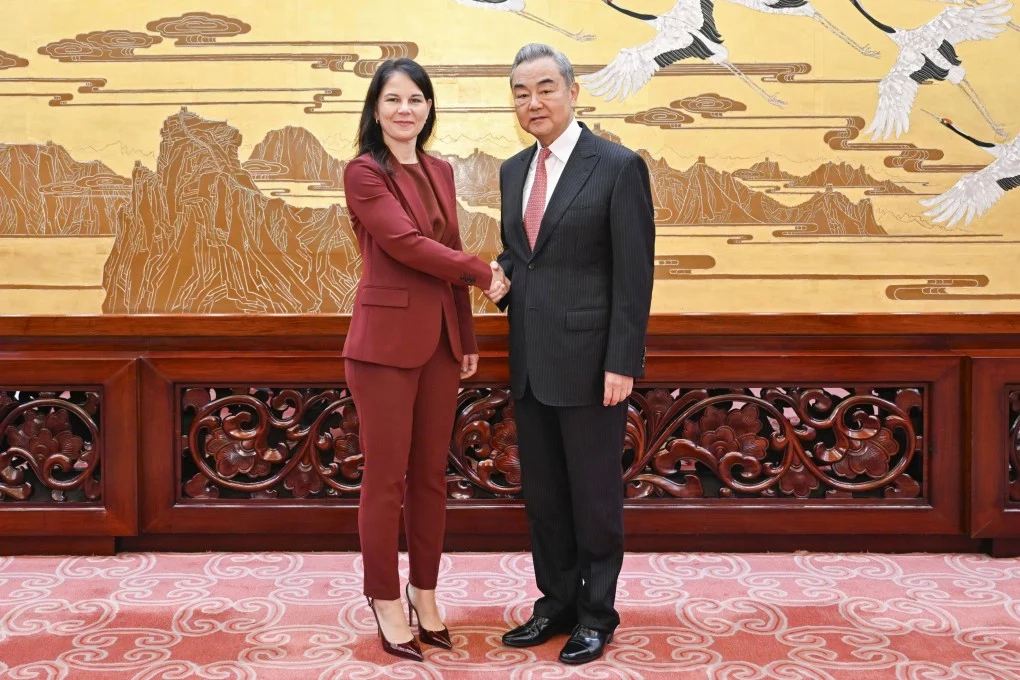
Amid rising tensions on the international stage, Chinese Foreign Minister Wang Yi called for "unity and the protection of international justice" during a meeting with the President of the United Nations General Assembly, Csaba Kőrösi, in the Chinese capital, Beijing. Yi highlighted the importance of forming a global front to confront what he described as the "law of the jungle" that threatens the international order.
During the discussions, Yi pointed out that multilateralism faces significant challenges from unspecified powers that prefer "might over right," implicitly referring to U.S. policies. He asserted that some nations are attempting to impose their dominance through military and economic force, which jeopardizes global stability.
Details of the Meeting
Wang Yi's statements came at a critical juncture, as tensions escalate between major powers, particularly with ongoing conflicts in various regions such as Ukraine and the Middle East. The meeting also addressed the importance of enhancing international cooperation to tackle shared challenges like climate change and humanitarian crises.
Yi further stressed the necessity of promoting dialogue among major nations, emphasizing that peaceful solutions are the optimal path for resolving disputes. He expressed hope that the United Nations could facilitate this dialogue and provide a platform for international cooperation.
Background & Context
Historically, international relations have undergone significant transformations, with multilateralism being a prominent feature of the international system following World War II. However, signs of unilateralism have begun to emerge in international politics, especially after the events of September 11, 2001, leading to an escalation of conflicts and wars in various parts of the world.
As a rising superpower, China seeks to enhance its role in the international system by advocating for multilateralism and justice. Recently, Beijing has shown greater interest in global affairs, particularly in light of the challenges it faces from the United States and its allies.
Impact & Consequences
Wang Yi's call for unity and the protection of international justice is a significant step in the context of current geopolitical tensions. Should major powers respond positively to this call, it could lead to a de-escalation of conflicts and bolster international cooperation across multiple domains. However, the question remains regarding how receptive major powers will be to this appeal, especially amid the ongoing rivalry between China and the United States.
The implications of this call extend beyond immediate diplomatic relations, as it may influence the global balance of power and the future of international governance.
Regional Significance
The call for unity by China resonates strongly in a world increasingly characterized by division and conflict. It reflects China's desire to position itself as a responsible global leader advocating for a rules-based international order. This appeal may also encourage other nations to reconsider their approaches to international cooperation and conflict resolution.
In conclusion, Wang Yi's statements underscore the critical need for collaborative efforts to address global challenges, highlighting China's ambition to play a pivotal role in shaping the future of international relations.