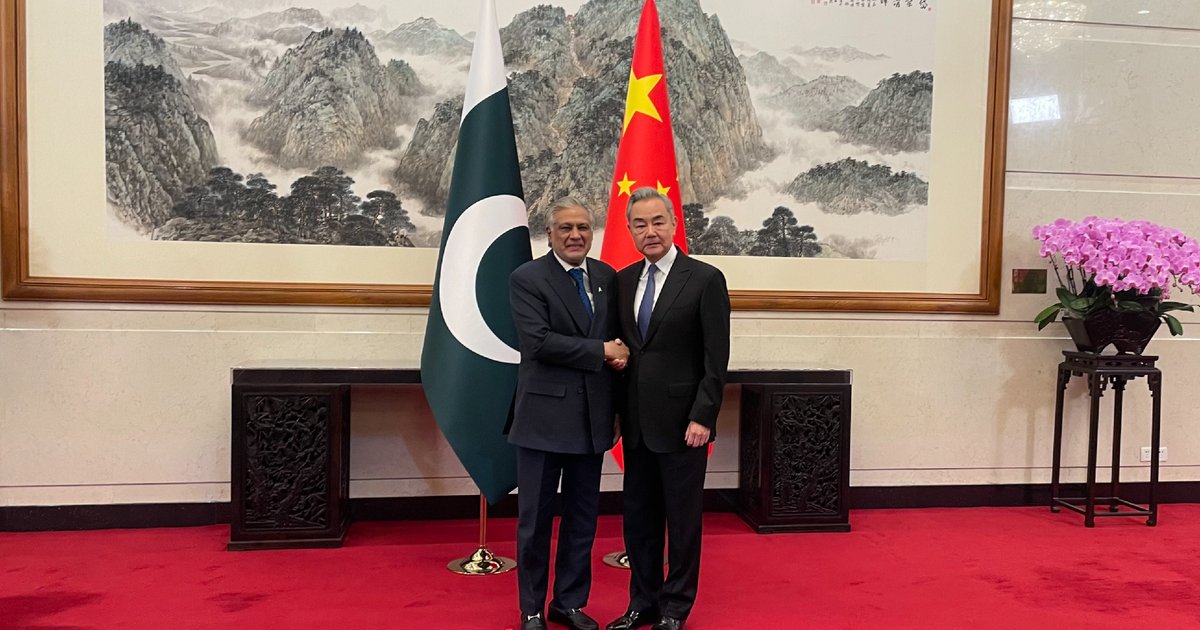
Chinese Foreign Minister Wang Yi held a meeting with Pakistani Deputy Prime Minister and Foreign Minister Mohammad Ishaq Dar in the Chinese capital Beijing on Tuesday, where they discussed the current situation in Iran. This meeting is part of ongoing efforts to enhance bilateral cooperation between the two countries, especially in light of increasing tensions in the region.
During the meeting, opinions were exchanged regarding the challenges facing Iran, including political and economic issues, as well as the impact of these situations on regional security. Both sides emphasized the importance of dialogue and cooperation to resolve existing crises.
Details of the Meeting
The meeting of the foreign ministers comes at a sensitive time, as Iran is experiencing internal and external tensions that affect the stability of the region. Wang Yi noted that China is closely monitoring the situation in Iran and supports the Iranian government's efforts to achieve stability and development.
For his part, Mohammad Ishaq Dar stressed the importance of cooperation between Pakistan and China in addressing regional challenges, indicating that his country seeks to strengthen relations with Iran to ensure security and stability in the region.
Background & Context
Historically, the relations between China and Pakistan have been strong, with Pakistan considered one of China's strategic partners in the region. In recent years, Iran's importance in regional politics has increased, especially with the tensions arising from Western sanctions and economic pressures.
China aims to enhance its role as an influential power in the Middle East, with Pakistan playing a pivotal role in this context. The relations among the three countries (China, Pakistan, and Iran) have seen significant development in recent years, reflecting the need for joint coordination to face regional challenges.
Impact & Consequences
The meeting between the foreign ministers may contribute to easing tensions in the region, as cooperation between China and Pakistan could lead to greater stability in Iran. Additionally, strengthening relations among these countries could open new avenues for economic and political cooperation.
The impact of this meeting may extend to other countries in the region, as it could encourage dialogue among competing nations and enhance opportunities for peace and stability. Furthermore, China, as a major power, could play an important role in mediating between Iran and Western countries.
Regional Significance
For the Arab region, the situation in Iran has direct implications for security and stability. Iran is a key player in many regional conflicts, making any movement towards stability in Tehran crucial for Arab countries.
Moreover, strengthening relations between China and Pakistan may contribute to the formation of new alliances in the region, affecting political and economic balances. Therefore, monitoring the outcomes of this meeting will be essential to understanding the new dynamics in the Middle East.