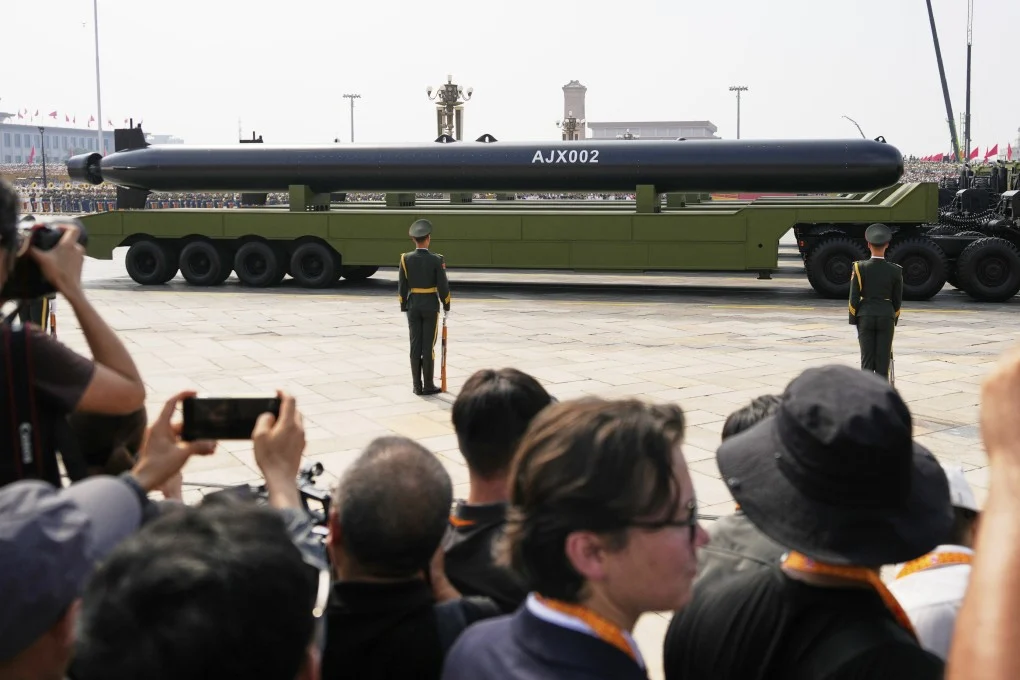
China has made a significant leap in military technology by developing unmanned submarines that are considered the largest in the world. Two models, HSU001 and AJX002, were displayed during last year's military parade, both approaching a length of 20 meters (66 feet). These developments have raised international concerns, especially from the United States, which is closely monitoring these military innovations.
Additionally, Western media reports have revealed the existence of a secret model exceeding 40 meters in length at one of China's naval facilities. This new model is classified as a giant unmanned submarine, raising questions about China's military intentions in the region.
Details of the Event
These submarines are part of China's strategy to enhance its naval military capabilities, representing a new class known as giant unmanned underwater vehicles (XXLUUVs). This new category of submarines is characterized by their large dimensions and ability to perform multiple underwater missions, making them a significant strategic tool in maritime conflicts.
Through these submarines, China aims to strengthen its presence in the oceans, aligning with its expansionist plans in the Pacific region. Analyzed satellite images have shown that these submarines are stored in fortified naval facilities, increasing concerns about their potential use in future military operations.
Background & Context
Historically, China has sought to develop its naval military capabilities for several years, especially following increased tensions in the South China Sea. This area is rich in natural resources and is contested by several countries, heightening the importance of strengthening China's military capabilities.
In recent years, China has witnessed a notable increase in its defense budget, allowing it to develop new and advanced technologies. Unmanned submarines are part of this strategy, providing China with the ability to conduct reconnaissance and surveillance operations without endangering its forces.
Impact & Consequences
These developments raise questions about the military balance in the region, potentially leading to a new arms race in the Pacific. The United States and its allies may feel an increasing threat from these submarines, prompting them to bolster their military presence in the area.
Furthermore, these submarines could influence the defense strategies of neighboring countries, potentially leading to changes in military and political alliances in the region. Major powers are expected to closely monitor these developments, as any escalation in tensions could impact regional and international security.
Regional Significance
For Arab countries, these developments reflect the importance of enhancing military and technological capabilities to face regional challenges. Additionally, tensions in the Pacific may affect oil prices and natural resources, impacting the Arab economy.
In light of these circumstances, Arab nations should consider joint defensive strategies to address any potential threats, whether from major powers or regional conflicts. Military and technological cooperation among Arab countries could be an effective solution to enhance security and stability in the region.