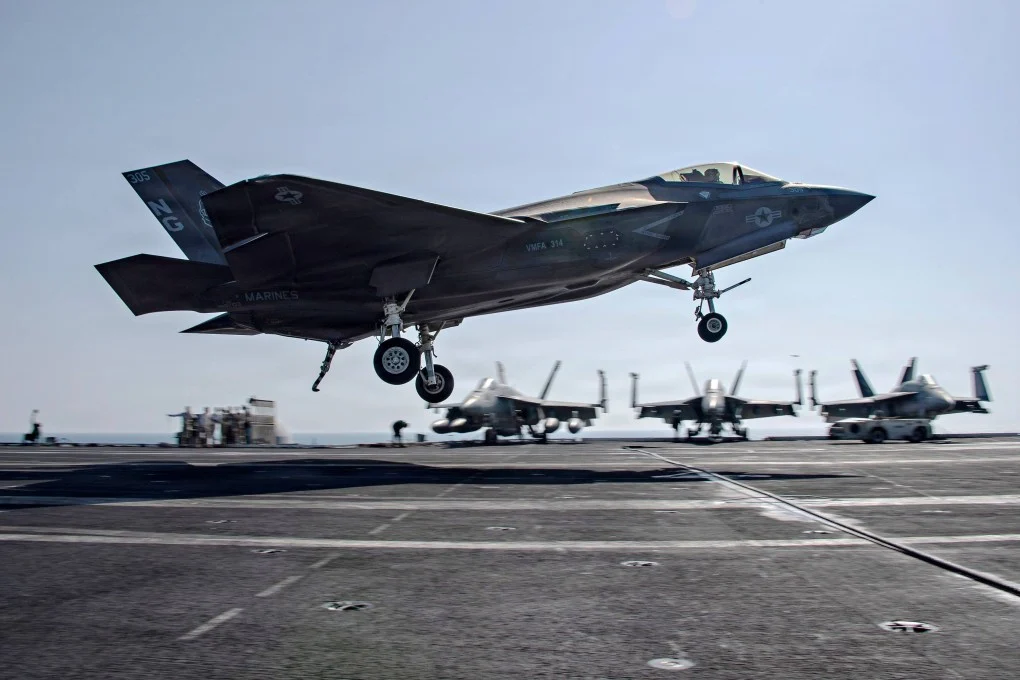
As tensions escalate in the Middle East, a new phenomenon has emerged from China where civil engineers are donating their technical expertise online to help Iran confront American military power. This trend became more evident after a video circulated on Chinese social media on March 14, explaining in detail how to shoot down an F-35 aircraft, igniting widespread debate over the motives and potential consequences.
The video, produced by the account "Lao Hu Talks World," was translated into Persian and provided a detailed explanation of the techniques and methods that could be employed to target the advanced aircraft. This type of content reflects the growing informal cooperation between individuals in China and Iran, without any official support or financial compensation.
Details of the Event
The video quickly spread across social media platforms, showcasing how specific techniques could be used to bring down advanced aircraft like the F-35. It was filmed in a way that made the information appear easy to understand, contributing to its significant spread among users. This type of content reflects a spirit of solidarity among some individuals in China and Iran, as these engineers seek to provide assistance in facing military challenges.
It is noteworthy that the F-35 is considered one of the most advanced combat aircraft in the world, designed to perform multiple missions under various conditions. Therefore, providing information on how to shoot it down is a bold step by these engineers.
Background & Context
Historically, relations between China and Iran have evolved significantly, especially in the fields of military and technical cooperation. China is one of Iran's largest trading partners and has provided support in various areas, including military technology. In recent years, with rising tensions in the region, it has become clear that Iran is seeking ways to enhance its defensive capabilities, making this cooperation increasingly important.
Moreover, tensions between the United States and Iran have significantly increased following the U.S. withdrawal from the nuclear agreement in 2018, leading to strict economic sanctions on Iran. This situation has prompted Iran to seek external support, making cooperation with China appear to be a logical option.
Impact & Consequences
The dissemination of such information could have significant military and political implications. Militarily, enhancing Iran's defensive capabilities could shift the balance of power in the region, increasing tensions between Iran and the United States and its allies. Additionally, this informal cooperation may encourage other countries to seek similar support, complicating the security situation in the Middle East.
Politically, this type of cooperation could strengthen relations between China and Iran, potentially raising concerns for the United States and its allies. Furthermore, this collaboration could contribute to the formation of new alliances in the region, making it difficult to predict future developments.
Regional Significance
Considering the situation in the Arab region, this phenomenon could directly impact security and stability in Gulf countries. If Iran manages to enhance its defensive capabilities, it may lead to increased tensions in the region, affecting the interests of Arab nations. Additionally, strengthening ties between Iran and China could alter the dynamics of power in the region, prompting Arab countries to reassess their security strategies.
In conclusion, this phenomenon reflects a shift in how nations interact with military challenges, potentially having far-reaching implications for regional and international security. It is crucial to closely monitor these developments to understand their impact on the region.