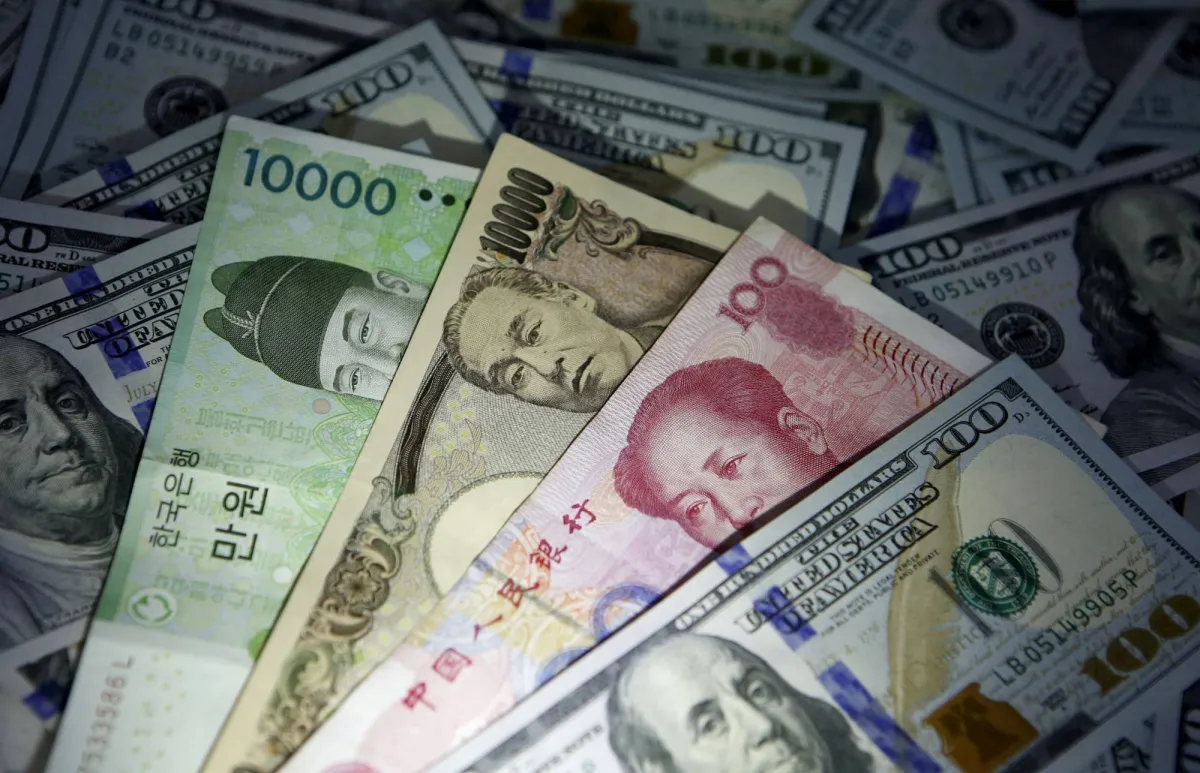
The Chinese yuan experienced a significant rise during the morning trading session on Wednesday, marking its highest level against the US dollar in over three years. This robust recovery was driven by a decline in the US currency after President Donald Trump announced a two-week ceasefire agreement with Iran, leading to a wave of optimism in Asian markets.
In trading details, the onshore yuan recorded a level of 6.8287 against the dollar, while the offshore yuan rose to 6.8270, levels not seen since March 2023. This increase coincided with a collective rise of currencies in the Asian region, as the ceasefire agreement boosted investors' risk appetite.
Details of the Event
The yuan received additional support from the monetary policy of the People's Bank of China, which set a strong reference rate for the currency at 6.8680 against the dollar, the strongest level for the bank since April 2023. This trend reflects the monetary authorities' desire to maintain currency stability amid global fluctuations, enhancing traders' confidence.
Since the beginning of this year, the yuan has gained approximately 2.4%, indicating an improvement in its position compared to other currencies. Analysts at major international banks, such as MUFG, believe that the yuan still enjoys a favorable position, supported by strategic oil reserves and flexible energy supply chains.
Background & Context
These developments come at a sensitive time as markets await the results of upcoming negotiations between Washington and Tehran. Despite the current optimism, there are still existing risks that require close monitoring of the negotiation path during the ceasefire period.
In the same context, the Dubai Financial Market Index recorded an exceptional jump at the start of trading on Wednesday, rising by 8.3%, amid a wave of optimism that swept through investor circles following the ceasefire news. The stock of Dubai Financial Market Company led the gains, soaring by 10.6% in early trading.
Impact & Consequences
European gas contract prices were sharply affected, declining after Trump's approval of the ceasefire with Iran, raising hopes for the resumption of oil and natural gas flows through the Strait of Hormuz. Dutch gas contracts for May fell by approximately 18% to 43.80 euros per megawatt-hour.
Asian markets saw a strong rebound, with the MSCI Emerging Markets Index rising by 5%. This increase reflects the impact of Trump's decision to step back from the brink, contributing to the strengthening of developing economies in Asia that heavily rely on energy imports.
Regional Significance
The Arab region is directly affected by these developments, as the stability of oil and gas prices significantly impacts the economies of energy-importing countries. With the dollar index declining, Asian currencies have made sharp gains, which could positively reflect on trade relations between Arab countries and Asian nations.
In conclusion, despite the current optimism, caution remains necessary amid changing geopolitical conditions. Investors need to closely monitor developments to ensure informed decision-making in these volatile circumstances.